



கம்பராமாயணம் 3438 · ஆரணிய 8.36
பாடல் · The poem
Tap a word to see its gloss in the commentary and where else it occurs.
பாட வேறுபாடு · Project Madurai reads
பொருள் · Meaning in Tamil
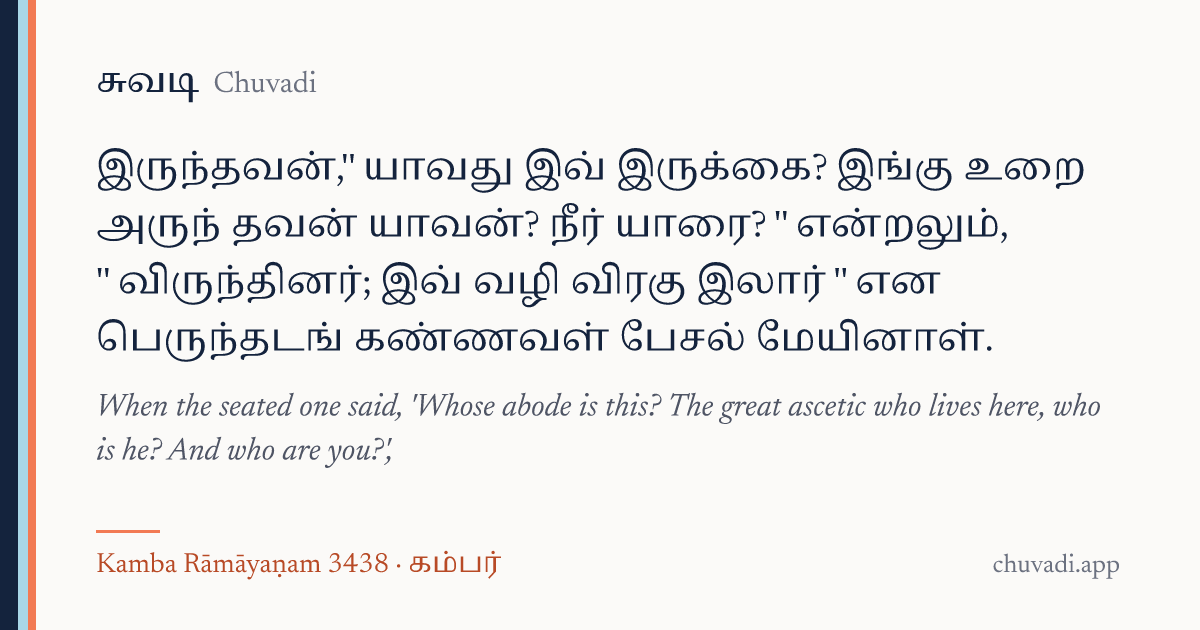
இருந்தவன் - (மூங்கிலிருக்கையில் இருந்த) இராவண சன்னியாசி; இவ் இருக்கை யாவது - இந்த இருப்பிடம் யாது?; இங்கு உறை அருந்தவன் யாவன் - இச்சாலையில் வாழும் அரிய முனிவன் யார்?; நீர் யாரை - நீவிர் யார்?; என்றலும் - எனக் கேட்டதும்; இவ்வழி விருந்தினர் - இங்கு வந்த புதியவர் ஆவர்; விரகு இலார் - வஞ்சகம் அற்றவர்; எனப் பெருந் தடங் கண்ணவள் பேசல் மேயினாள் - என்று நினைத்துப் பெரிய நீண்ட கண்களை உடைய சீதை (இராவணனுடன் பேசத் தொடங்கினாள்.
விருந்தினர் - புதிதாக வந்த அதிதி ஆவர். விரகு - என்பதைக் கபடம் எனவும் இங்கு வழி அறியாதவர் எனவும் உரைப்பர் பாலகாண்ட நாட்டுப் படலத்தில் விருந்தோம்பும் மங்கையர் மாண்பு பற்றிக் கூறும் போது 'பெருந்தடங்கண் பிறை நுதலார்' (67) என்று கூறியதை நினைவு கூர்க. 'பேசல் மேயினாள்' முனிவன் என இராவணனை எண்ணியதால் புதிய ஆண்கள் முன் நாணித் தலை குனிந்து பேசுவது போலன்றி அவனை நோக்கிப் பேசத் தொடங்கினாள் சீதை.
இருந்தவன் - இறந்த கால வினையாலணையும் பெயர்.
ஆங்கிலம் · English translationAI
Translation
- When the seated one said, 'Whose abode is this? The great ascetic
- who lives here, who is he? And who are you?',
- thinking, 'He is a guest, a stranger to this place, without guile,'
- she of the large wide eyes began to speak.
What the poem says
Seated, the false ascetic asks whose hermitage this is, who the holy man living here is, and who she is.
Taking him for a guileless guest new to the place, Cītai, with her large, wide eyes, begins to answer him. She looks at him openly, as she would at a sage, without the shyness she would show a stranger.