



கம்பராமாயணம் 3441 · ஆரணிய 8.39
பாடல் · The poem
Tap a word to see its gloss in the commentary and where else it occurs.
பொருள் · Meaning in Tamil
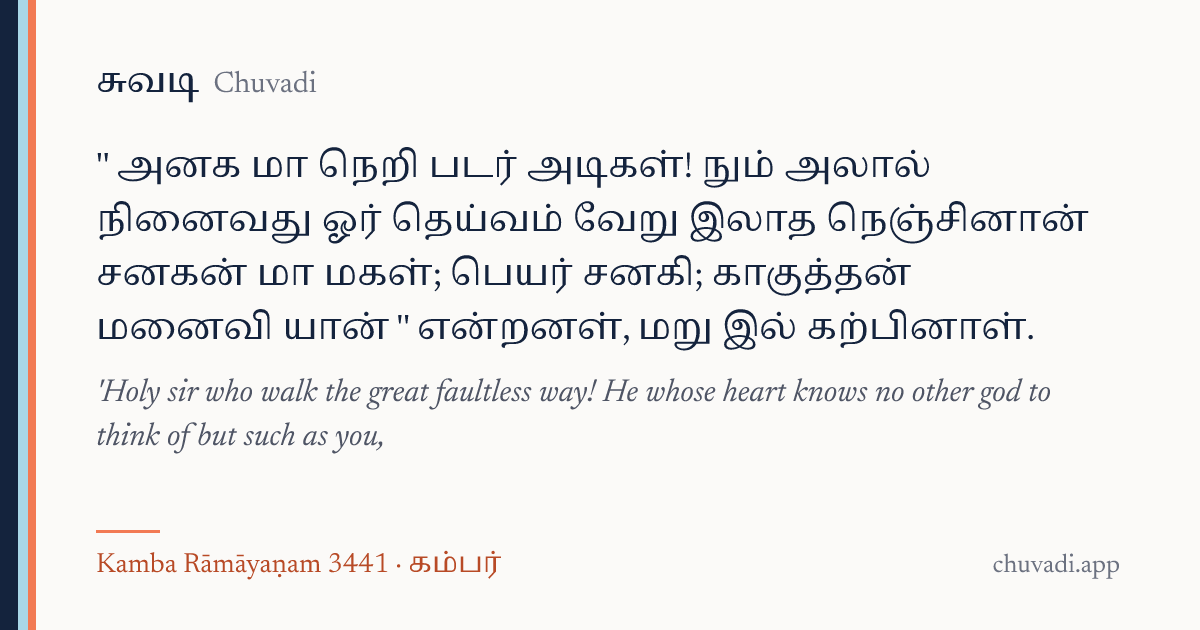
மறு இல் கற்பினாள் - (அவன் சொற்களைக் கேட்ட) குற்றமற்ற கற்புடைய சீதை; அனகமாநெறி படர் அடிகள்! - குற்றமில்லாத சிறந்த அறவழியில் செல்லும் அடிகளே!; நும் அலால் ஓர் தெய்வம் நினைவது வேறு இலாத நெஞ்சினான் - உம்மைப் போன்றவர்களை அல்லாமல் வேறு தெய்வத்தை நினையாத மனமுடையவன், சனகன் மாமகள் - சனக மன்னனுடைய பெருமைக்குரிய மகளும்; சனகி பெயர் - சானகி எனும் பெயருடையவளும்; காகுத்தன் மனைவி யான் என்றனள் - காகுத்தன் மரபில் வந்த இராமனின் மனைவியும் ஆகியவள் நான் எனக் கூறினாள்.
மறு இல் கற்பினாள் என்பதற்கேற்ப முன்னரும் 'நீர் துடைத்த கற்பினாள்' என வந்துளது (3351). இவள் நிலையை உணர்ந்த திரிசடையும் சுந்தர காண்டத்தில் 'நவையில் கற்பினாம்' (5108) என அழைப்பாள். ந + அகம் - அனகம். வடசொற்புணர்ச்சி; குற்றம் அற்றது என்ற எதிர் மறைப் பொருளில் வந்தது. சனக மன்னன் முனிவர்களையே தெய்வமாக மதித்து வழிபடுபவன். அவன் மகளும் அங்ஙனமே 'அடிகள்' என முனிவேடத்தில் வந்தவனை வரவேற்பது இயற்கையே. காகுத்தன் இந்திரனை ஊர்தியாகக் கொண்டு அசுரர்களை வென்றவன் (639) அவன் மரபில் வந்தவன் இராமன் எனப் பெயரைக் கூறா நிலை பெறப்படும்.
சனக - சானகி என்ற பெயரின் விகாரம்.
ஆங்கிலம் · English translationAI
Translation
- 'Holy sir who walk the great faultless way! He whose heart
- knows no other god to think of but such as you,
- Caṉakaṉ, his noble daughter am I; my name is Caṉaki; of Kākuttaṉ's line,
- I am the wife,' said she of spotless chastity.
What the poem says
Cītai, whose chastity has no flaw, answers simply. She is the daughter of King Caṉakaṉ, who worships holy men like the visitor as his only gods, her name is Jānakī, and she is the wife of the prince of Kākuttaṉ's line.
Kākuttaṉ was an ancestor who rode on Indra in the form of a bull to defeat the demons. Like her father she honours ascetics, which is why she treats the disguised Irāvaṇaṉ with such respect. Again she avoids saying her husband's name.