



கம்பராமாயணம் 3442 · ஆரணிய 8.40
பாடல் · The poem
Tap a word to see its gloss in the commentary and where else it occurs.
பொருள் · Meaning in Tamil
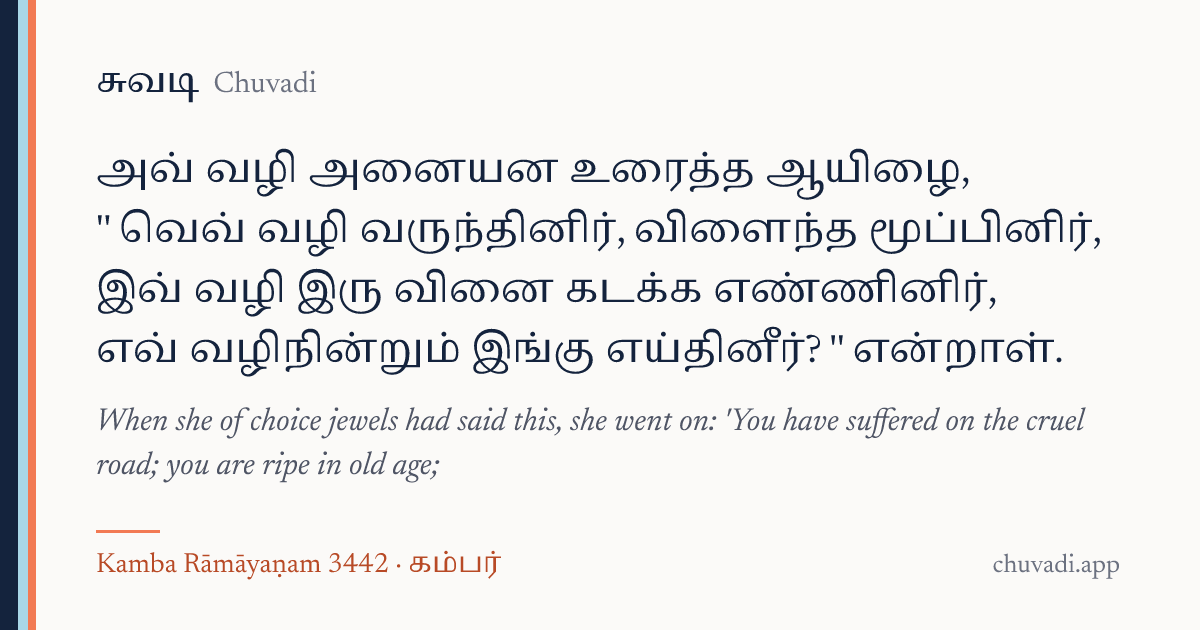
அவ்வழி அனையன உரைத்த ஆயிழை - அப்போது அவ்வாறு தன் வரலாற்றைக் கூறிய சீதை, விளைந்த மூப்பினிர் - பழுத்த முதுமை அடைந்தவரே!; வெவ்வழி வருந்தினிர் - கொடிய காட்டு வழியில் வந்ததால் துன்பமடைந்தீர்; இவ்வழி இருவினை கடக்க எண்ணினிர் - இத் தவ நெறியில் புண்ணிய பாவங்களைக் கடந்து செல்ல நினைத்தீர்; எவ்வழி நின்றும் இங்கு எய்தினீர் என்றாள் - எவ்விடத்திலிருந்து இவ்விடம் வந்தடைந்தீர் எனக் கேட்டாள்.
ஆயிழை - ஆராய்ந்தெடுத்த அணிகலன்களை அணிந்த பெண்ணாம் சீதை. மூப்பின் முதிர்ச்சியைச் சுட்ட 'விளைந்த மூப்பினிர்' என்றாள். இரு வினை என்பது 'இருள் சேர் இருவினை எனக் குறள் (குறள். 5) கூறும். 'வெவ்வழி வருந்தினிர் என்ற கருத்துப்பட முன்னரே 'சேண் நெறி வந்தது ஓர் வருத்தச் செய்கையன்' (8339) எனக் கூறப்பட்டுள்ளது.
ஆயிழை - வினைத் தொகைப் புறத்துப் பிறந்த அன்மொழித் தொகை.
ஆங்கிலம் · English translationAI
Translation
- When she of choice jewels had said this, she went on: 'You have suffered
- on the cruel road; you are ripe in old age;
- by this path you mean to pass beyond the two kinds of deeds;
- from what place have you come here?' she said.
What the poem says
Having told him who she is, Cītai asks the visitor about himself. She sees a very old man worn out from travelling the harsh forest roads, someone who has taken up the ascetic life to go beyond both good and evil deeds.
She asks him where he has come from.