



கம்பராமாயணம் 3478 · ஆரணிய 8.76
பாடல் · The poem
Tap a word to see its gloss in the commentary and where else it occurs.
பொருள் · Meaning in Tamil
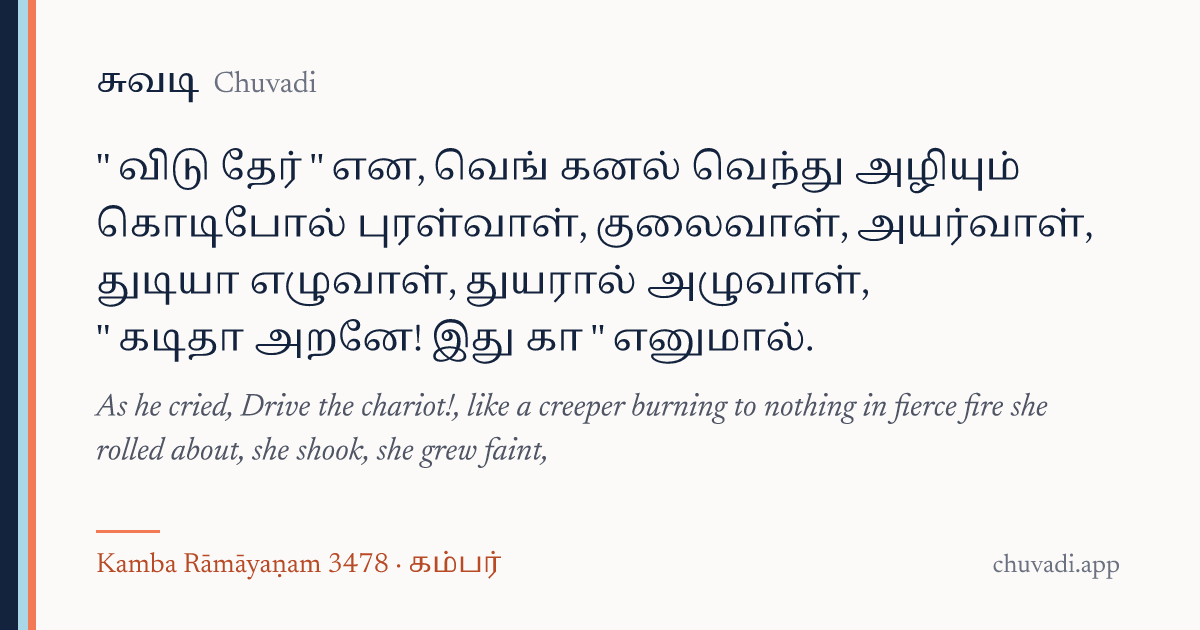
தேர் விடு என - (இராவணன் தேர்ப்பாகனைப் பார்த்து) விரைவாகத் தேரைச் செலுத்து என்று கூற; வெங்கனல் வெந்து அழியும் கொடி போல் - கொடிய தீயில் வீழ்ந்து வெந்து அழிகின்ற கொடி போன்று; புரள்வாள் குலைவாள் அயர்வாள் துடியா எழுவாள் துயரால் அழுவாள் - சீதை கீழே புரண்டு நிலை குலைந்து செயலறியாது சோர்ந்து மனம் துடித்து எழுந்து பின் வருந்தி அழுவாள்; அறனே கடிதா இதுகா எனும் - 'தருமமே! இத்துன்பத்திலிருந்து விரைவாகக் காப்பாற்று' என வேண்டுவாள். ஆல் - ஈற்றசை.
தீயில் வீழ்ந்த கொடி எரிவது போலச் சீதை இராவணனின் தேர்மீது துன்புற்றாள். கொடி, சீதைக்கு உவமை; தீ, இராவணனின் செயலுக்கு உவமையாம். சீதை படும் பாட்டைப் பல வினைத்தொடர்கள் விளக்கும். மேலும் கடியா யறமே என்ற பாடத்திற்கு 'ஒருவரும் கைவிடாத தருமமே' எனவும் உரைப்பர்.
யாரும் துணையற்ற நிலையில் தருமமே காப்பாற்றும் என்ற நம்பிக்கை இதனால் புலனாகும்.
ஆங்கிலம் · English translationAI
Translation
- As he cried, Drive the chariot!, like a creeper burning to nothing in fierce fire
- she rolled about, she shook, she grew faint,
- she started up in anguish, she wept for her sorrow,
- and cried, O Righteousness, protect me from this, and quickly!
What the poem says
Irāvaṇaṉ orders his charioteer to drive on. On the chariot Cītai is like a creeper that has fallen into a fire: she writhes, collapses, starts up and weeps. The creeper stands for Cītai and the fire for Irāvaṇaṉ's deed, and the string of verbs piles up her suffering.
With no one at hand to help her, she calls on Dharma itself to save her, trusting that righteousness protects those who have no other refuge. Another reading takes her words to mean Righteousness, which never abandons anyone.