



கம்பராமாயணம் 3482 · ஆரணிய 8.80
பாடல் · The poem
Tap a word to see its gloss in the commentary and where else it occurs.
பொருள் · Meaning in Tamil
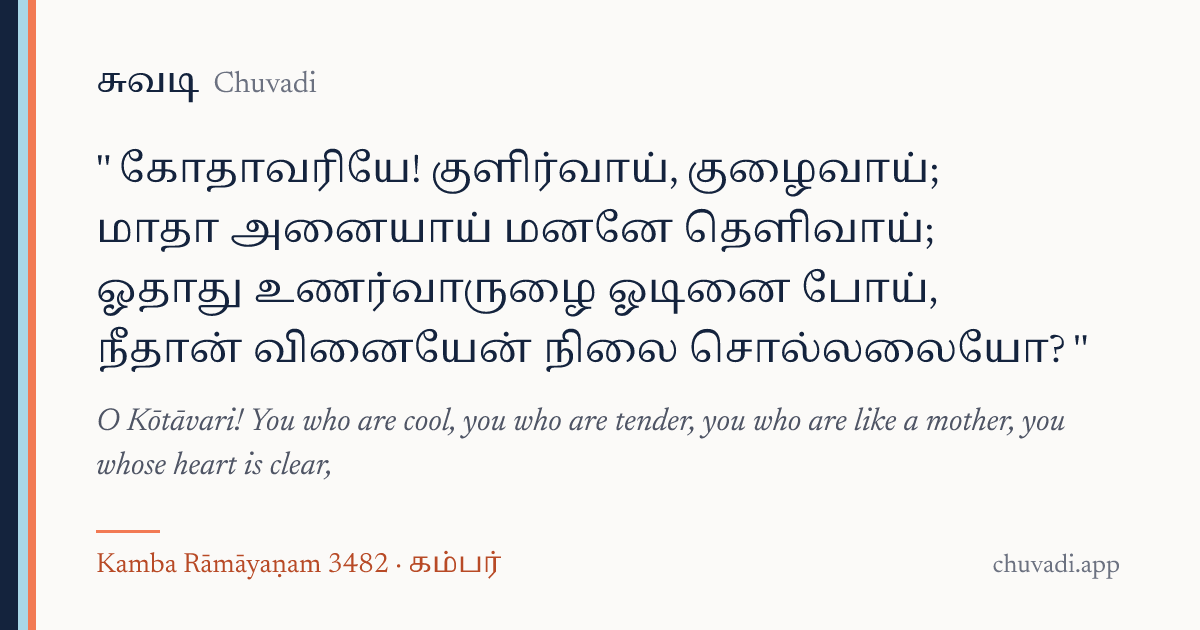
கோதாவரியே - கோதாவரி எனும் ஆறே!; குளிர்வாய் - குளிர்ந்த தன்மை உடையாய்; குழைவாய் - இளகும் இயல்புடையாய்; மாதா அனையாய் - தாயைப் போன்றவளே!; மனனே தெளிவாய் - குற்றமற்ற தெளிந்த மனமுடையாய்; ஓதாது உணர்வார் உழை - ஓதாமலே எல்லா நூல்களையும் உணர்ந்துள்ள என் கணவரிடத்து; ஓடினைபோய் - ஓடிச் சென்று; வினையேன் நிலை நீ தான் சொல்லலையோ - துன்பமுற்ற தீவினையேனாகிய என் நிலையை நீயே போய்ச் சொல்லமாட்டாயா?
குளிர்தலும் குழைதலும் நீரின் தன்மை. அவற்றைப் பெற்ற கோதாவரி ஆறு தன் துன்பத்தை இராமனிடம் கூறாதா எனச் சீதை ஏங்குகிறாள். ஓடுதல் ஆற்றின் இயல்பு. குளிர் பண்பும் குழையும் பண்பும் தாயன்பும் கொண்ட கோதாவரி தன் ஓட்டத்தின் போக்கைத் திசை மாற்றி இராமலக்குவரை நோக்கி ஓடித் தெரிவிக்கக் கூடாதா என்று பேதைச் சீதை அரற்றுகிறாள். 'புவியினுக்கு' எனும் பாடலில் இப்பண்பு முன்னரே கூறப் பெற்றதாம் (2732). ஆற்றைத் தாயாகப் படைப்பது கவிமரபு. இதனைச் 'சரயு என்பது தாய் முலை அன்னது' (23) என வந்த தொடரால் அறியலாம். ஓதாதுணரும் நிலையை முன்னர் விராதன் 'அன்னம் ஆய் அருமறைகள் அறைந்தாய் நீ, அவை உன்னை முன்னம் ஆர் ஓதுவித்தார்' (2575) எனத் துதித்தலில் காணலாம். சீதை புலம்பியது போலவே இராமனும் அவளைக் காணாது புலம்பியது ஒப்பிடற்பாலது (3731 - 3740).
மனன் - போலி.
ஆங்கிலம் · English translationAI
Translation
- O Kōtāvari! You who are cool, you who are tender,
- you who are like a mother, you whose heart is clear,
- will you not run off to him who knows all without being taught,
- and tell him yourself the plight of wretched me?
What the poem says
Cītai now turns to the Godavari river beside which they had been living. Coolness and softness belong to water, and running belongs to a river, so she pleads with it, as with a mother, to change its course and run to Irāmaṉ with the news.
Poets traditionally picture rivers as mothers; elsewhere the Sarayu is likened to a mother's breast. Irāmaṉ is he who knows all scripture without having studied, an idea earlier voiced in Virātaṉ's hymn of praise. Later in the story Irāmaṉ will lament for Cītai in much the same way.