



கம்பராமாயணம் 3484 · ஆரணிய 8.82
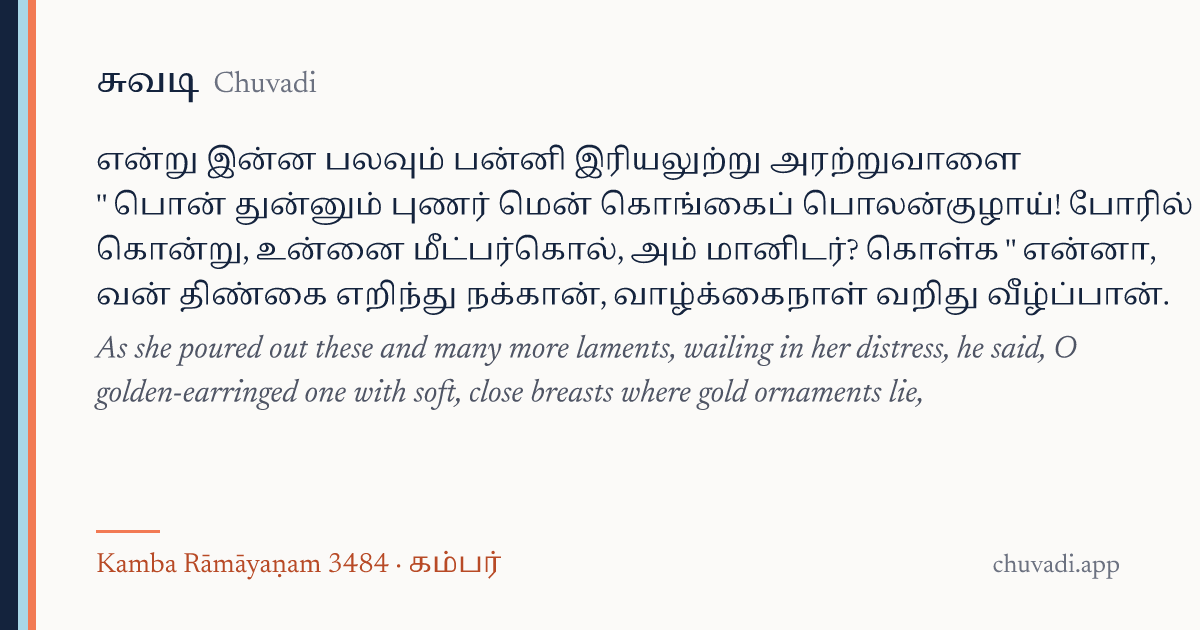
பாடல் · The poem
Tap a word to see its gloss in the commentary and where else it occurs.
பாட வேறுபாடு · Project Madurai reads
பொருள் · Meaning in Tamil
என்று இன்ன பலவும் பன்னி - இவ்விதம் பல சொற்களைச் சொல்லி; இரியலுற்று அரற்றுவாளை - நிலைகெட்டு வாய் விட்டுப் புலம்பி அழும் சீதையை, (நோக்கி); வாழ்க்கை நாள் வறிது வீழ்ப்பான் - தனது வாழ்நாளை வீணாக அழித்துக் கொள்பவனான இராவணன்; பொன் துன்னும் புணர்மென் கொங்கைப் பொலன்குழாய் - பொற்கலன்கள் அணிந்த நெருங்கிய மார்புகளை உடைய அழகிய குண்டலமணிந்த பெண்ணே!; அம்மானிடர் போரில் என்னைக் கொன்று உன்னை மீட்பர் கொல் - அந்த மனிதர்கள் சண்டையில் என்னைக் கொன்று உன்னை மீட்டு விடுவார்களோ?; கொள்க - முடிந்தால் மீட்டுக் கொள்ளட்டும்; என்னா வன்திண்கை எறிந்து நக்கான் - என்று கூறி வலிய திண்ணிய கைகளைப் புடைத்துச் சிரித்தான்.
பன்னுதல் - பல முறை கூறல். வாழ்க்கை நாள் வறிது வீழ்ப்பான் - செயற்கரிய தவம் செய்து மூன்றரைக் கோடி ஆண்டுகளை வாழ்நாளாகப் பெற்றும் தீய செயல் புரிந்து அவற்றை வீணாகப் போக்குபவன். அத்தகைய தீயோர் அழிவது உறுதி என்பது பெறப்பட்டது. பொன் துன்னும் - பொன்னிறம் பொருந்திய என்றுமாம். கைஎறிதல் - இகழ்ச்சியிலும் வெகுளியிலும் தோன்றும் மெய்ப்பாடு. 'அங்கதன் அதனைக் கேளா, அங்கையோடு அங்கை தாக்கித் துங்கவன் தோளும் மார்பும் இலங்கையும் துளங்க நக்கான்' என வருவதை (7001) இத்துடன் ஒப்பிடலாம்.
கொல் - ஐயப்பொருளில் வந்த அசை.
ஆங்கிலம் · English translationAI
Translation
- As she poured out these and many more laments, wailing in her distress,
- he said, O golden-earringed one with soft, close breasts where gold ornaments lie,
- will those men kill me in battle and win you back? Let them take you!,
- and clapping his strong hard hands he laughed, he who was throwing his life away for nothing.
What the poem says
Irāvaṇaṉ mocks Cītai's laments. Will those mere humans kill him in battle and take her back? Let them try, he says, and he slaps his hands together and laughs, a gesture of contempt.
The poet calls him one who wastes his days for nothing: by hard penance he had earned a lifespan of thirty-five million years, yet he squanders it on evil deeds, and his ruin is therefore certain. The same mocking hand-clap and laugh are given later to Aṅkataṉ.