



கம்பராமாயணம் 351 · பால 7.21
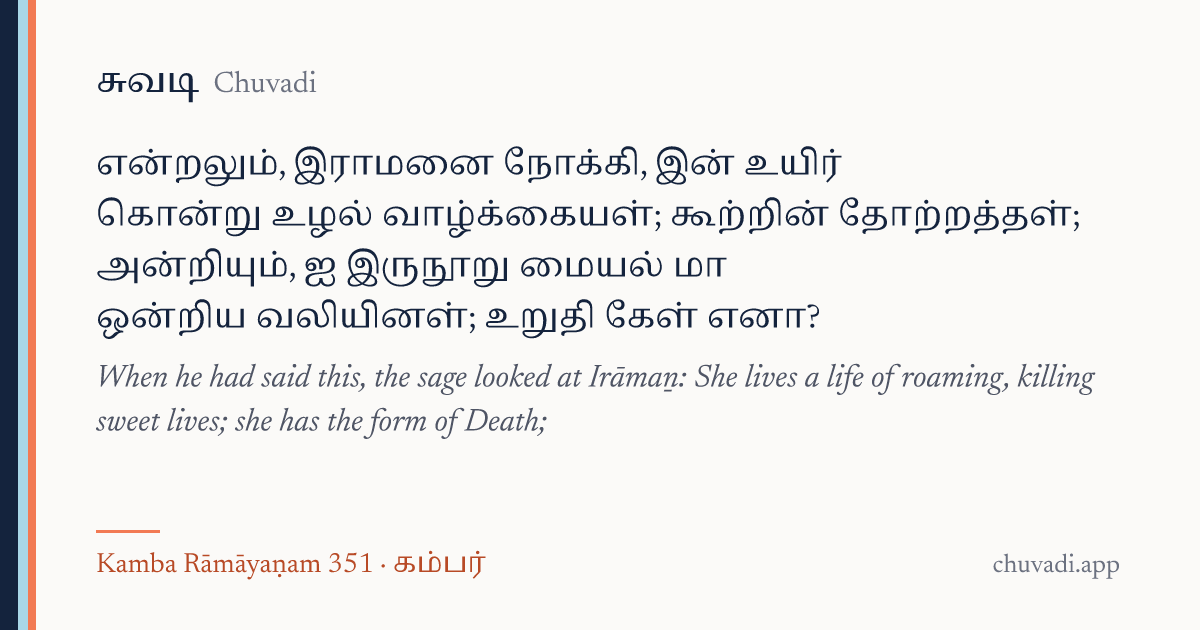
பாடல் · The poem
Tap a word to see its gloss in the commentary and where else it occurs.
பொருள் · Meaning in Tamil
என்றலும் இராமனை நோக்கி - என்று சொன்னதும், இராமனைப் பார்த்து (விசுவாமித்திரன்); இன்உயிர் கொன்று உழல்வாழ்க்கையள் - இனிய உயிர்களை எல்லாம் கொன்று திரியும் வாழ்க்கை உடையவளும்; கூற்றின் தோற்றத்தள் - எமனைப் போன்ற தோற்றம் உடையவளும்; அன்றியும் ஐ இருநூறுமையல்மா - ஆயிரம் மதயானைகளுக்கு ஒப்பான; ஒன்றிய வலியினள் - பொருந்திய வலிமை உடையவளுமான; உறுதி கேள் எனா - (ஒருத்தி) செய்தியைக் கேட்பாயாக என்று.
இன்னுயிர்: இனிய உயிர். அவராவார்: முனிவர் முதலானோர் உழல் வாழ்க்கை வினைத்தொகை (திரிகின்ற வாழ்க்கை). கூற்று: எமன். தோற்றத்தள்: தோற்றம் உடையவள் ஐ இரு நூறு: ஆயிரம். மையல்: வலிமை. மா: மிருகம் (யானை). ஒன்றிய: பொருந்திய. உறுதி: செயல். எனா: என்று செயா என்ற வாய்பாட்டு வினையெச்சம். இதுமுதல் ஏழுபாடல்கள் தாடகையின் வரலாறு கூறுவனவாம். 'பழிபடா மன்னவன் பரித்த நாட்டின் ஊங்கு அழிவதென்' எனக்கேட்ட இராமனுக்கு அழிவுக்குக் காரணமான தாடகையைப் பற்றிக் கூறுவனவாம்.
ஆங்கிலம் · English translationAI
Translation
- When he had said this, the sage looked at Irāmaṉ: She lives a life of roaming, killing sweet lives;
- she has the form of Death;
- and more, the strength of a thousand maddened beasts
- is joined in her; hear what she has done, he said.
What the poem says
Vicuvāmittiraṉ answers Irāmaṉ's question about why the land is ruined. The cause is a woman who roams killing living creatures, especially the sages, looks like Death itself, and has the strength of a thousand rutting elephants.
This begins a run of about seven verses telling Tāṭakai's story to the prince.