



கம்பராமாயணம் 3513 · ஆரணிய 8.111
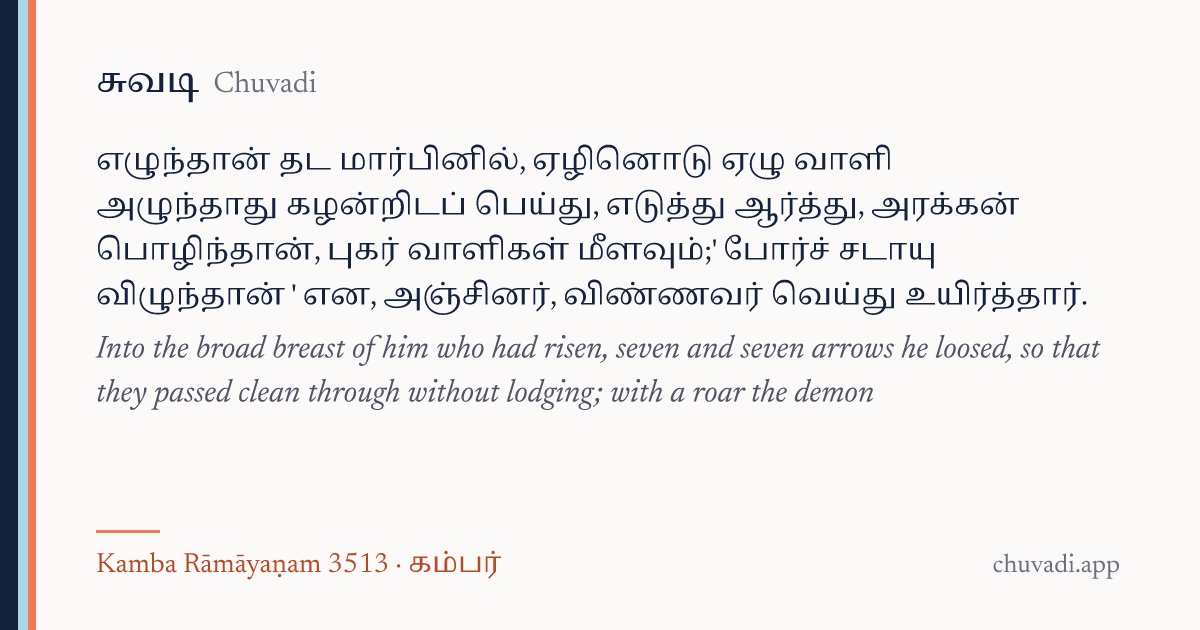
பாடல் · The poem
Tap a word to see its gloss in the commentary and where else it occurs.
பொருள் · Meaning in Tamil
அரக்கன் ஆர்த்து - அரக்கன் ஆகிய இராவணன் பேரொலி செய்து; எழுந்தான் தட மார்பினில் - தன் குண்டலங்களைப் பறித்துக் கொண்டு எழுந்தவனாகிய (சடாயுவின்) பரந்த மார்பில்; ஏழினொடு ஏழு வாளி எடுத்து - பதினான்கு அம்புகளை எடுத்து; அழுந்தாது கழன்றிடப் பெய்து - (அவை) மார்பில் பதிந்து நிற்காமல் ஊடுருவிப் போகும்படி எய்து; மீளவும் புகர் வாளிகள் பொழிந்தான் - மீண்டும் ஒளியுள்ள அம்புகளைச் (சடாயு மேல்) எய்தான்; போர்ச் சடாயு விழுந்தான் என அஞ்சினர் - போர் ஆற்றல் மிக்க சடாயு விழுந்து விட்டான் என அஞ்சி; விண்ணவர் வெய்து உயிர்த்தார் - தேவர்கள் பெருமூச்சு விட்டார்கள்.
தன் குண்டலங்களைப் பறித்து எழுந்த சடாயுவின் மார்பில் பதினான்கு அம்புகளை ஊடுருவிச் செல்லுமாறு எய்த இராவணன், மேலும் அம்புகளைச் சடாயு மீது சொரிந்ததைக் கண்டு சடாயு விழுந்தான் என எண்ணித் தேவர்கள் பெருமூச்சு விட்டனர் என்க. ஏழினொடு ஏழு - பதினான்கு; கழன்றிட - ஊடுருவ; புகர் - ஒளி. தடமார்பு - உரிச்சொல் தொடர். ஏழினொடு ஏழு - உம்மைத் தொகை. எழுந்தான் - வினையாலணையும் பெயர். விழுந்தான் - தெளிவு பற்றி வந்த கால வழுவமைதி. முந்தைய பாடலும் இதுவும் அந்தாதித் தொடையில் அமைந்துள்ளமை காண்க.
ஆங்கிலம் · English translationAI
Translation
- Into the broad breast of him who had risen, seven and seven arrows
- he loosed, so that they passed clean through without lodging; with a roar the demon
- rained bright arrows down once more; Caṭāyu the warrior
- has fallen!, the gods feared, and they sighed hot sighs.
What the poem says
Irāvaṇaṉ strikes back with a roar, shooting fourteen arrows that pass straight through Caṭāyu's broad chest, and then loosing a further shower of gleaming shafts. Watching from the sky, the gods are sure the brave vulture has fallen, and they sigh in dismay.
This verse begins with the word that ended the previous one, he rose, a linking device in which the end of one stanza starts the next.