



கம்பராமாயணம் 3529 · ஆரணிய 8.127
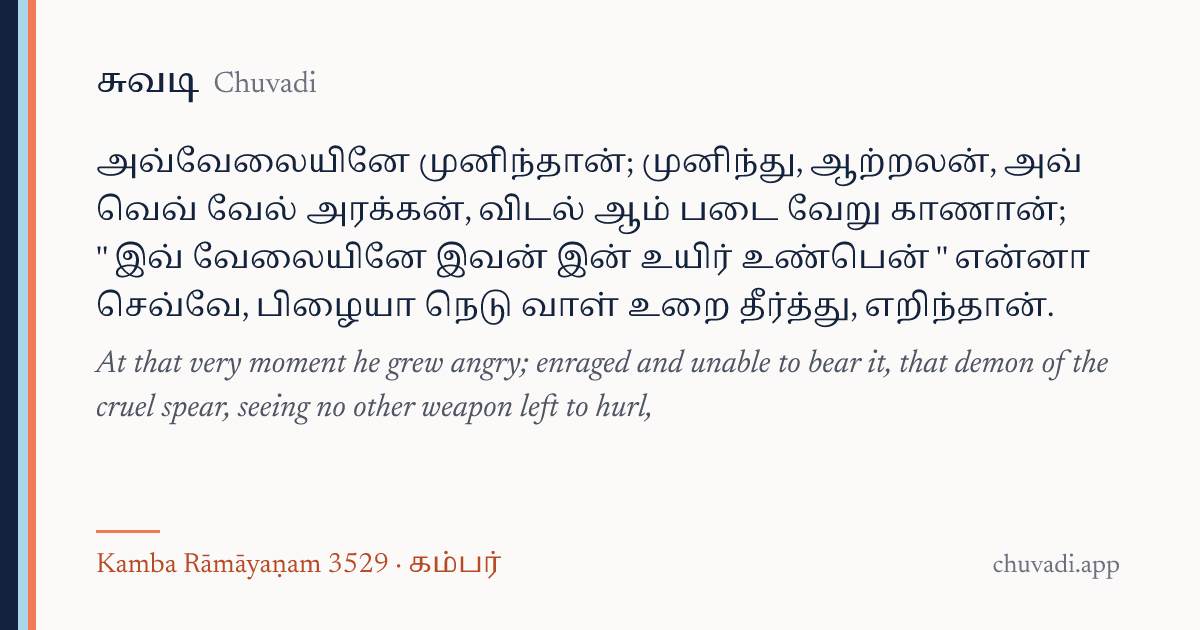
பாடல் · The poem
Tap a word to see its gloss in the commentary and where else it occurs.
பொருள் · Meaning in Tamil
அவ்வேலையினே - (உன் வலிமை போச்சு இத்தனை போலும் நின் ஆற்றல்) என்று (சடாயு கூறிய) அந்த நேரத்தில்; முனிந்தான் முனிந்து - (இராவணன்) சினம் கொண்டான் முனிந்து; ஆற்றலன் - (அச்) சினத்தை ஆற்றமுடியாதவனாகிய; அவ்வெவ்வேல் அரக்கன் - அந்தக் கொடிய வேலை ஏந்திய அரக்கன்; விடல் ஆம் படை வேறு காணான் - (சடாயுவின் மீது) விடுதற்கு உரிய படைக் கலங்கள் வேறு ஒன்றையும் காணாதவனாம்; இவ் வேலையினே - இப்பொழுதே; இவன் இன் உயிர் உண்பென் என்னா - இந்தச் சடாயுவினுடைய இனிய உயிரை உண்பேன் என்று சொல்லி; செவ்வே பிழையா நெடுவாள் - (பகைவரைக்) கொல்லுதல் தப்பாத நீண்ட தன் சந்திரகாசம் என்னும் வாளை; உறை தீர்த்து எறிந்தான் - உறையில் இருந்து (வெளியில்) எடுத்து வீசினான். சடாயுவால் படைக்கலங்களை இழந்து இகழப்பட்ட இராவணன் சினந்து 'இப்பொழுதே இவன் உயிர் உண்பேன்' என்று தன் தப்பாத வாளை எடுத்து வீசினான். சந்திரகாசம் என்ற வாள் கைலாயத்தைத் தூக்க முயன்ற காலத்துச் சிவபிரான் கொடுத்தது. "அரன் தடக்கைவாள் கொண்டாய்" (2835) என வருதலும், தார் அணி மவுலி பத்தும், சங்கரன் கொடுத்த வாளும் (7272) என்று கூறியுள்ளதும் இது குறித்தே என்க.
ஆங்கிலம் · English translationAI
Translation
- At that very moment he grew angry; enraged and unable to bear it,
- that demon of the cruel spear, seeing no other weapon left to hurl,
- said, This very moment I will devour this creature's sweet life,
- and drawing from its sheath the long sword that never misses, he struck.
What the poem says
Stung by Caṭāyu's mockery and with all his other weapons gone, Irāvaṇaṉ is beside himself with anger. Vowing to take the vulture's life on the spot, he draws his long sword Candrahāsa, which never fails to kill, and strikes.
Śiva gave Irāvaṇaṉ this sword after he tried to lift Kailāsa, and the poem refers to that gift elsewhere too.