



கம்பராமாயணம் 354 · பால 7.24
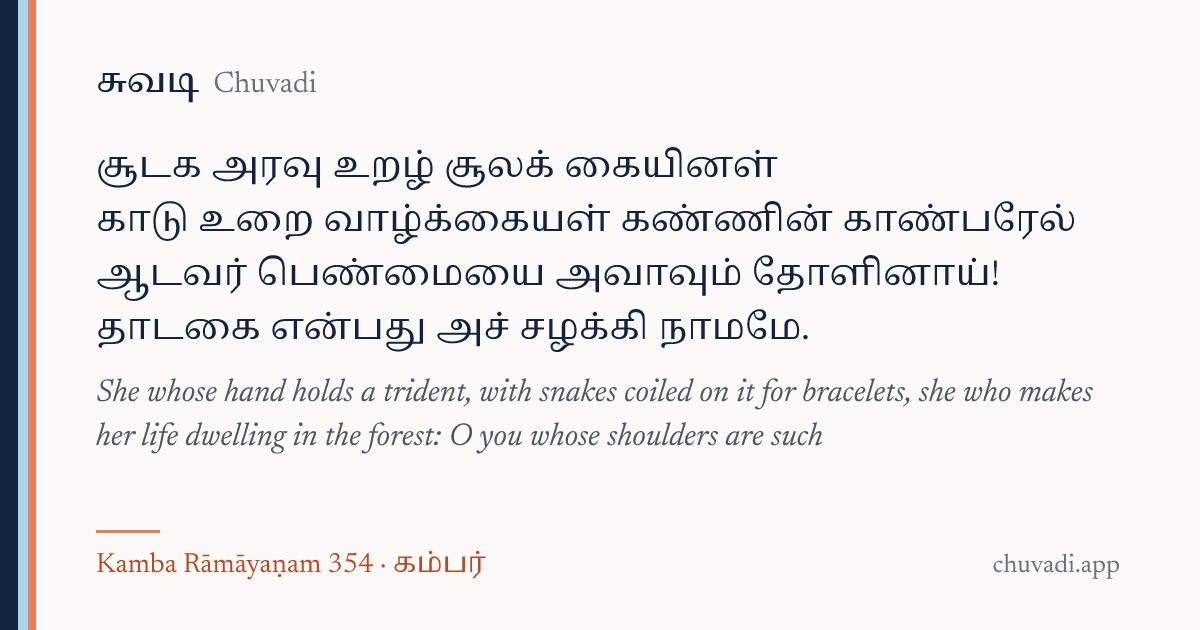
பாடல் · The poem
Tap a word to see its gloss in the commentary and where else it occurs.
பாட வேறுபாடு · Project Madurai reads
பொருள் · Meaning in Tamil
ஆடவர் கண்ணில் காண்பரேல் பெண்மையை அவாவும் தோளினாய் - ஆண்களும் உன்னைக் காண்பாராயின் பெண்தன்மையை விரும்பத் தகுந்த தோளாற்றலுடையவனே; சூடகம் அரவு உறழ் சூலம் கையினள் - கையணியாகப் பாம்புகளை உடையவள் சூலம் உடையவள்; காடு உறை வாழ்க்கையள் - இவ்வனத்தில் வாழும் வாழ்க்கை உடையவள்; அச் சழக்கி நாமம் தாடகை என்பது - இத்தகைய இக்கொடியவளது பெயர் தாடகை என்பதாம்.
சூடகம்: கையில் அணியும்அணி (வளையல்). அரவு: பாம்பு. சூடகமாக அரவுறழ் கை: சூலக்கை எனக்கூட்டி உரை காண்பர் கையணியாக நாகங்களை அணிந்திருக்கிறாள். சூலம் ஏந்தியிருக்கிறாள் என்பது பொருள் உறை வாழ்க்கை: வினைத்தொகை. ராமனது தோளாற்றல் கண்ட ஆண்களும், பெண்மையை அவாவுவர் என்றார் அவாவுதல்: விரும்புதல். சழக்கி: கொடியவள். நாமம்: பெயர் கண்டார் விரும்பும் தோளாற்றல் உடையவன் என்பதால் உலகுயிர்கள், ஆண், பெண் அடங்க அனைத்தும் பெண் தன்மையே என்பதும் கருத்தாம்.
ஆங்கிலம் · English translationAI
Translation
- She whose hand holds a trident, with snakes coiled on it for bracelets,
- she who makes her life dwelling in the forest: O you whose shoulders are such
- that men who saw them with their eyes would long to be women,
- Tāṭakai is the name of that wicked one.
What the poem says
The sage finally names her: Tāṭakai, who wears serpents as bangles, carries a trident and lives in this forest.
He addresses Irāmaṉ with a striking epithet: his shoulders are so beautiful that even men who see them wish they were women, so they might love him. The commentary adds a devotional reading: before the Lord, every soul, male or female, stands in the position of the beloved.