



கம்பராமாயணம் 3547 · ஆரணிய 8.145
பாடல் · The poem
Tap a word to see its gloss in the commentary and where else it occurs.
பாட வேறுபாடு · Project Madurai reads
பொருள் · Meaning in Tamil
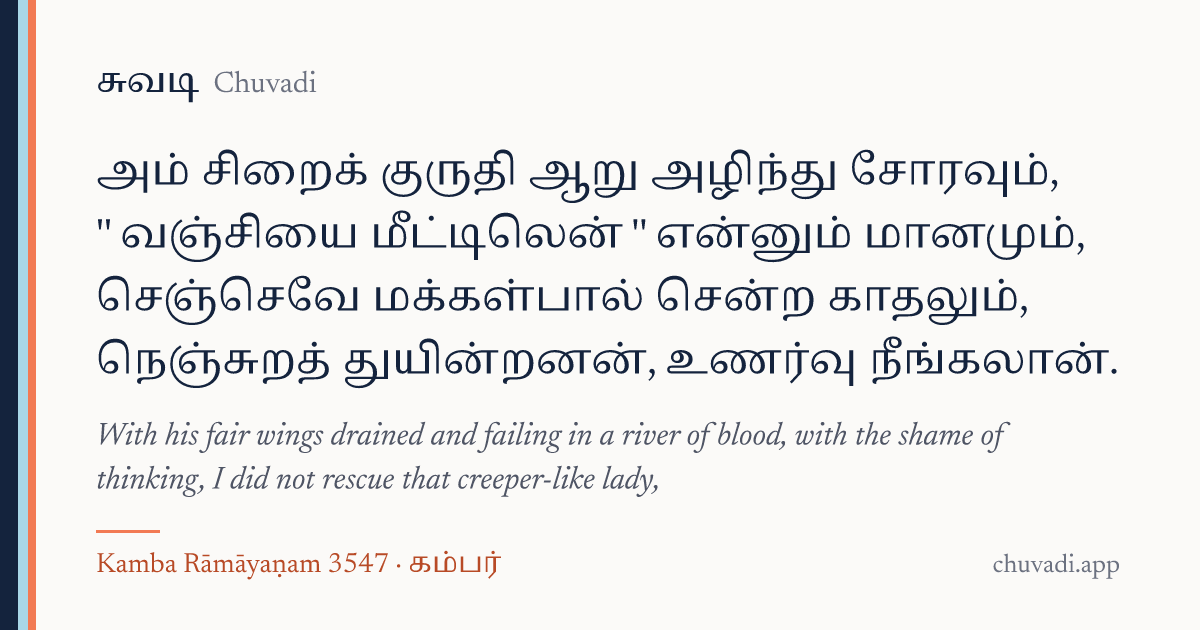
அம்சிறை - தன் அழகிய சிறகுகள்; குருதி ஆறு அழிந்து சோரவும் - குருதி யாற்றுப் பெருக்கத்தால் கெட்டுச் சோர்வடைய; வஞ்சியை மீட்டிலென் - வஞ்சிக் கொடி போன்ற (சீதையை) மீட்டேன் இல்லையே; என்னும் மானமும் - என்று (மனதில்) எண்ணிய மான உணர்வும்; செஞ்செவே மக்கள்பால் சென்ற காதலும் - நேராகத் (தன்) மக்களின் மேல் சென்ற அன்பு உணர்ச்சியும்; நெஞ்சுற - (தன்) மனத்தில் நிறைந்து நிற்க; உணர்வு நீங்கலான் - அறிவு அழியாதவனாகிய (சடாயு); துயின்றனன் - மயங்கி உறங்கினான்.
வாளால் வெட்டப்பட்ட சிறகுகளில் இருந்து பெருகிய குருதி இழப்பால் ஏற்பட்ட தளர்ச்சியும், சீதையை மீட்க முடியவில்லையே என்ற மான உணர்ச்சியும் இராமலக்குவர்களிடம் சென்ற காதல் உணர்ச்சியும் தன் மனத்தில் நிறைந்திருக்கச் சடாயு தன் உணர்வு நீங்காமல் மயக்கம் உற்றான். செஞ்செவே - நேராக. வஞ்சி - உவமையாகுபெயர்.
ஆங்கிலம் · English translationAI
Translation
- With his fair wings drained and failing in a river of blood,
- with the shame of thinking, I did not rescue that creeper-like lady,
- and with the love that went straight out to his sons,
- all filling his heart, he sank into sleep, yet his awareness did not leave him.
What the poem says
Caṭāyu grows faint from the river of blood flowing from his severed wings. His heart is full of shame that he could not rescue Cītai, slender as a vañci creeper, and of love for Irāmaṉ and Ilakkuvaṉ, whom he thinks of as his sons. He sinks into a swoon, but his awareness never quite leaves him, for he must stay alive to tell them what happened.