



கம்பராமாயணம் 3575 · ஆரணிய 8.173
பாடல் · The poem
Tap a word to see its gloss in the commentary and where else it occurs.
பாட வேறுபாடு · Project Madurai reads
பொருள் · Meaning in Tamil
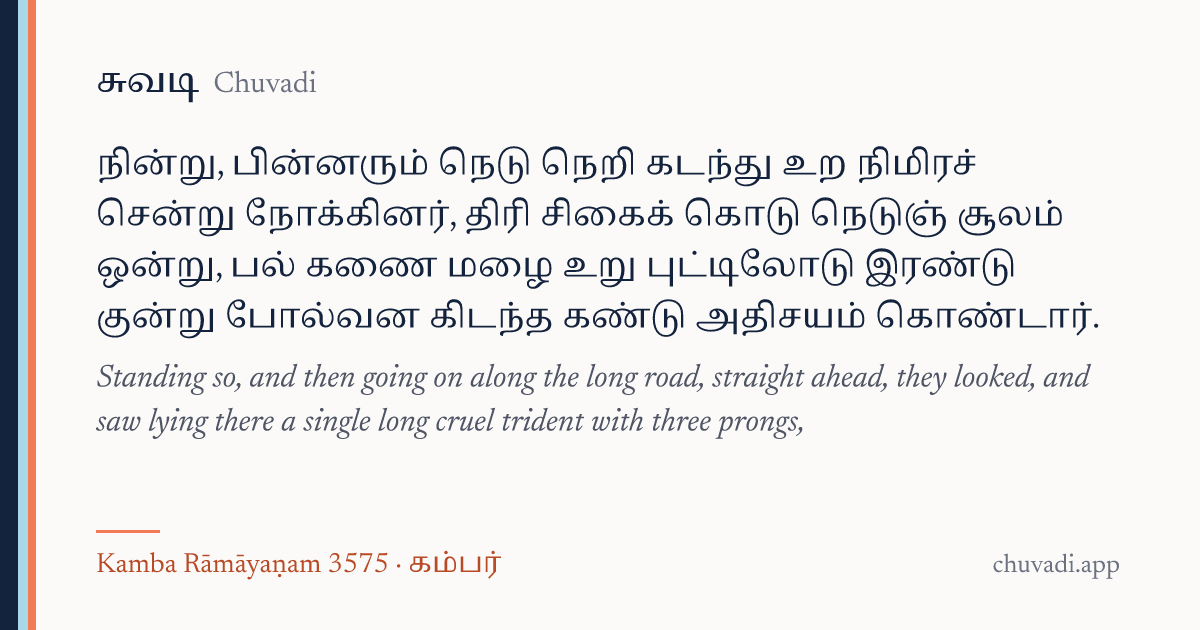
நின்று - (அவ்வாறு எண்ணிக் கொண்டு) நின்று; பின்னரும் நெடுநெறி கடந்து - (அதற்குப்) பின்பு நீண்ட வழியைக் கடந்து; நிமிர உறச் சென்று - நேராக (தெற்கு திசையில்) நீண்ட தூரம் சென்று; திரி சிகைக் கொடு நெடுஞ்சூலம் ஒன்று - மூன்று தலையை உடைய கொடுமையான பெரிய சூலம் ஒன்றினையும்; பல்கணை மழை உறுபுட்டிலோடு இரண்டு - பல அம்புகளின் தொகுதி நிறைந்துள்ள அம்பறாத்தூணியாகிய இரண்டினையும்; குன்று போல்வன கிடந்த கண்டு - மலைகள் போல் கிடந்தவற்றைக் கண்டு; அதிசயம் கொண்டார் நோக்கினர் - வியப்புக் கொண்டவர்களாய்ப் பார்த்தனர்.
நீண்ட தூரம் தெற்கே நேராகச் சென்று முத்தலைச் சூலம், அம்பு அறாத் தூணி ஆகியவை விழுந்து கிடந்ததைக் கண்டு வியப்போடு நோக்கி நின்றனர். சிகை - தலை, உச்சி. மழை - தொகுதி. அந்தாதித் தொடை காண்க.
ஆங்கிலம் · English translationAI
Translation
- Standing so, and then going on along the long road, straight ahead,
- they looked, and saw lying there a single long cruel trident with three prongs,
- and two quivers holding a rain of many arrows,
- like hills, and they were filled with wonder.
What the poem says
After pausing, the brothers press straight on southward and find more debris of the battle: Irāvaṇaṉ's great three-pronged trident, and two quivers crammed with arrows, lying on the ground like hills. They stare in astonishment. The verse opens with the word on which the previous one ended.