



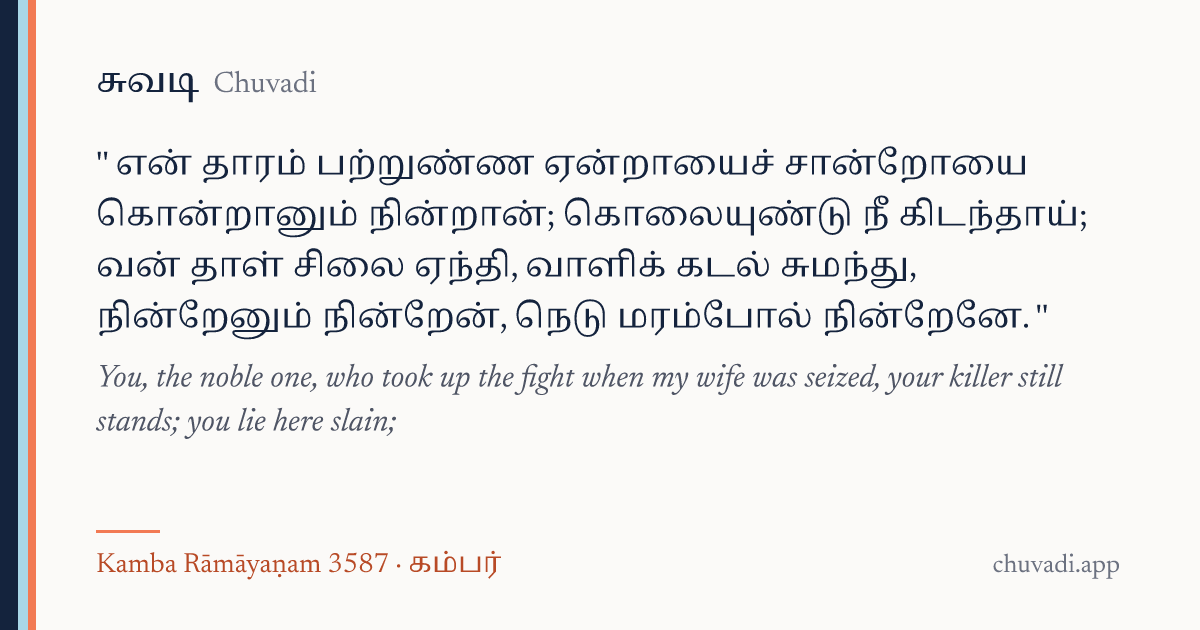
கம்பராமாயணம் 3587 · ஆரணிய 8.185
பாடல் · The poem
Tap a word to see its gloss in the commentary and where else it occurs.
பொருள் · Meaning in Tamil
என் தாரம் பற்றுண்ண - என் மனைவி (என்னால் பாதுகாக்கப் படாது) மாற்றானால் பற்றப்பட; ஏன்றாயை - (அவளை மீட்பதற்காக) எதிர்த்துப் போரிட்டவன் ஆகிய; சான்றோயை - சான்றோன் ஆகிய உன்னை; கொன்றானும் நின்றான் - கொன்றவனாகிய பகைவனும் உயிரோடு நின்றான்; நீ கொலையுண்டு கிடந்தாய் - நீயோ கொலைப்பட்டுக் கிடக்கிறாய்; வன்தாள் சிலை ஏந்தி - வலிமையான அடிப்பகுதியை உடைய வில்லினைக் (கையில்) ஏந்தி; வாளிக் கடல் சுமந்து - அம்புகளின் தொகுதியைச் சுமந்து கொண்டு; நின்றேனும் நின்றேன் - நின்றவனாகிய நானும் நின்றேன்; நெடுமரம் போல் நின்றேனே - ஓங்கி வளர்ந்த மரம் போல் நின்றேன் என்றவாறு.
'கொலையுண்டு நீ கிடந்தாய்' என்ற வரியில் சடாயுவின் இடம் நன்றி உணர்வும், மதிப்புணர்வும் நெடுமரம் போல் நின்றேன் என்ற இடத்து நாணமும், பெரு வெறுப்பும் வெளிப்படுமாறு இப்பாடல் அமைந்துள்ளது என்பர். வாளிக்கடல் - அம்புகளின் தொகுதி; கடலளவு கணைகள் இருந்தும் அவை பலனற்று வெறுஞ்சுமையாயின என்று வருந்துகிறான் இராமன்.
ஆங்கிலம் · English translationAI
Translation
- You, the noble one, who took up the fight when my wife was seized,
- your killer still stands; you lie here slain;
- and I, holding my strong-limbed bow, bearing a sea of arrows,
- I too stand, stand like a tall tree.
What the poem says
Irāmaṉ contrasts the two of them. Caṭāyu, a true noble, took on the fight when Irāmaṉ's wife was seized, and now lies dead, while his killer is still alive. Irāmaṉ, with his mighty bow and a whole sea of arrows, merely stands there like a tall, useless tree.
His gratitude and respect for Caṭāyu come through, along with his own shame and self-disgust; all those arrows have been nothing but a burden to carry.