



கம்பராமாயணம் 3588 · ஆரணிய 8.186
பாடல் · The poem
Tap a word to see its gloss in the commentary and where else it occurs.
பாட வேறுபாடு · Project Madurai reads
பொருள் · Meaning in Tamil
இனி என்போல் சொல் உடையார் உளரோ - இனிமேல் என்னைப் போல் புகழ் படைத்தவர் உலகத்தில் உளரோ?; இறகு உடையாய் - (பெரிய) இறகுகளை உடையவனே; எண் இலாப் பல் உடையாய் - எண்ண முடியாத (வலிமை படைத்த) அலகு உடையவனே; தொல் வினையேன் இல் உடையாள் காண - பழந் தீவினை உடைய என் மனைவி காண; உனைப் படை உடையான் கொன்று அகல - உன்னைப் படைக்கலம் ஏந்திய பகைவன் கொன்று விட்டுச் செல்ல; வில் உடையேன் நின்றேன் - வில்லை ஏந்திய நான் (எதுவும் செய்யாது) நின்றேன்; விறல் உடையேன் அல்லேனோ - (அவ்வாறு நின்ற நான்) வீரமுடையவனல்லவா?
'என் மனைவி காண, உதவ வந்த உன்னைப் படையுடைப் பகைவன் கொன்று அகல, வில்லேந்திய நான் எதுவும் செய்ய இயலாமல் வீணாக நின்றேனே! என் வீரம் இருந்தவாறு என்னே' என்று தவித்ததைச் சொல்வது இப்பாடற் கருத்து. சொல் - புகழ்ச் சொல், பழிச் சொல் எனலுமாம்.
ஆங்கிலம் · English translationAI
Translation
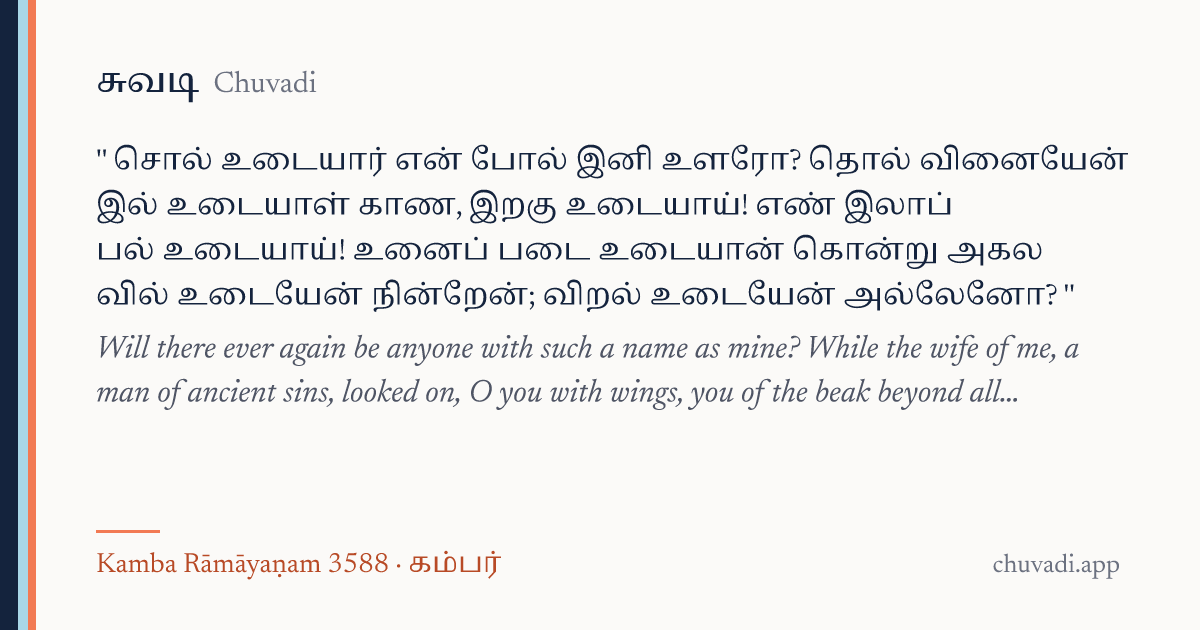
- Will there ever again be anyone with such a name as mine? While the wife
- of me, a man of ancient sins, looked on, O you with wings, you of the beak beyond all reckoning,
- the one who bore weapons killed you and went off,
- and I, the one who bears a bow, stood by; am I not a man of valour?
What the poem says
Irāmaṉ mocks himself bitterly. Will there ever again be anyone with such a reputation as his? Before his wife's very eyes, an armed enemy killed Caṭāyu, the great-winged bird of the mighty beak, and got away, while Irāmaṉ, the famous archer, did nothing. What fine valour, he says. The name in the first line can mean fame or infamy, and the irony depends on both.