



கம்பராமாயணம் 3613 · ஆரணிய 8.211
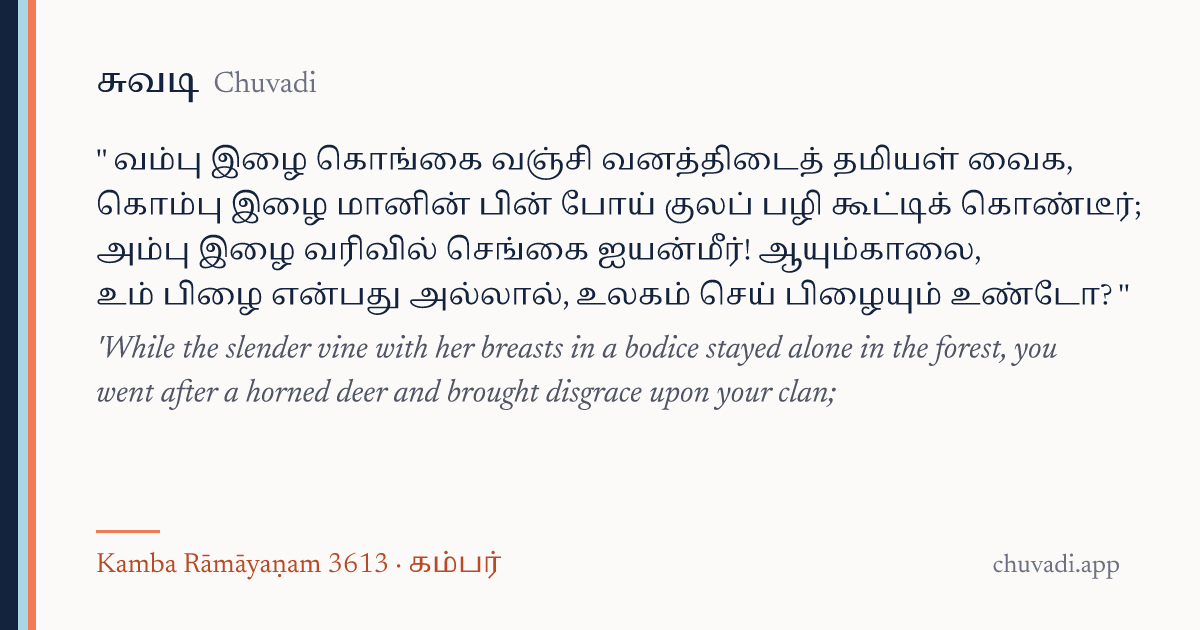
பாடல் · The poem
Tap a word to see its gloss in the commentary and where else it occurs.
பொருள் · Meaning in Tamil
அம்பு இழை - அம்பினைத் தொடுக்கின்ற; வரிவில் செங்கை - கட்டமைந்த வில்லினை ஏந்திய சிவந்த கைகளை உடைய; ஐயன்மீர் - மக்களே!; வம்பு இழை கொங்கை - கச்சு அணிந்த முலைகளை உடைய, வஞ்சி - வஞ்சிக்கொடி போன்ற சீதை, வனத்திடை - காட்டில், தமியள் வைக - தனித்தவளாய்த் தங்கி இருக்க; கொம்பு இழை மானின் - கொம்பு பொருந்திய (மாயப்பொன் மானின்; பின் போய் - பின்னால் போய்; குலப்பழி கூட்டிக் கொண்டீர் - (சீதையை இழந்து அதனால் உங்கள் குலத்துக்குப் பெரும் பழியை உண்டாக்கிக் கொண்டீர்கள்; ஆயும் காலை - ஆராய்ந்து பார்க்கும் இடத்து; உம் பிழை என்பது அல்லால் - (அச்செயல்) உங்களது குற்றம் என்பது அல்லால்; உலகம் செய் பிழையும் உண்டோ - (இதில்) உலகத்தார் செய்த குற்றம் ஏதாவது உள்ளதா?
நீங்கள் வஞ்சியை வனத்திடைத் தமியள் வைக விட்டு மானின் பின் போய்ச் செய்த செயல் உங்கள் குற்றமேயல்லாமல் உலகம் செய் பிழையன்று என்று சடாயு கூறினான். குற்றமும் பழியும் உங்கள்பால் இருக்கப் புறத்தே பிறவற்றை பிறரையும் சினப்பது ஏன் என்பது சடாயு குறிப்பு. வம்பு - கச்சு. வஞ்சி - உவமை ஆகுபெயர். குலப்பழி - நான்காம் வேற்றுமைத் தொகை. உலகம் - இடவாகுபெயர்.
ஆங்கிலம் · English translationAI
Translation
- 'While the slender vine with her breasts in a bodice stayed alone in the forest,
- you went after a horned deer and brought disgrace upon your clan;
- O sirs, whose red hands hold the banded bow that fits the arrow, if you look into it,
- the fault is your own; is there any fault the world has done?'
What the poem says
Caṭāyu speaks frankly to both brothers. They left Cītai, slender as a creeper, alone in the forest and chased after a deer, and so brought shame on their line.
Looked at honestly, the fault is theirs, not the world's. Why, then, should Irāmaṉ rage at others when the blame lies close to home? It is a bold rebuke from an old friend of the family.