



கம்பராமாயணம் 3619 · ஆரணிய 8.217
பாடல் · The poem
Tap a word to see its gloss in the commentary and where else it occurs.
பொருள் · Meaning in Tamil
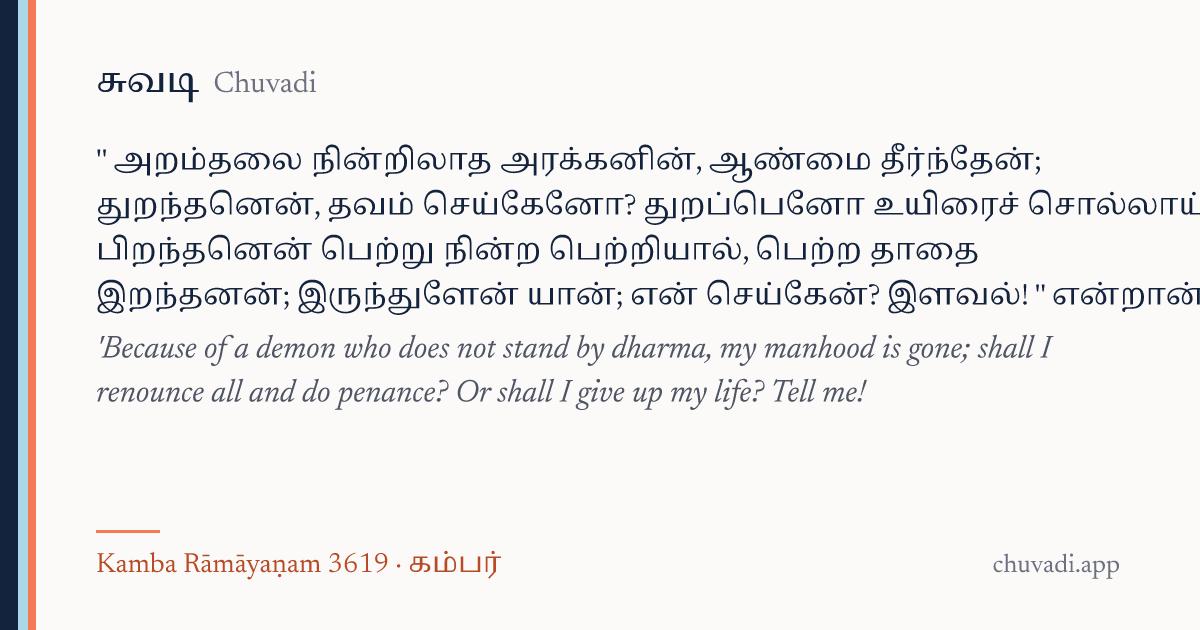
இளவல் - இளைய தம்பியே!; அறம் தலை நின்றிலாத அரக்கனின் - அறவழியில் நிலைத்து நிற்றல் இல்லாத அரக்கனால்; ஆண்மை தீர்ந்தேன் - ஆண்மையை இழந்தவனாகிய (யான்); துறந்தனென் தவம் செய்கேனோ - முற்றும் துறந்தவனாய்த் தவம் செய்வேனோ?; உயிரை துறப்பெனோ - உயிரை விட்டு விடுவேனோ?; சொல்லாய் - (இரண்டில் தக்கது எது என நீ) சொல்வாய்; பெற்று நின்ற பெற்றியால் - (என்னை மகனாகப்) பெற்று நின்ற தன்மையால், பெற்ற தாதை இறந்தனன் - (என்னைப்) பெற்ற தயரதனும் (ஆரண்யத்தில் பெற்ற தந்தையாகிய சடாயுவும்) இறந்து போனான்; பிறந்தனென் யான் இருந்துளேன் - (மகனாகப்) பிறந்தவனாகிய நான் (இன்னும் உயிர் தாங்கி) இருக்கிறேன்; என் செய்கேன் - எதைச் செய்யக் கடவேன்; என்றான் - என்று இராமன் கூறினான்.
அறந்தலை நின்றிலாத அரக்கனின் வஞ்சனையால் பழியைப் பெற்று, பெற்ற தந்தையாகிய தயரதனையும், உற்ற தந்தையாகிய சடாயுவையும் இழந்து, மகனாகிய நான் யாது செய்வது என்று தெரியாமல் தடுமாறி நிற்கிறேன் என்றவாறு. நின்றிலாத - எதிர்மறைப் பெயரெச்சம். தீர்ந்தேன், துறந்தனென் - முற்றெச்சங்கள்.
ஆங்கிலம் · English translationAI
Translation
- 'Because of a demon who does not stand by dharma, my manhood is gone;
- shall I renounce all and do penance? Or shall I give up my life? Tell me!
- I was born; and by the bond of having begotten me, the father who begot me
- has died, and I am still alive; what am I to do, younger brother?' he said.
What the poem says
After the death, Irāmaṉ collapses into despair and turns to Ilakkuvaṉ. A demon who knows no dharma has robbed him of his honour. Should he become an ascetic, or simply die?
He has now lost two fathers: Tacarataṉ, who begot him and died of grief at his exile, and Caṭāyu, a father to him in the forest, who died for his sake. And he, the son, lives on. He no longer knows what to do.