



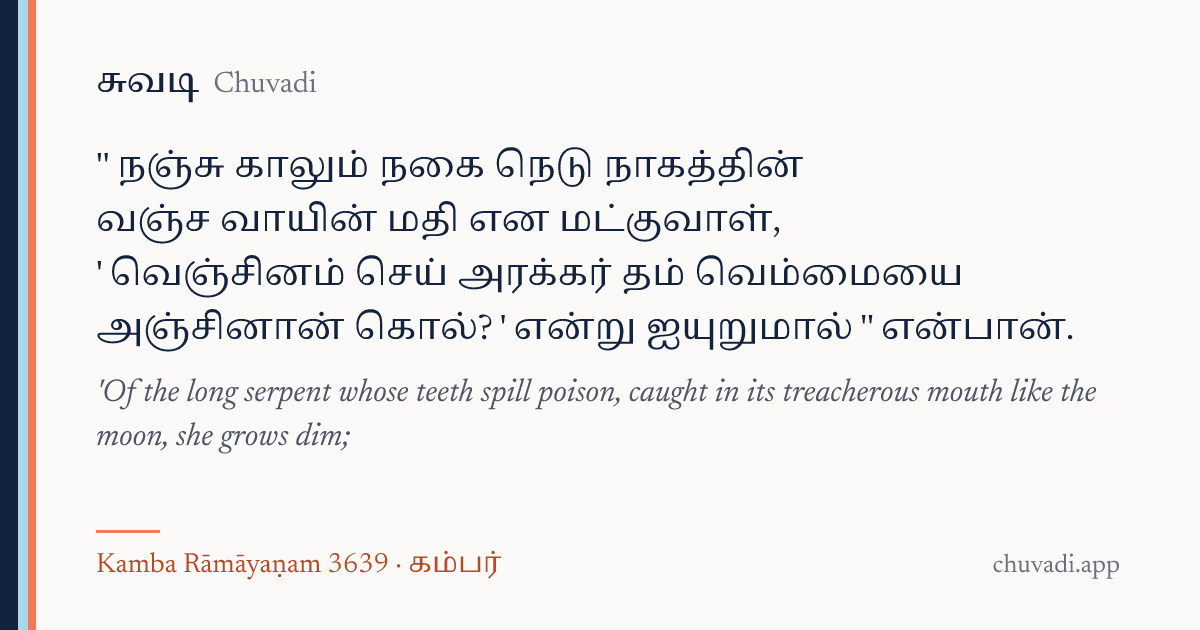
கம்பராமாயணம் 3639 · ஆரணிய 9.12
பாடல் · The poem
Tap a word to see its gloss in the commentary and where else it occurs.
பொருள் · Meaning in Tamil
நஞ்சு காலும் நகை நெடு நாகத்தின் - நஞ்சினை வெளிப்படுத்துகிற பற்களை உடைய நீண்ட (இராகு என்னும்) பாம்பினது; வஞ்ச வாயின் மதி என மட்குவாள் - கொடிய வாயின் கண் பட்ட நிலவு போல் ஒளி மழுங்கியவளான (சீதை); "வெஞ்சினம் செய் அரக்கர் தம் - கொடிய சினத்தைச் செய்கிற அரக்கர்களுடைய; வெம்மையை அஞ்சினான் கொல் - கொடுமையான (வலிமைக்கு) அஞ்சினான், (தன்னை மீட்க வராமையால்) போலும்"; என்று ஐயுறும் என்பான் - என்று ஐயப்படுவாள் என எண்ணினான்.
நாகத்தின் வாய்ப்பட்ட மதி தன் ஒளி குன்றுதல் போல் இராவணன் வயப்பட்ட சீதை ஒளி குன்றினாள் என்றபடி. நாகத்தின் வஞ்ச வாயின் பட்ட மதி இராவணன் கையகப்பட்ட சீதைக்கு உவமை. நாகம் - இராவணன், மதி - சீதை. காலுதல் - வெளிப்படுத்தல், உமிழ்தல். நகை - பல். மட்குவாள் - ஒளி மங்கிக் குறைவாள். கொல் - ஐயப்பொருள் தருவதோர் இடைச் சொல், ஆல் - அசை.
ஆங்கிலம் · English translationAI
Translation
- 'Of the long serpent whose teeth spill poison,
- caught in its treacherous mouth like the moon, she grows dim;
- "Was he afraid of the cruelty
- of the demons who rage so fiercely?" she must be wondering,' he says.
What the poem says
Irāmaṉ imagines Cītai in Irāvaṇaṉ's grip, losing her radiance like the moon swallowed in an eclipse by the serpent Rāhu, whose fangs drip venom. The serpent is Irāvaṇaṉ; the moon is Cītai.
His fear is that, because he has not yet come to save her, she will doubt him and suspect that he was afraid of the fierce demons.