



கம்பராமாயணம் 3642 · ஆரணிய 9.15
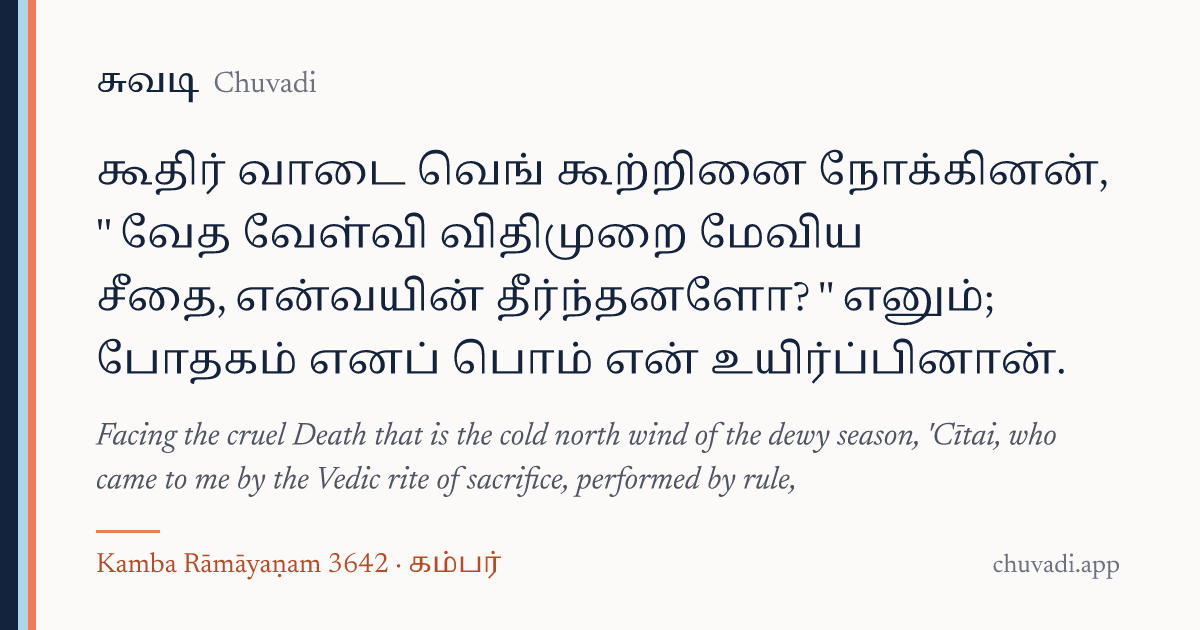
பாடல் · The poem
Tap a word to see its gloss in the commentary and where else it occurs.
பொருள் · Meaning in Tamil
போதகம் எனப் பொம் என் உயிர்ப்பினான் - யானைக் கன்று போலப் பொம் என்ற ஒலியுடன் பெருமூச்சு விடுபவனாகிய (இராமன்; கூதிர் வாடை வெங் கூற்றினை நோக்கினன் - கூதிர் கால வாடைக் காற்றாகிய கொடுமையான யமனை நோக்கிய காரணத்தால்; 'வேத விதிமுறை வேள்வி மேவிய - வேதங்களில் கூறப்பட்டுள்ள விதிகளின் முறைப்படி (செய்த) மணச் சடங்கினால் (யான் மணந்து பெற்ற; சீதை என்வயின் தீர்ந்தனளோ - சீதை என்னிடத்தில் இருந்து நீங்கி விட்டாளோ; எனும் - என்பான்.
சீதையின் பிரிவினைக் கூதிர்க் கால வாடைக் காற்று உணர்த்த உணர்ந்த இராமன். அறிவுத் தடுமாற்றத்தால் 'சீதை என்னை விட்டு நீங்கி விட்டாளோ என்றான் - என்பதாம். வாடை - வடக்கில் இருந்து வீசும் காற்று. வேள்வி - இங்கே திருமணச் சடங்கு, போதகம் - யானைக் கன்று. பொம் - ஒலிக்குறிப்பு. வாடை வெங் கூற்று - உருவகம். நோக்கினன் - முற்றெச்சம்.
ஆங்கிலம் · English translationAI
Translation
- Facing the cruel Death that is the cold north wind of the dewy season,
- 'Cītai, who came to me by the Vedic rite of sacrifice, performed by rule,
- has she gone away from me?' he says,
- sighing with a heavy 'pom' like a young elephant.
What the poem says
The cold north wind of the dewy season, which in Tamil love poetry torments lovers who are apart, strikes Irāmaṉ like Death itself. It makes him feel Cītai's absence sharply.
In confusion he asks whether Cītai, his wife joined to him by the Vedic marriage rite, could really have left him. His sighs burst out with a sound like the trumpeting breath of a young elephant.