



கம்பராமாயணம் 3644 · ஆரணிய 9.17
பாடல் · The poem
Tap a word to see its gloss in the commentary and where else it occurs.
பொருள் · Meaning in Tamil
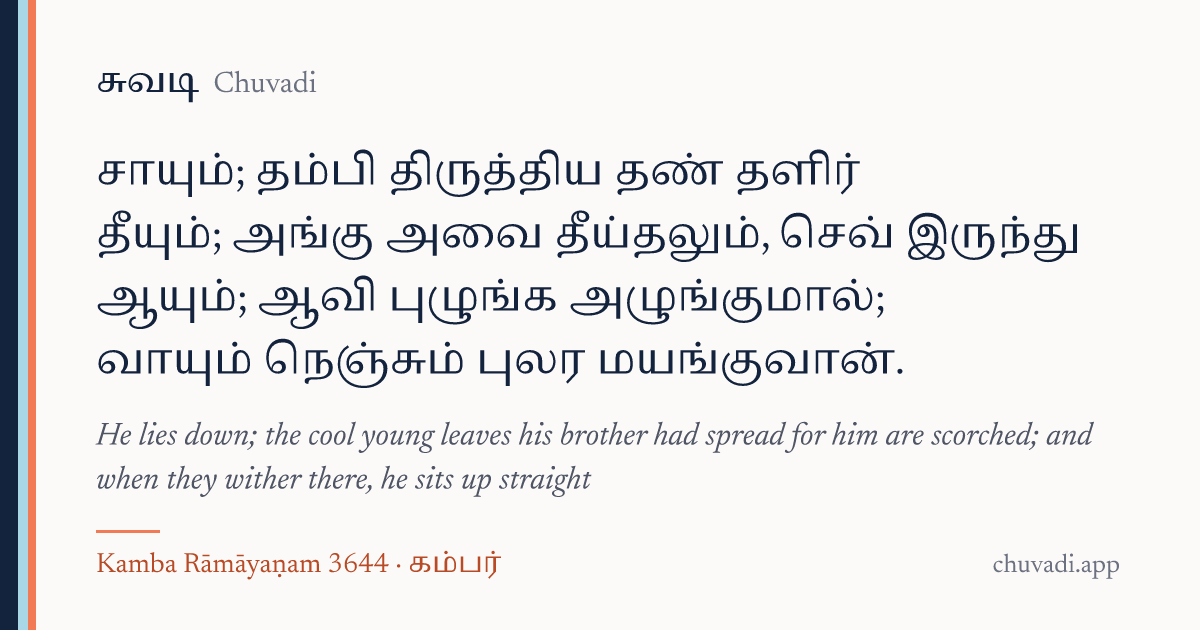
வாயும் நெஞ்சும் புலர மயங்குவான் - வாயும் மனமும் வறண்டு மயக்கமுற்றவனாகிய (இராமன்; தம்பி திருத்திய தண் தளிர் சாயும் - (தன்) தம்பியாகிய இலக்குவன் (தேடிப் படுப்பதற்காகத்) திருத்திய குளிர்ந்த தளிர்க் குவியலில் சாய்ந்து படுப்பான்; அங்கு அவை - அப்பொழுது அத்தளிர்கள்; தீயும் - (இராமனின் உடல் வெப்பத்தால்) தீய்ந்து போகும்; தீய்தலும் - (அவ்வாறு அப்படுக்கையாகிய தளிர்கள்) தீய்ந்த உடனே; செவ் இருந்து ஆயும் - சாயாது நேரே நிமிர்ந்து அமர்ந்து எண்ணுவான்; ஆவி புழுங்க அழுங்கும் - உயிர் உருகிப் புழுங்கச் சோர்வான்.
சீதையின் பிரிவால் வருந்தும் இராமனுக்கு இலக்குவன் தளிர்ப் படுக்கையை அமைக்க, அதில் படுத்தவுடன் அத்தளிர்கள் தீய்ந்து போனதால், அவன் நேரே நிமிர்ந்து அமர்ந்து பலவாறு எண்ணி உயிர் உருகப் புழுங்கிச் சோர்ந்தான் என்க. ஆல் - அசை.
ஆங்கிலம் · English translationAI
Translation
- He lies down; the cool young leaves his brother had spread for him
- are scorched; and when they wither there, he sits up straight
- and broods; his life smouldering, he droops in misery;
- his mouth and heart parched, he is lost in a daze.
What the poem says
Ilakkuvaṉ has made his brother a bed of cool, tender leaves, the traditional remedy for the fever of love-sickness. But when Irāmaṉ lies on it, the heat of his grief scorches the leaves.
So he sits up again, brooding, his spirit smouldering, his mouth dry and his mind confused. The withering of the leaf-bed is a stock image in Tamil poetry for the burning of separation.