



கம்பராமாயணம் 3647 · ஆரணிய 9.20
பாடல் · The poem
Tap a word to see its gloss in the commentary and where else it occurs.
பொருள் · Meaning in Tamil
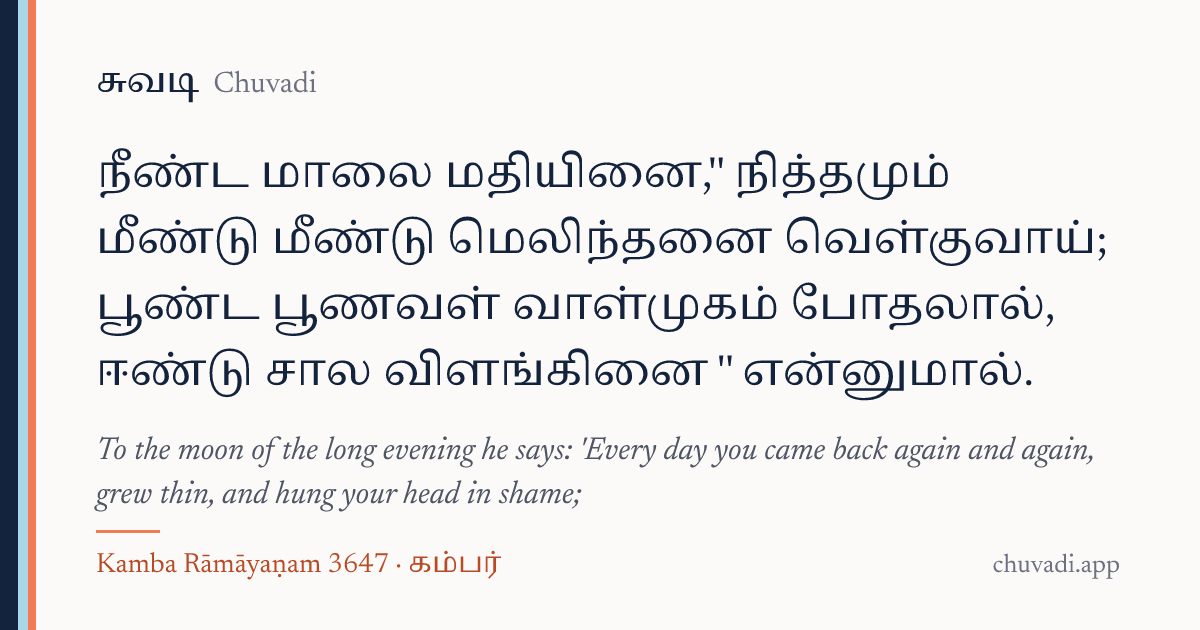
நீண்ட மாலை மதியினை - (பிரிந்தவர்க்கு) நீண்டதாகத் தோன்றி அமையும் மாலைக் காலத்து அம்புலியை (இராமன் பார்த்து); 'நித்தமும் மீண்டு மீண்டு மெலிந்தனை வெள்குவாய் - (சீதை என்னுடன் இருக்கும் போது) நாள்தோறும் (அவள் முகத்துக்கு ஒப்பு என்ற நினைவுடன் திரும்பத் திரும்ப வந்து (அவ்வாறு ஒப்பாக மாட்டாமையால்) உடல் மெலிந்தவனாகி வெட்கம் கொண்ட (நீ), பூண்ட பூணவள் வாள் முகம் போதலால் - அணிகலன்களை அணிந்த சீதையினது ஒளி பொருந்திய முகம் (என்னை விட்டு நீங்கிப்) போய்விட்டதால்; ஈண்டு - இப்பொழுது; சால விளங்கினை - மிக்க ஒளியுடன் விளங்குகிறாய்; என்னும் - என்று கூறினான்.
'சீதையின் முகம் எனக்கு அருகில் இருந்த காலத்தில், அதற்குத் தோற்று உடல் மெலிந்த நீ இப்போது சீதை என்னை விட்டுப் பிரிந்து விட்டதால் மிக்க ஒளியுடன் விளங்குகிறாய்' என்று இராமன் நிலவைப் பார்த்துக் கூறினான். நிலவுக் காட்சி கண்டு துன்புற்று நிலவைப் பழித்துக் கூறிய பகுதி இது. மெலிந்தனை - முற்றெச்சம். வாள்முகம் - பண்புத்தொகை. விளங்கினை - முன்னிலை ஒருமை வினைமுற்று. ஆல் - அசை.
ஆங்கிலம் · English translationAI
Translation
- To the moon of the long evening he says: 'Every day
- you came back again and again, grew thin, and hung your head in shame;
- but now that the bright face of her who wore the jewels is gone,
- here you shine out very brightly indeed.'
What the poem says
Irāmaṉ taunts the moon. While Cītai was with him, the moon came night after night to compete with her face, lost every time, and wasted away in shame; that is the poet's explanation of its waning.
Now that her face is gone, the moon shines boldly, with no rival left. The moonlight that should comfort only reminds him of what he has lost.