



கம்பராமாயணம் 3650 · ஆரணிய 9.23
பாடல் · The poem
Tap a word to see its gloss in the commentary and where else it occurs.
பொருள் · Meaning in Tamil
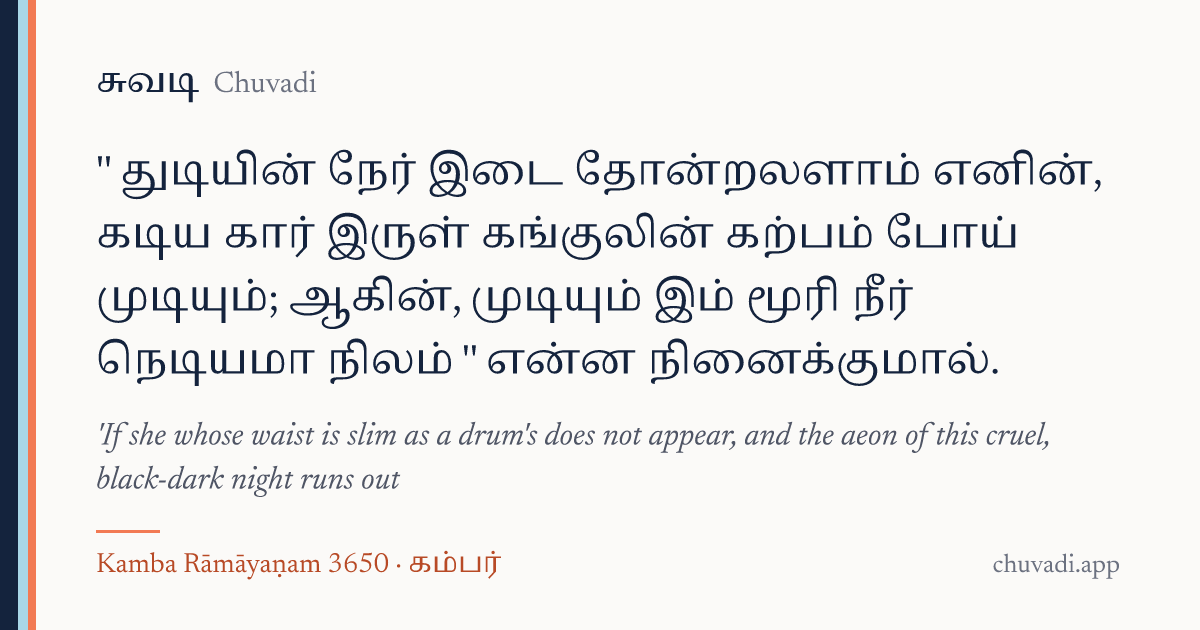
துடியின் நேர் இடை - உடுக்கையை ஒத்த இடையை உடைய சீதை; தோன்றலளாம் எனின் - (இரவு விடிவதற்குள்) என் முன் தோன்றாமல் போனாள் எனின்; கடிய கார் இருள் கங்குலின் - (அந்நிலையிலேயே இந்தக் கொடிய கரிய இருளை உடைய இரவாகிய, கற்பம் போய் முடியும் ஆகின் - நீண்ட காலம் முடிந்து (விடியல் வரும்) என்றால்; இம்மூரிநீர் நெடிய மாநிலம் - இந்த வலிய கடலால் சூழப்பட்ட மிகப் பெரிய உலகம்; முடியும் - (என் ஆற்றலால்) அழிந்து விடும்; என்ன நினைக்கும் - என்று (இராமன் எண்ணுவான். ஆல் - ஈற்றசை.
சீதை இந்த நீண்ட கங்குற் கற்பம் முடிவதற்குள் வராமல் போய் விடிவு வந்தால் இவ்வுலகத்தை அழித்து விடுவேன் என்று கூறி இராமன் சினம் கொண்டனன் என்க. துடி - உடுக்கை, கற்பம் - நீண்ட காலம், கற்பாந்த காலம் என்ப. மூரி - வலிமை. மூரி நீர் - கடல், நேர் - உவமை உருபு; நேர நேர் என வந்தது. மூரி நீர் - பண்புத் தொகை.
ஆங்கிலம் · English translationAI
Translation
- 'If she whose waist is slim as a drum's does not appear,
- and the aeon of this cruel, black-dark night runs out
- and ends, then this vast great earth girt by the mighty waters
- will end as well,' so he thinks.
What the poem says
Grief turns again into fury. Cītai's waist is compared to the hourglass-shaped hand drum, a standard image for a slender waist.
Irāmaṉ resolves that if she does not come back to him before this night, which feels as long as a cosmic aeon, comes to an end, he will destroy the whole ocean-bound earth with his power.