



கம்பராமாயணம் 3674 · ஆரணிய 9.47
பாடல் · The poem
Tap a word to see its gloss in the commentary and where else it occurs.
பாட வேறுபாடு · Project Madurai reads
பொருள் · Meaning in Tamil
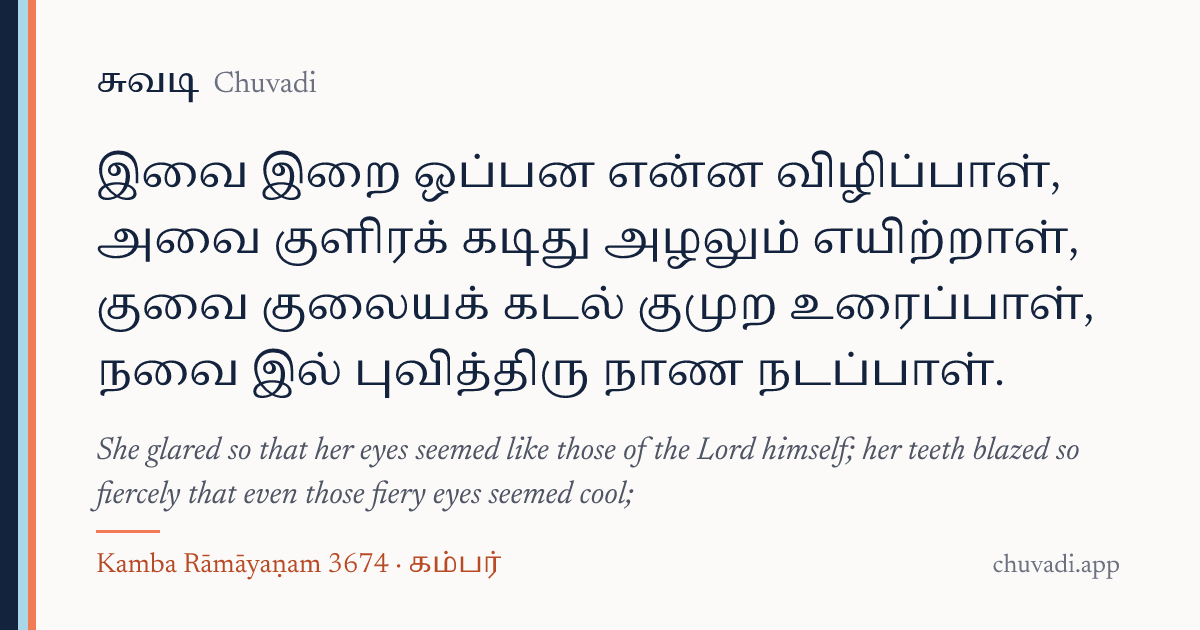
இவை - (அவளது) இக்கண்கள்; இறை ஒப்பன என்ன - சிவனின் கண்களை ஒப்பன என்று சொல்லுமாறு; விழிப்பாள் - (சினத்துடன்) விழித்துப் பார்ப்பவளும்; அவை குளிர - அக்கண்களில் இருந்து வெளிப்பட்ட சின நெருப்புக் குளிர்ந்து விட்டது என்று சொல்லும்படியாக; கடிது அழலும் எயிற்றாள் - மிகக் கொடுமையைக் காட்டும் பற்களை உடையவளும்; குவை குலைய - மலைகளும் தன் நிலை கெட்டு அழியும் படியும்; கடல் குமுற - கடல்கள் மோதிக் குமுறும் படியும், உரைப்பாள் - கடுமையாகப் பேசுபவளும்; நவை இல் புவித்திரு நாண நடப்பாள் - குற்றம் இல்லாத பூமகளாகிய செல்வத் தேவி வெட்கம் அடையும்படி நடப்பவளும்...... (தொடர்ச்சி அடுத்த பாடலில்.
சிவபிரானின் கண்களில் தீ வெளிப்படுதல் போல் விழித்து, அந்நெருப்பும் குளிர்ந்து விட்டது என்று எண்ணுமாறு பற்கடித்து வெப்பமெழுப்பி, மலை குலைய, கடல் அதிர முழங்கி, பூமகள் நாண அயோமுகி வந்தாள் என்க. இறை - சிவன், குவை - மலைக் கூட்டம், நவை - குற்றம். புவித்திரு - இரு பெயரொட்டுப் பண்புத்தொகை.
ஆங்கிலம் · English translationAI
Translation
- She glared so that her eyes seemed like those of the Lord himself;
- her teeth blazed so fiercely that even those fiery eyes seemed cool;
- she spoke so that the mountains crumbled and the seas roared;
- she walked so that the flawless goddess of the earth was put to shame.
What the poem says
More of Ayōmuki: her glaring eyes are like the fire-shooting eye of Civaṉ, yet her teeth blaze so hotly that even that fire seems cool by comparison.
Her voice makes mountains collapse and seas surge, and her heavy tread shames Bhūdevī, the gentle goddess of the earth, who must bear her weight.