



கம்பராமாயணம் 3679 · ஆரணிய 9.52
பாடல் · The poem
Tap a word to see its gloss in the commentary and where else it occurs.
பாட வேறுபாடு · Project Madurai reads
பொருள் · Meaning in Tamil
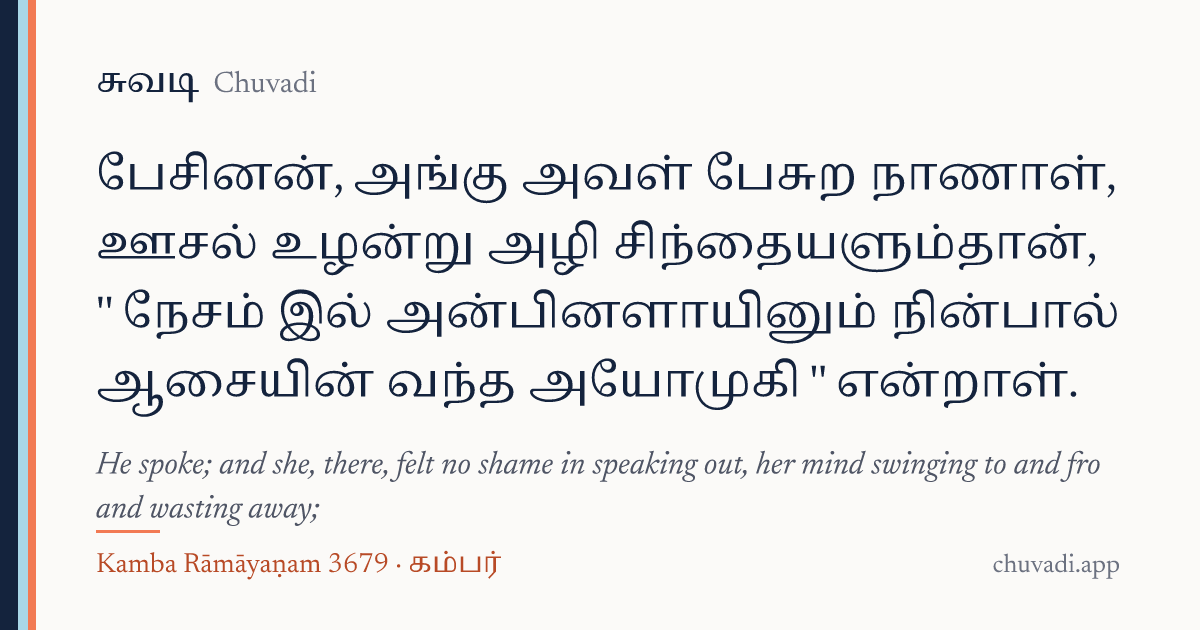
பேசினன் - (மேலே குறிப்பிட்டவாறு இலக்குவன் பேசினான்; அங்கு - அப்பொழுது; ஊசல் உழன்று அழி சிந்தையளும் தான் அவள் - ஊசலாடி வருந்தி அழிகின்ற மனத்தை உடையவளாகிய அயோமுகியும் தான்; பேசுற நாணாள் - தன் ஆசையை ஆண்மகனிடம் தானே எடுத்துச் சொல்ல நாணமடையாதவளாய்; நேசம் இல் அன்பினளாயினும் - பழைய உறவு இல்லாத அன்பு உடையவள் ஆயினும்; நின்பால் - நின்னிடம்; ஆசையின் வந்த அயோமுகி - ஆசையால் வந்த அயோமுகி என்ற பெயர் உடையவள்; என்றாள் - என்று கூறினாள்.
ஊசல் உழன்று அழி சிந்தையள் - இலக்குவன் தன்னை ஏற்பானோ மாட்டானோ என்று தடுமாறும் உள்ளம் கொண்டவள். பேசுற நாணாள் - தாமுறு காமத் தன்மை தாங்களே ஆடவனிடம் உரைக்க நாணாதவள். மூன்றாவது அடிக்கு வேறு பாடங்களும் உள; எனினும், நாம் கொண்ட பாடம் உட்பட எதற்கும் முற்றும் பொருந்துறப் பொருள் கொள்ள இயலவில்லை. ஏடெழுதியோர் பிழையோ, பொருள் கொள்ள நம்பால் உள்ள குறையோ - தெரியவில்லை. தான் - அசையாகவும் கொள்ளலாம்.
ஆங்கிலம் · English translationAI
Translation
- He spoke; and she, there, felt no shame in speaking out,
- her mind swinging to and fro and wasting away;
- 'Though my love has no long bond behind it,
- I am Ayōmuki, who has come to you out of desire,' she said.
What the poem says
Ayōmuki answers without the modesty expected of a woman in love: she declares her desire herself, though her mind swings back and forth, unsure whether he will accept her.
She gives her name and says she has come to him out of longing, even though they have no history together. The third line is obscure in the manuscripts; the meaning given here follows one possible reading.