



கம்பராமாயணம் 3694 · ஆரணிய 9.67
பாடல் · The poem
Tap a word to see its gloss in the commentary and where else it occurs.
பொருள் · Meaning in Tamil
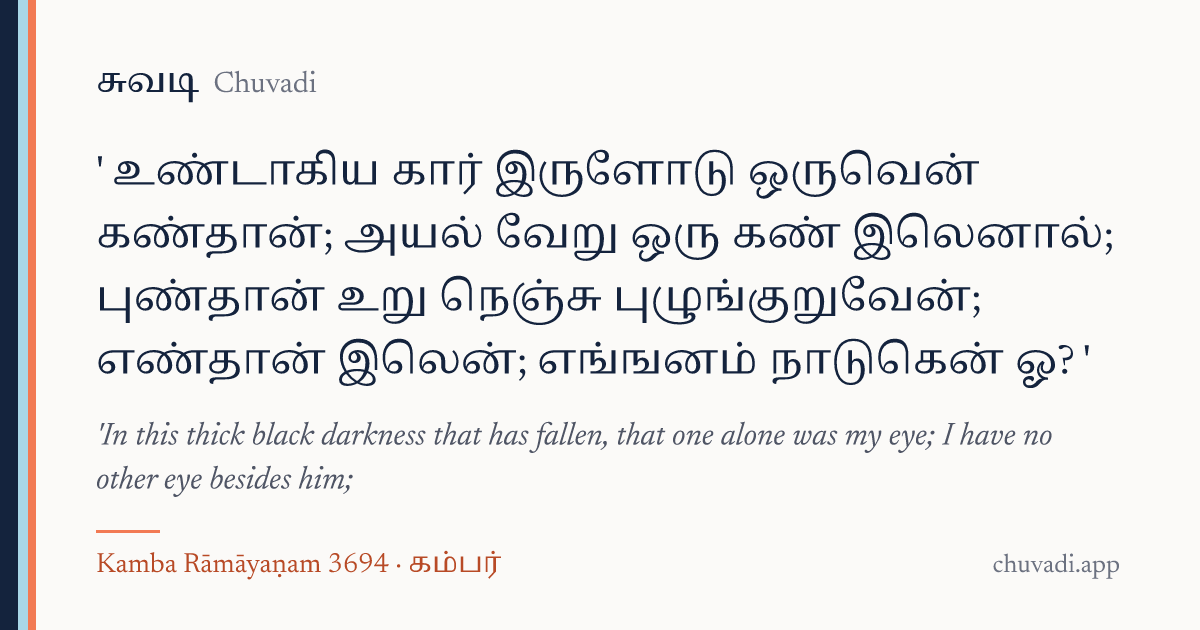
உண்டாகிய கார் இருளோடு - நிறைந்து உண்டாகிய கரிய இருளில்; ஒருவன் கண் தான் - என்னை விட்டுப் பிரிந்த ஒப்பற்றவனாகிய இலக்குவன், (எனக்குக்) கண்ணானவன்; அயல் வேறு ஒரு கண் இலெனால் - அவனைத் தவிர வேறு கண் ஒன்றும் எனக்கு இல்லை; புண் தான் உறு நெஞ்சு புழுங்குறுவென் - (முன்பு சீதையைப் பிரிந்ததால்) புண்மிகப்பட்ட நெஞ்சத்தில் (மீண்டும்) வருத்தம் அடைகிறேன்; எண் தான் இலென் - (எதுவும்) எண்ண முடியாது மனம் கலங்கி உள்ளேன்; எங்ஙனம் நாடுகெனோ - (அவனை எங்கு) எவ்வாறு தேடுவேனோ?
'இலக்குவனன்றிப் பிறிதொரு கண்ணிலாதவன் நான்; முன்பே புண்பட்ட நெஞ்சில் மீண்டும் புண்பட்டவன். அவனது பிரிவால் மனம் மிகக் கலங்கி உள்ள நான் அவனை எவ்விடத்து எவ்வாறு தேடுவேன்' என இராமன் கூறினான். எனக்குக் கண்ணாக இருந்தவன் பிரிந்ததால் கண்ணிழந்த நான் தேடுவது எங்ஙனம் என்று குறித்த நயம் காண்க. தான், ஆல் - அசைகள். ஓகாரம் எதிர்மறைப் பொருளில் வந்தது.
ஆங்கிலம் · English translationAI
Translation
- 'In this thick black darkness that has fallen, that one alone
- was my eye; I have no other eye besides him;
- with a heart already wounded, I burn again;
- I cannot think at all; how am I to search for him?'
What the poem says
Irāmaṉ calls Ilakkuvaṉ his only eye. In this pitch-black night, with his brother gone, he is effectively blind.
His heart, already wounded by losing Cītai, is hurt a second time, and he is too distraught to think. The irony is pointed: how can a man who has lost his eye go searching?