



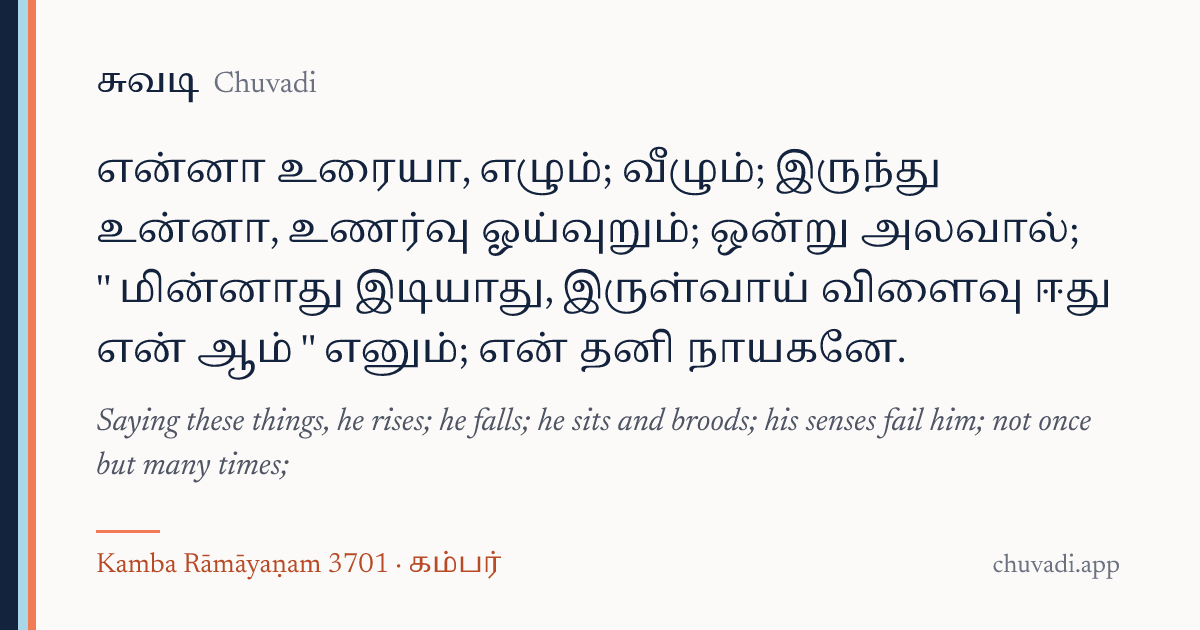
கம்பராமாயணம் 3701 · ஆரணிய 9.74
பாடல் · The poem
Tap a word to see its gloss in the commentary and where else it occurs.
பொருள் · Meaning in Tamil
என்தனிநாயகனே - என் ஒப்பில்லாத தலைவன் ஆகிய இராமன்; என்னா உரையா - என்று (பலவாறு) கூறிக்கொண்டு; எழும், வீழும் - எழுந்திருப்பான், (உடனே) கீழே விழுவான்; இருந்து உன்னா - அமர்ந்து எண்ணிப் பார்த்து; உணர்வு ஓய்வுறும் - அறிவு ஒடுங்கப் பெறுவான்; 'மின்னாது இடியாது - மின்னாமலும் இடியாமலும்; இருள்வாய் - (இந்த) இருட்டுக் காலத்தில்; விளைவு ஈது என் ஆம்' எனும் - விளைந்த செயலாகிய இது என்ன' என்பான்; ஒன்று அலவால் - (இவ்வாறு எண்ணி இராமன் பட்ட துன்பங்கள் ஒன்றல்ல பலவாம்.
இராமன் பலவற்றை எண்ணி வருந்தி எழுந்தும் உணர்வு ஒடுங்கப் பெற்றான். மழை வருவதற்கு அறிகுறியாக முன்னால் மின்னலும் இடியும் தோன்றுவது போலத் தம்பியைப் பிரிவதற்கு முன்பு எந்த அறிகுறியும் தோன்றவில்லையே என்று பலவாறு எண்ணித் துன்பப்பட்டான். உன்னுதல் - நினைத்தல். உரையா, உன்னா - செய்யா என்னும் வாய்பாட்டு உடன்பாட்டு வினையெச்சங்கள். ஆல் - அசை. இராமனின் துன்பத்தை விளக்கும் கவிக்கூற்று.
ஆங்கிலம் · English translationAI
Translation
- Saying these things, he rises; he falls; he sits
- and broods; his senses fail him; not once but many times;
- 'With no lightning and no thunder, here in the dark, this has come upon me:
- what can it be?' he says, my peerless Lord.
What the poem says
The poet steps in with tenderness, calling Irāmaṉ 'my peerless Lord'. Irāmaṉ stands up, collapses, sits and thinks, and loses consciousness again and again.
He is bewildered that this disaster struck without any warning, like a thunderbolt from a clear sky: a storm normally announces itself with lightning and thunder, but this came out of silent darkness.