



கம்பராமாயணம் 3713 · ஆரணிய 9.86
பாடல் · The poem
Tap a word to see its gloss in the commentary and where else it occurs.
பொருள் · Meaning in Tamil
அங்கு எய்தியது என்னை - அங்கே நடந்தது என்ன?, இயம்புவாய் என - (நீ) சொல்லுவாய் என்று (இராமன் கேட்க); அன்னவன் - அந்த இலக்குவன்; அஃது எலாம் அறியக் கூறலும் - அவை எல்லாவற்றையும் (தெளிவாகத் தெரிந்து கொள்ளுமாறு கூறிய உடன்; தன் அலாது ஒரு பொருள் தனக்கு மேல் இலான் - தன்னைத் தவிர வேறு ஒரு பொருளும் தனக்கு மேல் என்று கூற இல்லாதவனாகிய (இராமன்); இன்னலும் உவகையும் இரண்டும் எய்தினான் - துன்பம், மகிழ்ச்சி ஆகிய இரண்டையும் ஒருங்கே அடைந்தான்.
நடந்தவற்றையெல்லாம் இலக்குவன் கூறக் கேட்ட இராமன் துன்பமும் மகிழ்ச்சியும் ஒருங்கே அடைந்தான். தம்பிக்கு நேரிட்ட இடர்ப்பாடு துன்பத்துக்கும் அவன் வெற்றியொடு மீண்டமை இன்பத்துக்கும் காரணமாம். தன் அலாது ஒரு பொருள் தனக்கு மேல் இலான் இன்னலும் மகிழ்ச்சியும் அடைந்ததாகக் கூறுவது எற்றுக்கு எனின், பரம்பொருள் மானுட அவதார பாவனைக்கு ஏற்ப இவ்வாறு கூறப்பட்டது. அஃது எலாம் - ஒருமை பன்மை மயக்கம். இலான் - வினையாலணையும் பெயர்.
ஆங்கிலம் · English translationAI
Translation
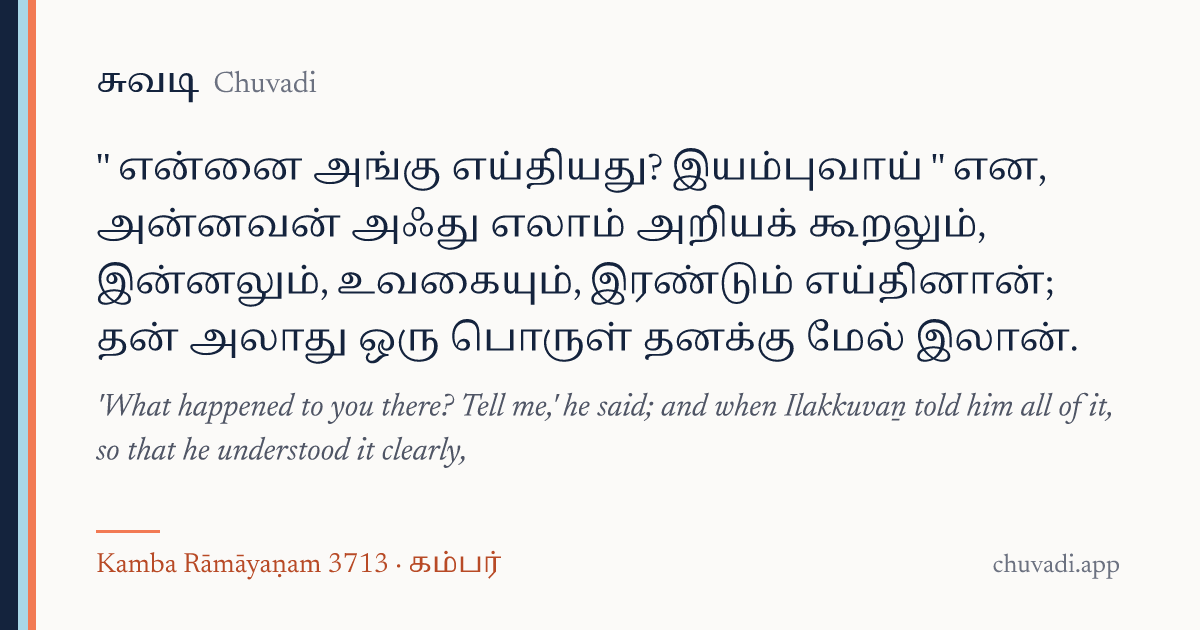
- 'What happened to you there? Tell me,' he said;
- and when Ilakkuvaṉ told him all of it, so that he understood it clearly,
- he felt both sorrow and joy together,
- he above whom there is nothing at all but himself.
What the poem says
Irāmaṉ asks what happened, and Ilakkuvaṉ tells him the whole story of Ayōmuki.
Irāmaṉ feels grief at the danger his brother faced and joy that he has come back victorious. The poet notes the paradox: the Supreme Being, with nothing above him, feels human sorrow and joy because he has taken on a human life.