



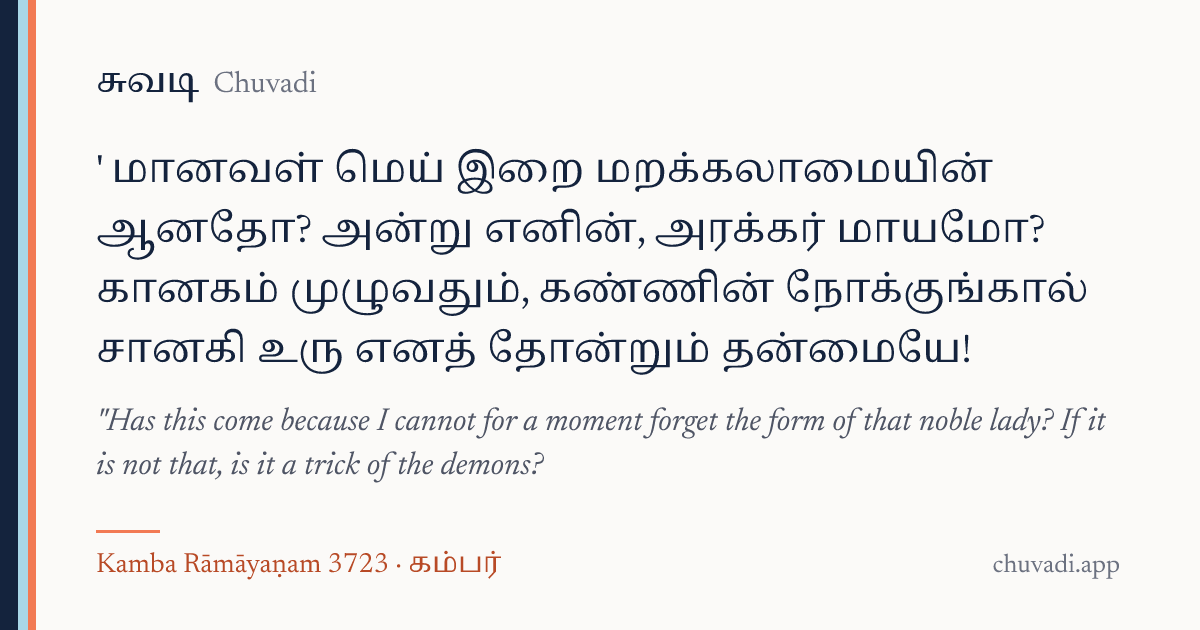
கம்பராமாயணம் 3723 · ஆரணிய 9.96
பாடல் · The poem
Tap a word to see its gloss in the commentary and where else it occurs.
பொருள் · Meaning in Tamil
கண்ணின் நோக்குங்கால் - கண்களால் பார்க்கும் போது; கானகம் முழுவதும் - காடு முழுவதும்; சானகி உரு எனத் தோன்றும் தன்மையே - சீதையின் உருவமே என்னும்படி; மானவள் மெய் இறை மறக்கலாமையின் ஆனதோ - பெருமையுடைய சீதையது உருவத்தை (நான் ஒரு போதும் மறக்காமல் (தொடர்ந்து நினைப்பதால்) உண்டாயிற்றோ?; அன்று எனின் - (அது) அல்ல என்றால்; அரக்கர் மாயமோ - (இவ்வாறு தெரிவது) அரக்கர்கள் செய்த மாயச் செயலோ (என எண்ணி இராமன் வருந்தினான் என்க).
காடு முழுதும் சீதையின் உருவமாகவே இராமனுக்குத் தோன்றியது. ஒரு பொருளை ஆழ நினைத்தால் அப்பொருளே எங்கும் உருவெளியாகத் தோன்றும் என்பதாம். "நோக்கிய எல்லாம் அவையே போறல்" என்பது தொல்காப்பியர் (1043) சுட்டும் மெய்ப்பாடு. மானவள் - பெருமை உடையவள், இறை - சிறிது, சானகி - சனகனது மகள். உழுகின்ற கொழுமுனையில் உதிக்கின்ற கதிரொளி போல் தோன்றிய தொழுந்தகைய நன்னலத்துப் பெண்ணரசி என்க.
மானவள் - மான் + அவள் எனப் பிரித்து மான் போன்ற அவள் என்றும் பொருள் கொள்ளலாம் என்பர். வை. மு. கோ. தன்மையே - ஏகாரம் ஈற்றசை.
ஆங்கிலம் · English translationAI
Translation
- "Has this come because I cannot for a moment forget the form of that noble lady?
- If it is not that, is it a trick of the demons?
- The whole forest, when I look with my eyes,
- has this way of appearing as the form of Cāṉaki!"
What the poem says
Irāmaṉ, lying awake, sees Cītai everywhere: every part of the forest seems to take her shape. He wonders whether his ceaseless longing is making him see her, or whether the demons are deceiving him with illusions again.
The commentary links this to a state described in the old Tamil grammar Tolkāppiyam, where a lover sees the beloved in everything they look at. Cāṉaki means daughter of Caṉakaṉ, Cītai's father.