



கம்பராமாயணம் 3748 · ஆரணிய 10.20
பாடல் · The poem
Tap a word to see its gloss in the commentary and where else it occurs.
பொருள் · Meaning in Tamil
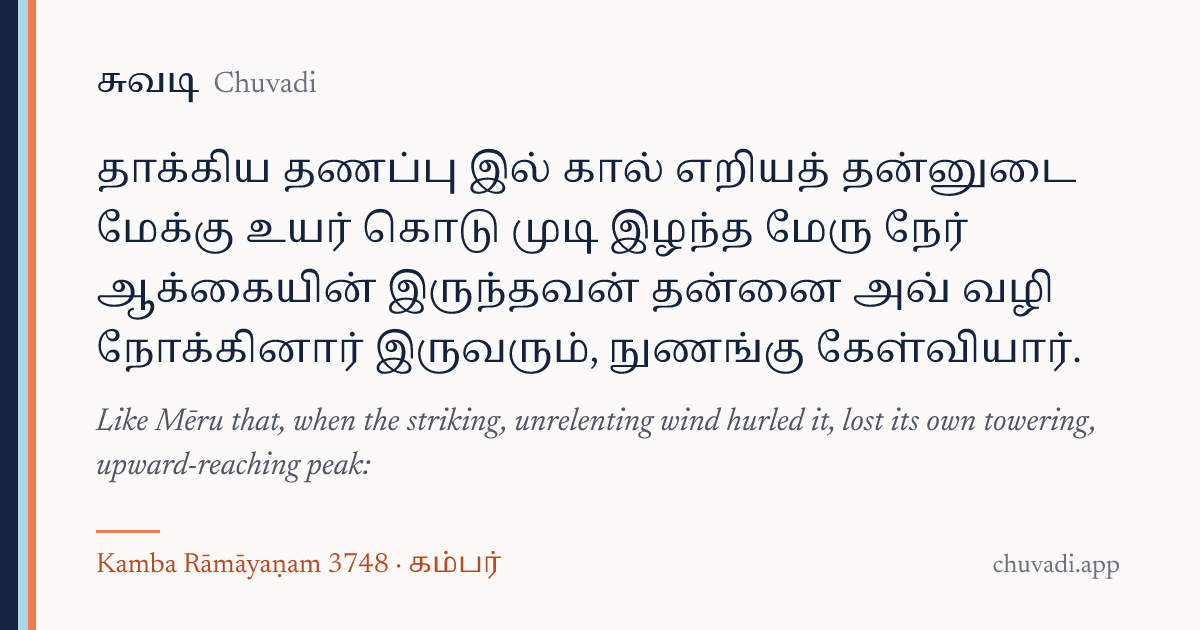
தாக்கிய தணப்பு இல் கால் எறிய - மோதியதும் தடங்கல் இல்லாததுமாகிய காற்றுச் சிதைத்தலால், மேக்கு உயர் தன்னுடைக் கொடு முடி இழந்த - மேல் நோக்கி உயர்ந்த தன்னுடைய சிகரத்தை இழந்த; மேரு நேர் - மேரு மலையைப் போன்ற, ஆக்கையின் இருந்தவன் தன்னை - உடம்போடு இருந்தவனாகிய கவந்தனை; அவ்வழி - அப்போது; நுணங்கு கேள்வியார் இருவரும் - நுட்பமான கேள்வியறிவுடைய இராமலக்குவர் இருவரும்; நோக்கினார் - கண்டனர்.
தாக்கிய கால், தணப்பு இல் கால் எனக் கூட்டிப் பொருள்கொள்க. கால்; காற்று. வசிட்ட முனிவரிடம் கரை பிறிது இல்லாஉவளரு மறையினொடு ஒழிவு அறு கலைகள் (303) கேட்டுப் பயின்றவராதலின் நுணங்கிய கேள்வியர் என்றார். வசிட்டரே குறித்தவண்ணம் விசுவாமித்திர முனிவரிடமிருந்து அளவு இல் விஞ்சைகள் (329) பெற்றவன் இராமன் என்பதும் நினையத்தக்கது. சிகரம் இழந்த மேரு, தலை என ஓர் உறுப்பு இல்லாத கவந்தனுக்கு உவமை. தலை இன்மையும் பேருருவும் பொதுத் தன்மைகள். ஆதிசேடனுக்கும் காற்றிறைவனுக்குமிடையே நடந்த போட்டியில் மேரு தன் சிகரத்தை இழந்ததொரு கதை.
ஆங்கிலம் · English translationAI
Translation
- Like Mēru that, when the striking, unrelenting wind hurled it, lost
- its own towering, upward-reaching peak:
- in such a body he sat, and at that place
- the two beheld him, they of subtle learning.
What the poem says
This concludes the long description of Kavantaṉ. His huge headless body resembles Mount Mēru after it lost its summit, a reference to a Purāṇic tale in which the wind god and the serpent Ātiśēṣa competed and the wind tore off the mountain's peak.
The brothers are called men of subtle learning: Irāmaṉ studied the Vedas and arts under Vacittaṉ and received rare knowledge from Vicuvāmittiraṉ.