



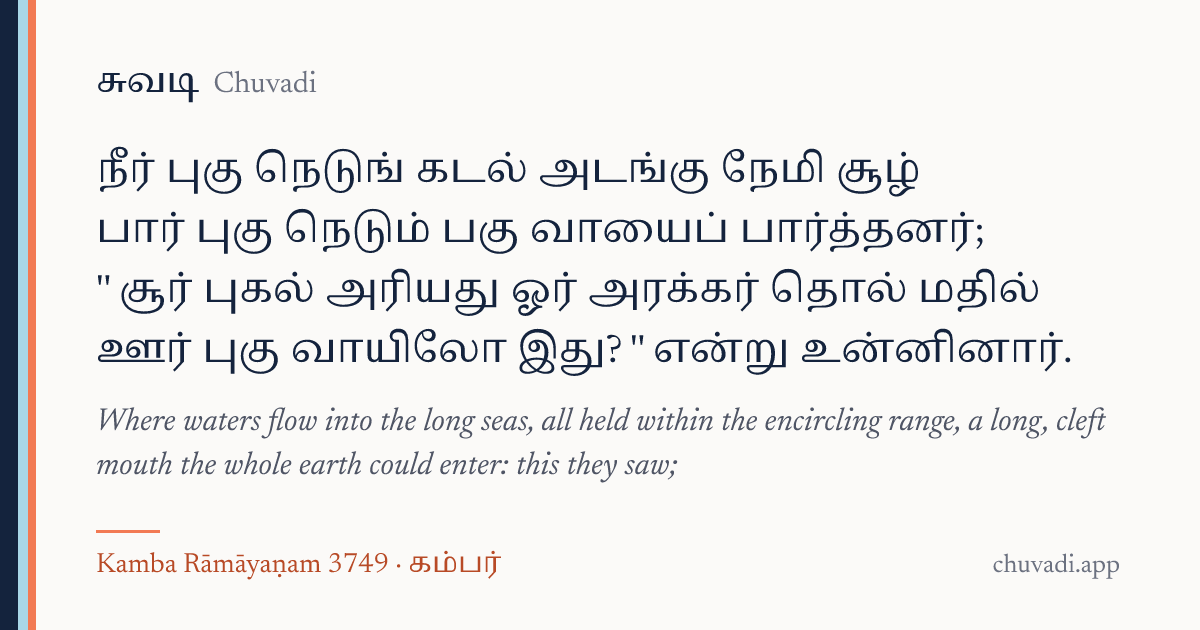
கம்பராமாயணம் 3749 · ஆரணிய 10.21
பாடல் · The poem
Tap a word to see its gloss in the commentary and where else it occurs.
பாட வேறுபாடு · Project Madurai reads
பொருள் · Meaning in Tamil
நீர் புகு - ஆறுகள் புகுகின்ற; நெடுங்கடல் - பெரிய கடல்களெல்லாம்; அடங்கு - தன்னுள் அடங்கப்பெற்ற; நேமி சூழ் - சக்கரவாள மலையால் சூழப்பட்டுள்ள; பார்புகு - உலகமே நுழையும்படியாக உள்ள; நெடும் பகு வாயைப் பார்த்தனர் - பெரியதாயும் பிளந்துள்ளதாயும் உள்ள (கவந்தனது) வாயைப் பார்த்து; இது - இந்தப் பிளவு; சூர் புகல் அரியது - தேவர்களும் உட்புகுதற்கு அரிய; ஓர் அரக்கர் - அரக்கருக்கு உரியதாகிய; தொல்மதில் ஊர்புகுவாயிலோ - பழமையான மதில் அமைந்த ஊருக்குள் புகுகின்ற வாசலோ; என்று உன்னினார் - என்று இராமலக்குவர் கருதினார்கள்.
நெடுங்கடலில் புகுதலைப் பின்னர் கூறினமையால் நீர் என முதலிற் சொன்னது ஆகுபெயராய் ஆறுகளைச் சுட்டிற்று. கடலைச் சூழ்ந்து உலக எல்லையில் வட்டமாக ஒரு மலை இருப்பதாகச் சொல்வது புராண மரபு. நேமி : சக்கரம்; சக்கரம் போல் வட்டமாக அமைந்த சக்கரவாள மலை. சூர்: தேவர்; கதிரவன் ஒளி புகா.... மதிள் (4657) என இலங்கை மதிலைக் கம்பர் குறிப்பது கொண்டு இவ்வாறு பொருள் கொள்ளலும் பொருத்தமே. 'இரு சுடர் மீதினில் இயங்கா மும்மதிள் இலங்கை' என்பது திருமங்கையாழ்வார் வாக்கு (திருவெழு கூற்றிருக்கை 3-4). ஆழ்வாரின் இவ்வாக்கே கம்பர் கற்பனைக்கு மூலமாக இருத்தல் கூடும். பார்த்தனர் - முற்றெச்சம்.
ஆங்கிலம் · English translationAI
Translation
- Where waters flow into the long seas, all held within the encircling range,
- a long, cleft mouth the whole earth could enter: this they saw;
- "Hard even for the gods to enter, is this the demons' ancient-walled
- city's entrance gate?" they wondered.
What the poem says
Seeing the immense opening in Kavantaṉ's belly, a mouth big enough to swallow the world with all its seas and the mountain ring said to surround it, the brothers wonder whether it is the gate of some demon city with ancient walls that even the gods cannot pass. This fits their earlier thought that they had reached Irāvaṇaṉ's land.
The commentary notes that the poet elsewhere describes Ilaṅkai's walls as impenetrable even to sunlight, and suggests an earlier poem by Tirumaṅkai Āḻvār as a source for the idea.