



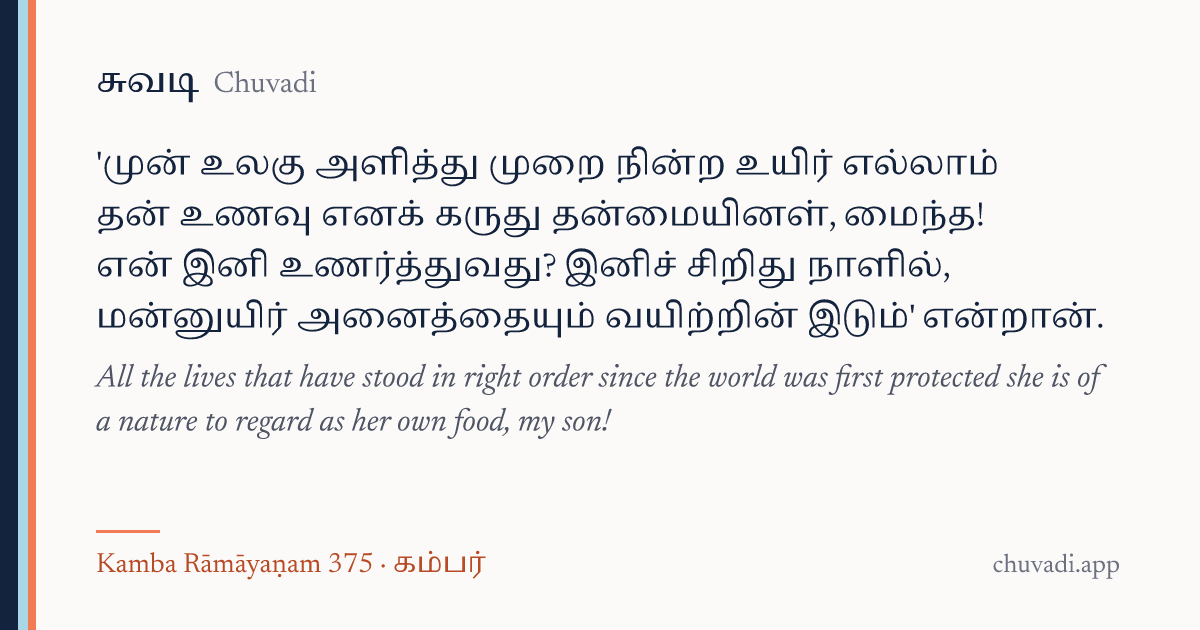
கம்பராமாயணம் 375 · பால 7.45
பாடல் · The poem
Tap a word to see its gloss in the commentary and where else it occurs.
பொருள் · Meaning in Tamil
முன் உலகளித்து - முற்பட உலகத்துயிர்களை யெல்லாம் காத்து; முறை நின்ற உயிரெல்லாம் - (அவ்வாறு காக்கப்பட்டதால்) முறையே நிலைத்து நின்ற உயிர்களை எல்லாம்; தன் உணவு எனக்கருது - தனது உணவு பொருள் போலவே என்னும்; தன்மையவள் மைந்தா - தன்மையுடையவள், தயரதனது மைந்தனே!; என் இனி உணர்த்துவது - இனிச் சொல்லவேண்டியதென்ன உண்டு; இனிச்சிறிது நாளில் - இன்னும் சில நாட்களிலே; மன்னுயிர் அனைத்தையும் - நிலைபெற்ற உயிர்களை எல்லாம்; வயிற்றின் இடும் என்றான் - வயிற்றிலே போட்டுக்கொள்வாள் என்றான்.
தயரதன், மன்னுயிர் தன்னுயிர் எனக்கருதுபவன். தாடகையோ மன்னுயிர் கொன்று திரிபவள் எனத் தாடகையின் கொடுமையைத் தயரதனுடைய பெருமையைக் கூறியுணர்த்துவதாக அமைந்திருப்பது சிறப்பு.
உலகளித்தல்: பரிபாலித்தல் மன்: பெருமை.
ஆங்கிலம் · English translationAI
Translation
- All the lives that have stood in right order since the world was first protected
- she is of a nature to regard as her own food, my son!
- What more is there to tell you? Within a few more days
- she will have put every living creature into her belly, he said.
What the poem says
The sage ends his account with a warning. Every creature whose life has been sustained by just rule, Tāṭakai treats as her food, and if nothing is done she will soon have swallowed them all.
The commentary notes a pointed contrast: Irāmaṉ's father Tacarataṉ treats the lives of his subjects as his own, while Tāṭakai treats them as her meal. Calling Irāmaṉ "son" reminds him of the protective duty he inherits.