



கம்பராமாயணம் 376 · பால 7.46
பாடல் · The poem
Tap a word to see its gloss in the commentary and where else it occurs.
பொருள் · Meaning in Tamil
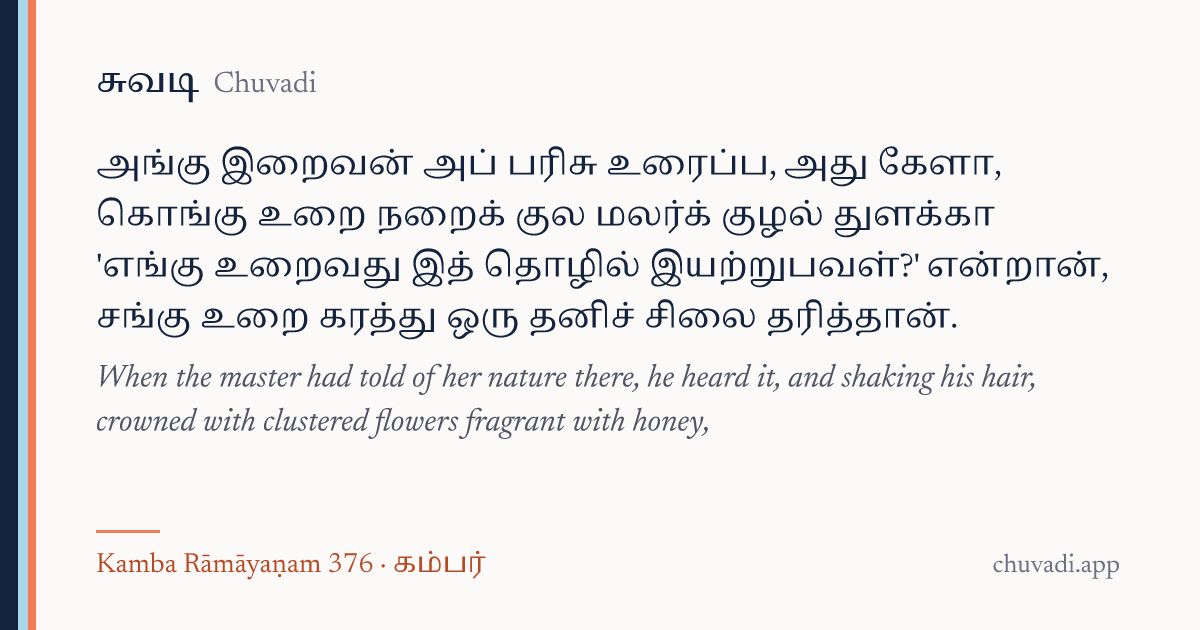
அங்கு இறைவன் அப்பரிசு உரைப்ப - அங்கு ஆசிரியனாகிய தவ முனிவன் அத்தன்மையைக்கூற; அது கேளா - அதனைக்கேட்டு; சங்கு உறை கரத்து ஒரு தனிச்சிலைதரித்தான் - சங்கிருக்கும் கையில் ஒப்பற்ற வில்லைப் பிடித்திருக்கும் ராமபிரான்; கொங்கு உறை நறைக் குலமலர் - மணம் பொருந்திய தேன்மிகுந்த மலர்களை அணிந்துள்ள; குழல் துளக்கா - தலையை அசைத்து; இத்தொழில் இயற்றுபவள் - இத்தகைய கொலைத்தொழில் புரியும் அக்கொடிய அரக்கி; எங்கு உறைவது என்றான் - வாழ்வது எங்கே என்று கேட்டான்.
இறைவன்: ஆசிரியன் (இங்கு விசுவாமித்திரன். பரிசு: தன்மை. கேளா: கேட்டு (செயா என்னும் வாய்பாட்டு வினையெச்சம்). கொங்கு: தேன். நறை: மணம். குழல்: கூந்தல் (இங்குத் தலையை உணர்த்துகின்றது). துளக்கா: துளக்கி (செயா என்ற வாய்பாட்டு வினையெச்சம். 'எங்குறைவது இத்தொழில் இயற்றுபவள்' என்பது வழுவமைதி. “சங்கு உறை கரத்து ஒரு தனிச்சிலைதரித்தான்” இடக்கையில் சங்கைப் பிடித்தவன் அதில் வில்லைத் தரித்திருக்கிறான் எனவும், சங்கை மறைத்து வில்லைப் பிடித்துள்ளான் எனவும் சங்கு ரேகையுடைய கையில் அதன் பயனாக வில்லைத் தரித்தான் எனவும் பொருள் கூறுவர். சிலை: வில். தரித்தல்: பிடித்தல்.
ஆங்கிலம் · English translationAI
Translation
- When the master had told of her nature there, he heard it,
- and shaking his hair, crowned with clustered flowers fragrant with honey,
- asked, Where does she live, she who does such deeds?
- he who holds a peerless bow in the hand where the conch abides.
What the poem says
Irāmaṉ hears the sage out, tosses his flower-decked head, and asks only one thing: where does this killer live? His readiness to act is immediate.
He is described as holding a matchless bow in the hand "where the conch dwells." Commentators read this several ways: as Viṣṇu, who carries the conch in his left hand, now holding a bow in it instead; as having hidden the conch to take up the bow; or as a hand marked with the auspicious conch-line on the palm.