



கம்பராமாயணம் 3759 · ஆரணிய 10.31
பாடல் · The poem
Tap a word to see its gloss in the commentary and where else it occurs.
பொருள் · Meaning in Tamil
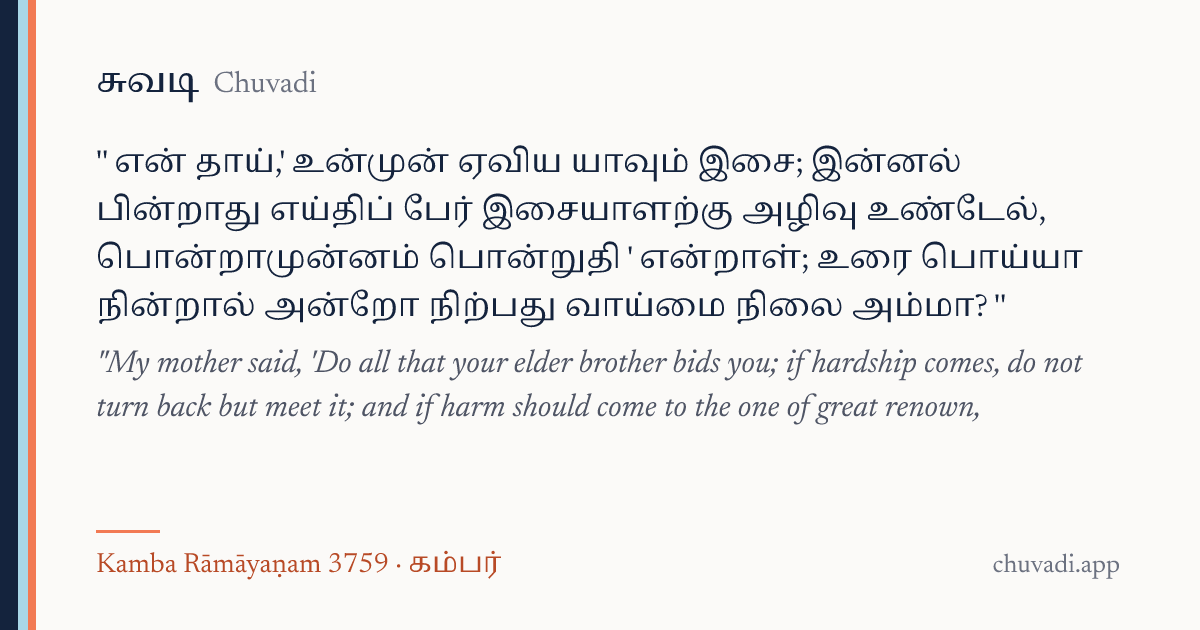
என் தாய் - ; உன்முன் ஏவிய யாவும் இசை - உன் தமையனாகிய இராமன் ஏவியவற்றையெல்லாம் ஏற்றுச் செயல்படுக; இன்னல் பின்றாது எய்தி - துன்பம் நேருமாயின் அத்துன்பங்கண்டு பின்வாங்கி விடாமல் அதனை நீ ஏற்று; பேர் இசையாளற்கு அழிவு உண்டேல் - பெரும்புகழாளன் ஆகிய இராமனுக்கு அழிவு நேரிடுவதாக இருந்தால்; பொன்றா முன்னம் - அவன் இறப்பதற்கு முன்னர்; பொன்றுதி - நீ இறப்பாயாக; என்றாள் - என்று எனக்குச் சொன்னாள்; உரை பொய்யா நின்றால் அன்றோ - என் தாயின் சொல் பொய்த்திடா வண்ணம் அவள் இட்ட கட்டளைப்படி நான் நடந்து கொண்டால் அன்றே; வாய்மை நிலை நிற்பது - சத்திய நெறி நிலை பெறுவதாகும்?
'மா காதல் இராமன்' (1751) 'இவன்' (1752) என்றே சுமித்திரை சொல்லாக அயோத்தியா காண்டத்தில் கம்பர் குறித்தார். அவரே இலக்குவன் கூற்றாக இராமனைப் 'பேரிசையாளன்' என்று இங்கே குறிக்கிறார். பேரிசையாளன் (பெரும் புகழாளன்) என்று தன் தாய் சொன்னதாக இலக்குவன் கூறுகிறான். இரண்டு இடத்தும் இராமனைப் புகழுக்கு உரியவனாகவே கம்பர் கருதுகிறார். முன்னே அக் கருத்து குறிப்பாக வந்தது; இங்கே வெளிப்படையாக வந்துள்ளது. தாய் சொல்லைப் பேணாது போதல் அஞ்சுதற்கு உரியது என்னும் குறிப்புக் கொண்டது இறுதியில் வரும் 'அம்மா' என்னும் இடைச்சொல்.
ஆங்கிலம் · English translationAI
Translation
- "My mother said, 'Do all that your elder brother bids you; if hardship
- comes, do not turn back but meet it; and if harm should come to the one of great renown,
- die before he dies.' Only if her word does not prove false
- does truth stand firm, is it not so?"
What the poem says
Ilakkuvaṉ recalls the parting words of his mother Cumittirai when he left Ayōttī: obey your brother in everything, never shrink from danger, and if his life is threatened, die before him. If he now saves himself and lets Irāmaṉ die, he will have made his mother's words false. Truth itself is at stake. Here his mother's praise of Irāmaṉ as a man of great fame is spelled out more openly than in the earlier scene.