



கம்பராமாயணம் 3766 · ஆரணிய 10.38
பாடல் · The poem
Tap a word to see its gloss in the commentary and where else it occurs.
பாட வேறுபாடு · Project Madurai reads
பொருள் · Meaning in Tamil
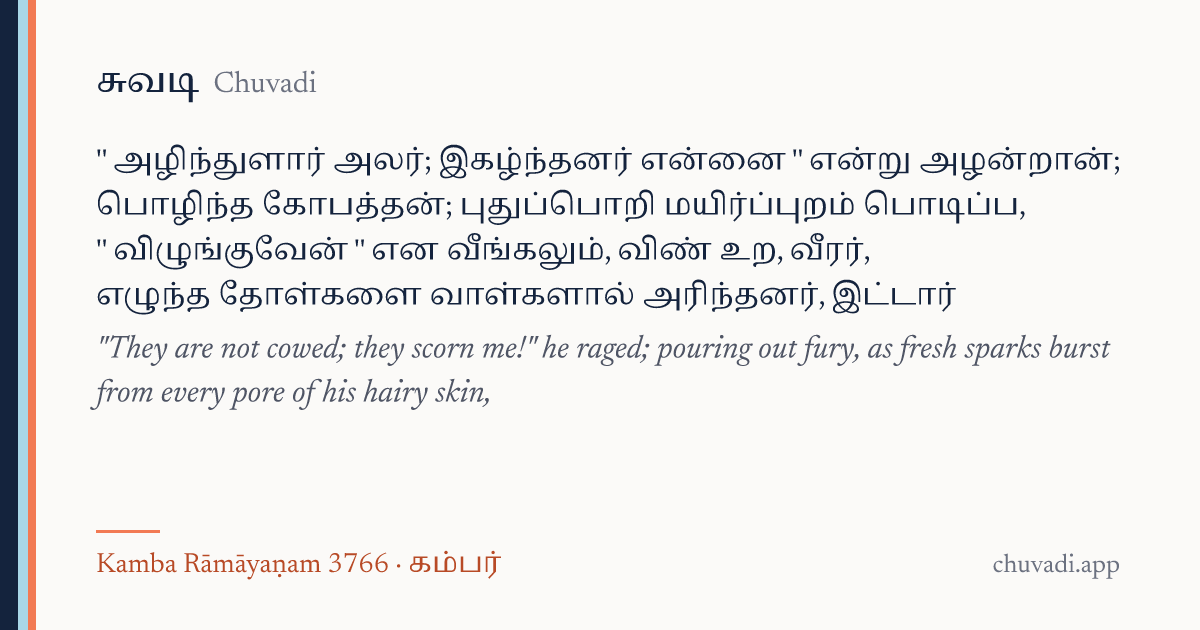
அழிந்துளார் அலர் - என்னைக் கண்டும் இவர்கள் தளரவில்லை; இகழ்ந்தனர் என்னை - அஞ்சித் தளராமல் உரமாக நிற்பதால் இவர்கள் என்னை அவமதித்து விட்டனர்; என்று அழன்றான் - என்று எண்ணிக் கவந்தன் சினம் மூண்டான்; பொழிந்த கோபத்தன் - பொங்கிப் பொழியும் சினம் கொண்டவனாய்; புதுப் பொறி மயிர்ப்புறம் பொடிப்ப - புதிதாய் தோன்றிய சினத் தீப்பொறி, மயிர்க் கால் தொறும் தோன்ற; 'விழுங்குவேன்' என வீங்கலும் - 'இவர்களை விழுங்கிடுவேன்' எனக் கிளம்பிய அளவில்; விண் உற எழுந்த தோள்களை - ஆகாயம் அளாவி எழுந்த கவந்தனின் தோள்களை; வீரர் - வீரம் கொண்ட இராமலக்குவர்; வாள்களால் அரிந்தனர் இட்டார் - வாள்களால் வெட்டி வீழ்த்தினார்கள்.
இயல்பாகவே சினப்பொறி தோன்றுகின்ற தோற்றத்தான், கவந்தன்; இராமலக்குவர் அவனைக் கண்டும் அஞ்சாது நின்று உருத்து நோக்கியதால் புதிதாகச் சினப்பொறி தோன்றியது என்பார் 'புதுப் பொறி' என்றார்.
ஆங்கிலம் · English translationAI
Translation
- "They are not cowed; they scorn me!" he raged;
- pouring out fury, as fresh sparks burst from every pore of his hairy skin,
- "I will swallow them!" he swelled up; at once the heroes,
- with their swords, cut off the arms that rose to the sky and threw them down.
What the poem says
The brothers' calm defiance enrages Kavantaṉ. He takes their lack of fear as an insult, and new sparks of anger fly from the roots of his hair, the poet saying "fresh" sparks because he already looked fiery by nature. As he rears up to swallow them, Irāmaṉ and Ilakkuvaṉ cut off his sky-high arms with their swords.