



கம்பராமாயணம் 3791 · ஆரணிய 11.5
பாடல் · The poem
Tap a word to see its gloss in the commentary and where else it occurs.
பாட வேறுபாடு · Project Madurai reads
பொருள் · Meaning in Tamil
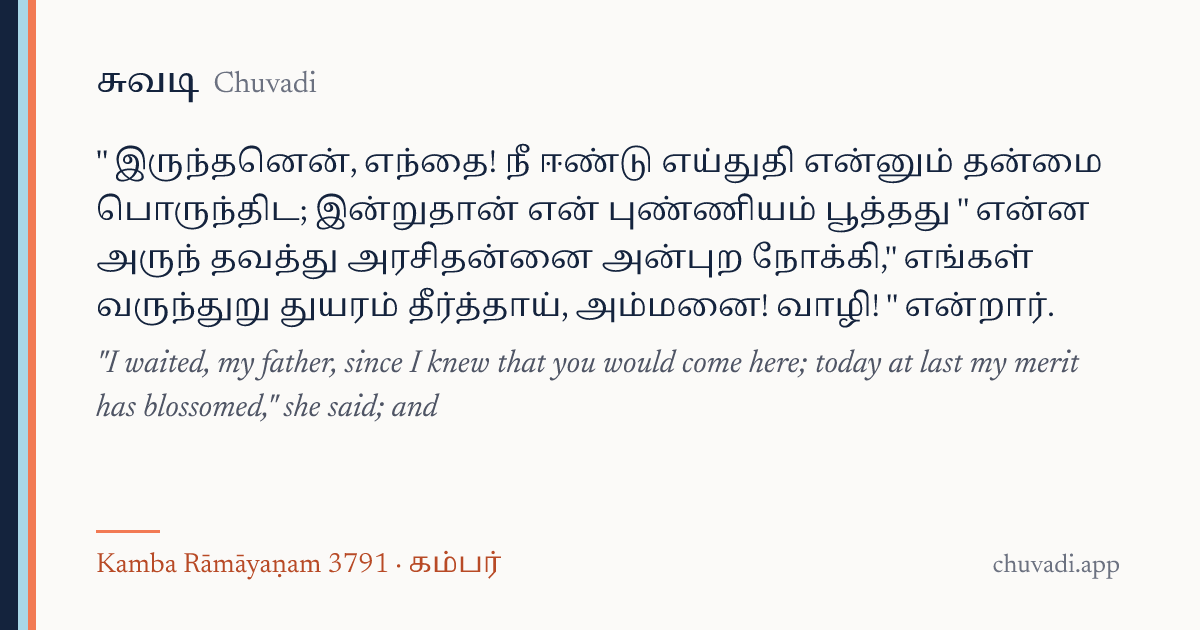
எந்தை - எம் தந்தையே; நீ ஈண்டு எய்துதி என்னும் தன்மை பொருந்திட - நீ இங்கே வருவாய் என்ற செய்தி தெரிந்தமையால்; இருந்தனென் - (உன்னை எதிர்பார்த்து) இங்கே இதுவரை இருந்தேன்; இன்று தான் என் புண்ணியம் பூத்தது - உன் வருகையால் இன்று தான் என் தவம் மலர்ச்சி பெற்றது; என்ன - என்று சவரி சொல்ல - (அதைக் கேட்ட இராமலக்குவர்); அருந்தவத்து அரசி தன்னை அன்புற நோக்கி - செயற்கு அரிய தவத்துறை அரசியை அன்பு பெருகப் பார்த்து; அம்மனை - தாயே; வருந்துறு எங்கள் துயரம் தீர்த்தாய் - வழிநடையால் வேதனையுற்ற எங்கள் துன்பத்தைப் போக்கினாய்; வாழி - வாழ்வாயாக; என்றார் - என்று கூறினார்.
திருநாவுக்கரசரை ஞானசம்பந்தர் முதலில் சந்தித்தபோது 'அப்பரே' (பெ பு. - திருநாவுக்கரசர் 234) என்று அழைத்ததையும், காரைக்காலம்மையாரைச் சிவபிரான் 'அம்மையே' (பெ. பு.- காண்க. 59) என்று அழைத்ததையும் ஒப்பிட்டுக் காணலாம். வாழிய என்னும் வியங்கோள் வினைமுற்று 'வாழி என விகாரமாயிற்று.
ஆங்கிலம் · English translationAI
Translation
- "I waited, my father, since I knew that you
- would come here; today at last my merit has blossomed," she said; and
- looking with love at the queen of hard penance, "Our
- weary sorrow you have taken away, mother! Long may you live!" they said.
What the poem says
Cavari explains that she has waited all this time only because she knew Irāmaṉ would come, and that now her merit has borne fruit. The brothers answer warmly, calling her "mother" and thanking her for relieving the weariness of their journey. The commentary compares this to Śiva calling the poet-saint Kāraikkāl Ammaiyār "mother" in the Periya Purāṇam.