



கம்பராமாயணம் 3822 · கிட்கிந்தா 1.27
பாடல் · The poem
Tap a word to see its gloss in the commentary and where else it occurs.
பொருள் · Meaning in Tamil
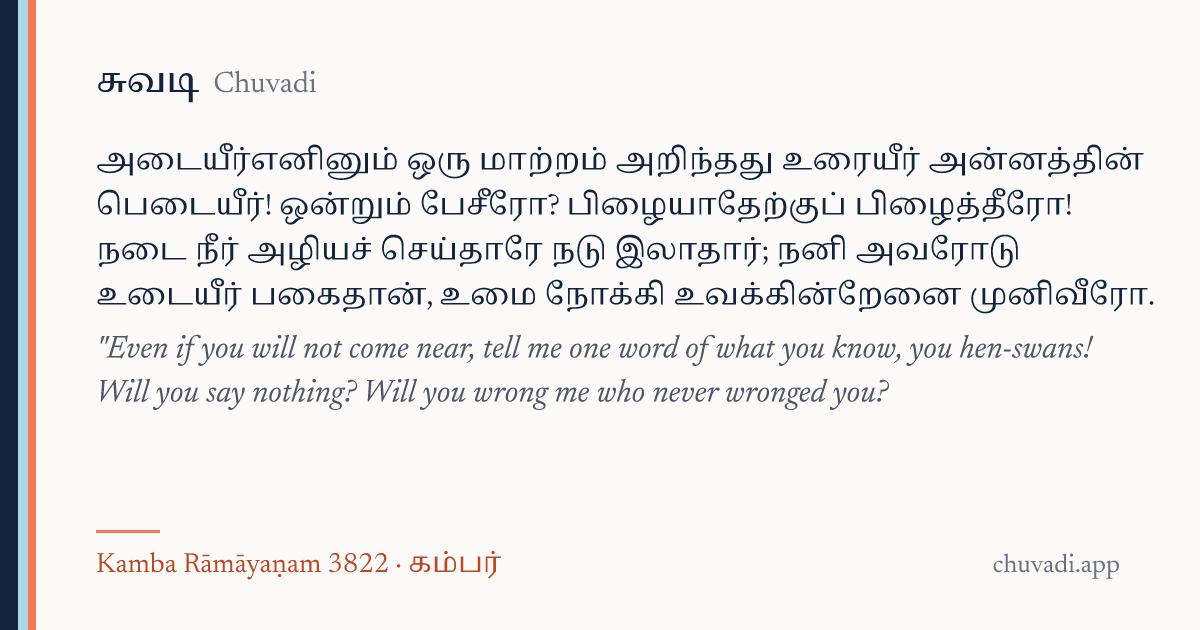
அன்னத்தின் பெடையீர் - பெண் அன்னங்களே! அடையீர் எனினும் - என்னிடத்து வரமாட்டீராயினும்; ஒரு மாற்றம் அறிந்தது உரையீர் - (சீதையைப்பற்றி) நீங்கள் அறிந்ததொரு வார்த்தையாயினும் சொல்லுங்கள்; ஒன்றும் பேசீரோ - (என்னிடம்) ஒன்றும் பேச மாட்டீர்களோ?; பிழையாதேற்கு - உங்களுக்கு ஒரு குற்றமும் புரியாத எனக்கு; பிழைத்தீரோ - பிழை செய்வீர்களோ?; நடு இலாதார் - இடையில்லாத சீதாபிராட்டியாரே; நடை நீர் அழியச் செய்தாரே - நீங்கள் நடையழகில் தோல்வியடையுமாறு செய்தார்; அவரோடு தான் நனி பகை உடையீர் - அவரோடுதான் நீங்கள் மிக்க பகைமை உடையவர் ஆவீர்; உமை நோக்கி உவக்கின்றேனை - உங்களை நோக்கி (உங்கள் நடை சீதை நடையை ஒக்கும் என்றெண்ணி) மகிழ்கின்ற என்னை; முனிவீரோ - வெறுப்பீர்களோ?
மாற்றம் - சொல்; நடை - நடையழகு.
உங்கள் நடையைத் தன் நடையழகால் தோற்கச் செய்த சீதை மாட்டுப் பகைமை கொள்வது முறையாகும். ஒரு பிழையும் செய்யாமல் உங்கள் நடையை நோக்கி மகிழ்கின்ற என்னிடத்தும் பகைமைகொண்டு அருகில் வராததும், ஆறுதலாக ஒன்றும் பேசாததும் தகுதியாமோ என்பதாம். பெடையீர் - திணைவழுவமைதி. சீதையின் இடை பற்றி "மருங்கு இலா நங்கை", "இல்லையே நுகப்பு" என முன்னரும் (5/7, 728) கூறுவர்.
ஆங்கிலம் · English translationAI
Translation
- "Even if you will not come near, tell me one word of what you know,
- you hen-swans! Will you say nothing? Will you wrong me who never wronged you?
- It was she who has no waist who made your walk look poor; it is with her
- that your great quarrel lies; will you be angry with me, who delights in watching you?"
What the poem says
Irāmaṉ pleads with the female swans. Their quarrel is with Cītai, whose graceful walk put theirs to shame, not with him: he has done them no harm and in fact enjoys watching them because they remind him of her. So why will they not come near or tell him anything? Calling Cītai "she who has no waist" uses the convention that a beautiful woman's waist is too slender to be seen.