



கம்பராமாயணம் 3823 · கிட்கிந்தா 1.28
பாடல் · The poem
Tap a word to see its gloss in the commentary and where else it occurs.
பொருள் · Meaning in Tamil
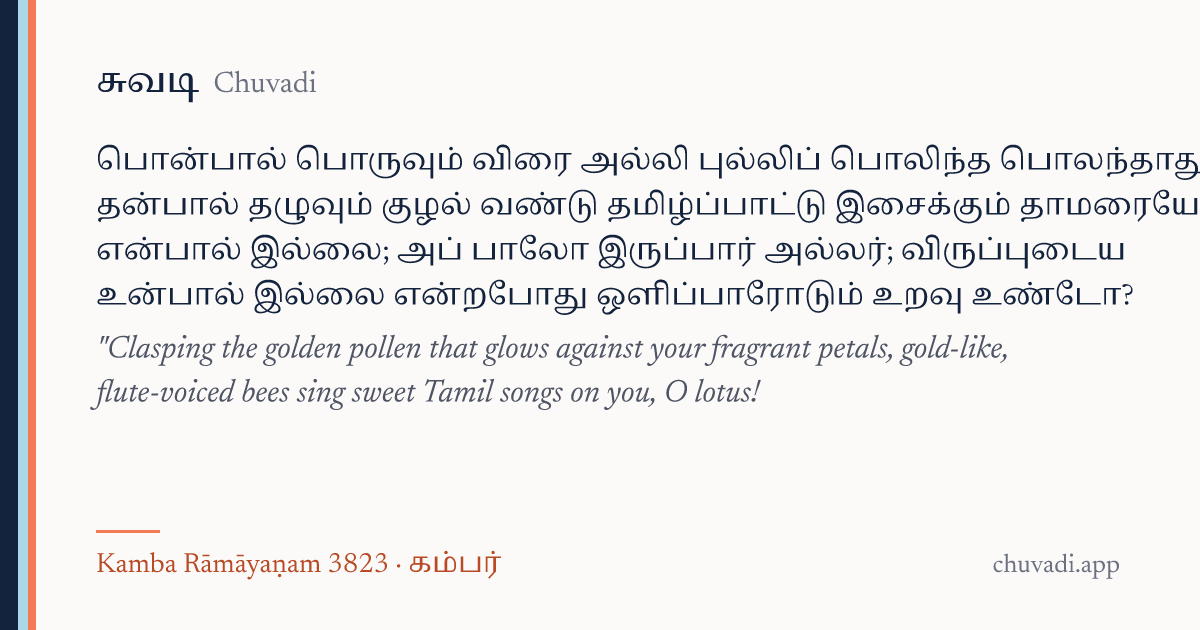
பொன்பால் பொருவும் - பொன்னின் இயல்பை ஒத்திருக்கும்; விரை அல்லி புல்லி - மணம் மிக்க அகஇதழ்களைச் சார்ந்து; பொலிந்த பூந்தாது - அழகிய மகரந்தத்தை; தன்பால் தழுவும் - தன்னிடத்தே கொண்ட; குழல்வண்டு - குழல்போலும் இசைபாடும் வண்டுகள்; தமிழ்ப் பாட்டு இசைக்கும் - (தங்கி) இனிய பாடல்கள் பாடும்; தாமரையே - தாமரை மலரே! என்பால் இல்லை - (சீதை) என்னிடத்தில் இல்லை; அப்பாலோ இருப்பர் அல்லர் - வேறிடத்தும் இருப்பவர் அல்லர்; விருப்புடைய உன்பால் - விருப்பமுடைய உன்னிடத்தும்; இல்லை என்றபோது - இல்லையென்று நீயும் கூறினால்; ஒளிப்பாரோடும் உறவு உண்டோ - தன்னிடத்துள்ளதை மறைக்கும் உன்னோடு எனக்கு உறவு உண்டோ?
சீதாபிராட்டி தன்னிடம் இல்லையென்பதும், பிற இடங்களில் தங்கமாட்டார் என்பதும் அறிந்த செய்தி. ஆதலால் பிறந்த இடமாகிய தாமரையில்தான் தங்கியிருத்தல் வேண்டும். அதைக்கூறாது தாமரை சீதையை ஒளித்து வைத்திருப்பதாக எண்ணி, இராமன் தாமரையை வெறுத்து உரைத்தனன் என்க.
அல்லி - அகஇதழ், தமிழ் - இனிமை. 'தமிழ் தழீஇய சாயலவர் (சீவக சிந்தாமணி 2026) என்னுமிடத்து இப்பொருள் காண்க. தாமரையைக் கேட்பது போலக் கூறியது மரபுவழுவமைதி.
ஆங்கிலம் · English translationAI
Translation
- "Clasping the golden pollen that glows against your fragrant petals, gold-like,
- flute-voiced bees sing sweet Tamil songs on you, O lotus!
- She is not with me; nor would she stay anywhere else; if in you, whom she loves,
- she is not, as you say, can I keep kinship with those who hide her?"
What the poem says
Irāmaṉ accuses the lotus. Cītai, as Lakṣmī, was born from a lotus, and she is not with him and would not live anywhere else, so she must be hiding in the lotus. If the lotus denies it, it is concealing her, and he can have no friendship with it. The bees humming on the flower are said to sing "Tamil" songs, where Tamil means sweetness, a usage the commentary also finds in Cīvakacintāmaṇi.