



கம்பராமாயணம் 3824 · கிட்கிந்தா 1.29
பாடல் · The poem
Tap a word to see its gloss in the commentary and where else it occurs.
பாட வேறுபாடு · Project Madurai reads
பொருள் · Meaning in Tamil
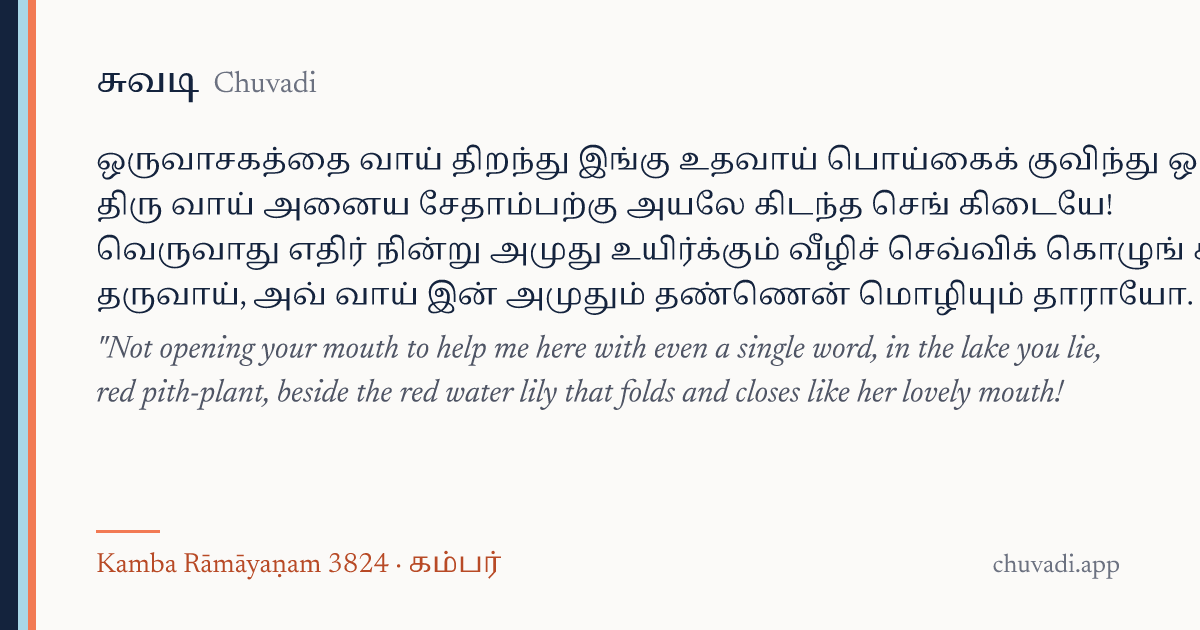
ஒரு வாசகத்தை வாய் திறந்து - ஒரு வார்த்தையினையும் வாயைத்திறந்து சொல்லி; இங்கு உதவாய் - இங்கு (எனக்கு) உதவாமல்; பொய்கை குவிந்து ஒடுங்கும் - பொய்கையில் குவிந்து ஒடுங்கிக் கிடக்கும்; திரு வாய் அனைய - சீதையின் வாயைப்போன்ற; சேதாம்பற்கு - செவ்வாம்பல் மலர்க்கு; அயலே கிடந்த செங்கிடையே - அருகில் கிடக்கும் நெட்டியே! வெருவாது எதிர்நின்று - அஞ்சாமல் என் எதிரில் வந்து; அமுது உயிர்க்கும் - அமுதம் போன்ற சொற்களைப் பேசும்; செவ்வி வீழிக் கொழுங்கனிவாய் - அழகிய செழுமையான வீழிக்கனிபோன்ற சீதையின் வாயை; தருவாய் - காட்டுவாய், அவ்வாய் இன்னமுதும் - அந்த வாயில் ஊறும் இனிய அமுதத்தையும்; தண்ணென் மொழியும் - குளிர்ந்த சொல்லினையும்; தாராயோ - தரமாட்டாயோ?
'நீ ஆம்பல் மலரைப்போல் இல்லாது சீதையின் வாயைப்போன்று வெளி வந்து காட்டுகின்றனை. அதிலுள்ள இனிய அமுதச்சுவையினையும், இனிய பேச்சுக்களையும் தரலாகாதோ' என இராமன் நெட்டியிடம் புலம்பிக் கூறியது. ஒடுங்கும் சேதாம்பல் - பகற்பொழுது ஆதலின் செவ்வாம்பல் குவிந்து காணப்பட்டது. சிவந்த நெட்டி வாயிதழ்க்கு உவமை ஆயிற்று. நெட்டி, வடிவத்தால் வாயினை ஒத்தும், வாயின் இன்னமுதும் தண்ணென் மொழியும் தராத வேற்றுமையும் கொண்டிருப்பதால் வேற்றுமை அணி அமையும். ஒரு வாசகத்தை என்னுமிடத்து இழிவுசிறப்பும்மை விகாரத்தால் தொக்கது.
ஆங்கிலம் · English translationAI
Translation
- "Not opening your mouth to help me here with even a single word, in the lake
- you lie, red pith-plant, beside the red water lily that folds and closes like her lovely mouth!
- Her mouth like the plump, fresh vīḻi fruit, that faced me unafraid and breathed out nectar,
- you show me; will you not give me that mouth's sweet nectar and its cool words too?"
What the poem says
Last in this series, Irāmaṉ speaks to the red sola pith plant growing beside the water lilies. The lilies have closed for the day, but the red plant stays visible and looks like Cītai's lips, red as the vīḻi fruit. It shows him the shape of her mouth, yet gives neither the sweetness of her kiss nor the comfort of her words. The commentary calls this a figure of contrast, where likeness in form is set against a difference in nature.