



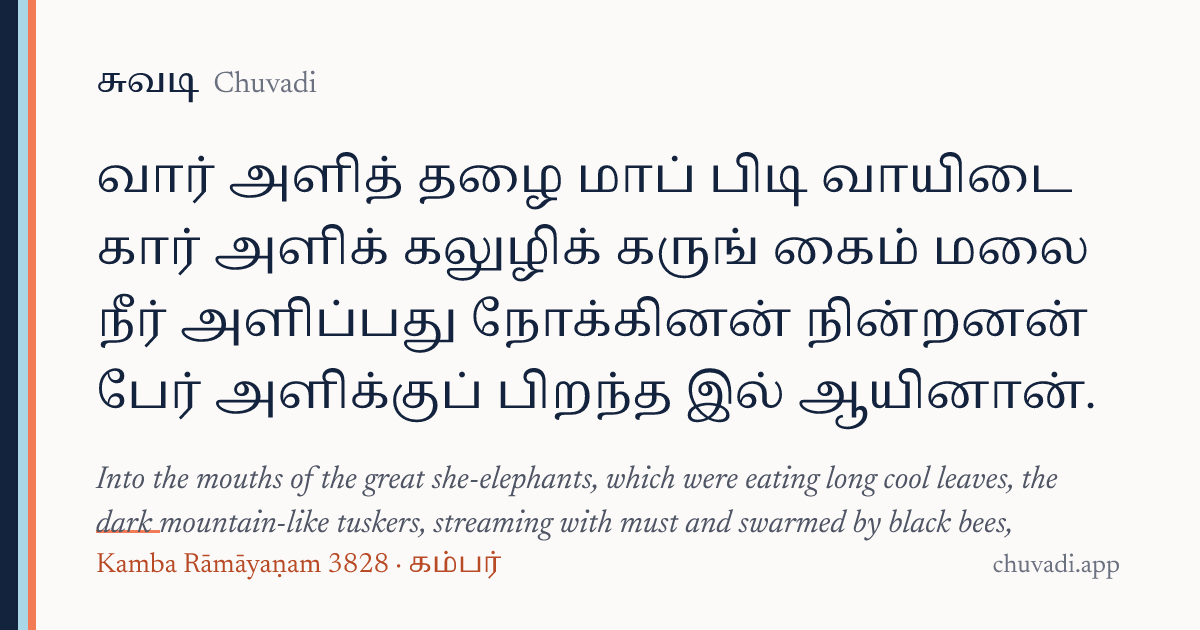
கம்பராமாயணம் 3828 · கிட்கிந்தா 1.33
பாடல் · The poem
Tap a word to see its gloss in the commentary and where else it occurs.
பொருள் · Meaning in Tamil
பேர் அளிக்கு - மிக்க கருணைக்கு, பிறந்த இல் ஆயினான் - பிறப்பிடமாக உள்ள இராமபிரான்; கார் அளி - கரிய வண்டுகள் மொய்க்கப்பெற்ற; கலுழிக் கருங்கைம்மலை - மதநீர்ப்பெருக்கையுடைய கரிய ஆண்யானைகள்; வார் அளித்தழை - நீண்ட குளிர்ந்த தழைகளை; மாப்பிடி வாயிடை - (உண்ணும்) பெரிய பெண் யானைகளின் வாயில்; நீர் அளிப்பது - தண்ணீரை முகந்து கொடுத்து ஊட்டுவதை; நோக்கினன் நின்றான் - நோக்கி நின்றான்.
இராமன் கருணையின் பிறப்பிடமானவன் என்று கம்பர் பின்னரும் 'கருணையின் நிலையும் அன்னான்' (6975) என்று கூறுவார். கைம்மலை - யானை; முன்னே பிடி கூறப்பட்டதால் 'கைம்மலை' என்பது ஆண்யானையைக் குறித்தது. மதநீர்ப்பெருக்குடைய களிறும் தன் பிடி வருந்தா வண்ணம் நீரூட்டி அன்பு காட்டுவதைக் கண்ட இராமன், அறிவும் ஆண்மையும் மிக்க தன்னால் சீதையின் துயர் நீக்கிப் பாதுகாக்க இயலாமை எண்ணி வருந்தி நின்றான். 'துடியடிக் கயந்தலை கலக்கிய சின்னீரைப், பிடியூட்டிப் பின் உண்ணுங் களிறு' (கலி. பாலை. 11.) என்ற அடிகள் ஈண்டு ஒப்புநோக்கத்தக்கன.
ஆங்கிலம் · English translationAI
Translation
- Into the mouths of the great she-elephants, which were eating long cool leaves,
- the dark mountain-like tuskers, streaming with must and swarmed by black bees,
- were giving water; he stood watching this,
- he who was the very birthplace of great compassion.
What the poem says
Irāmaṉ, whom the poet calls the home of compassion, watches bull elephants in must lift water in their trunks and feed it to their mates. Even a maddened tusker cares this tenderly for his partner, and Irāmaṉ, for all his wisdom and strength, has not been able to protect Cītai; the sight deepens his grief.
The commentary notes a similar image in classical Tamil poetry, where the bull lets his mate drink the little muddy water first and drinks only after her.