



கம்பராமாயணம் 3830 · கிட்கிந்தா 1.35
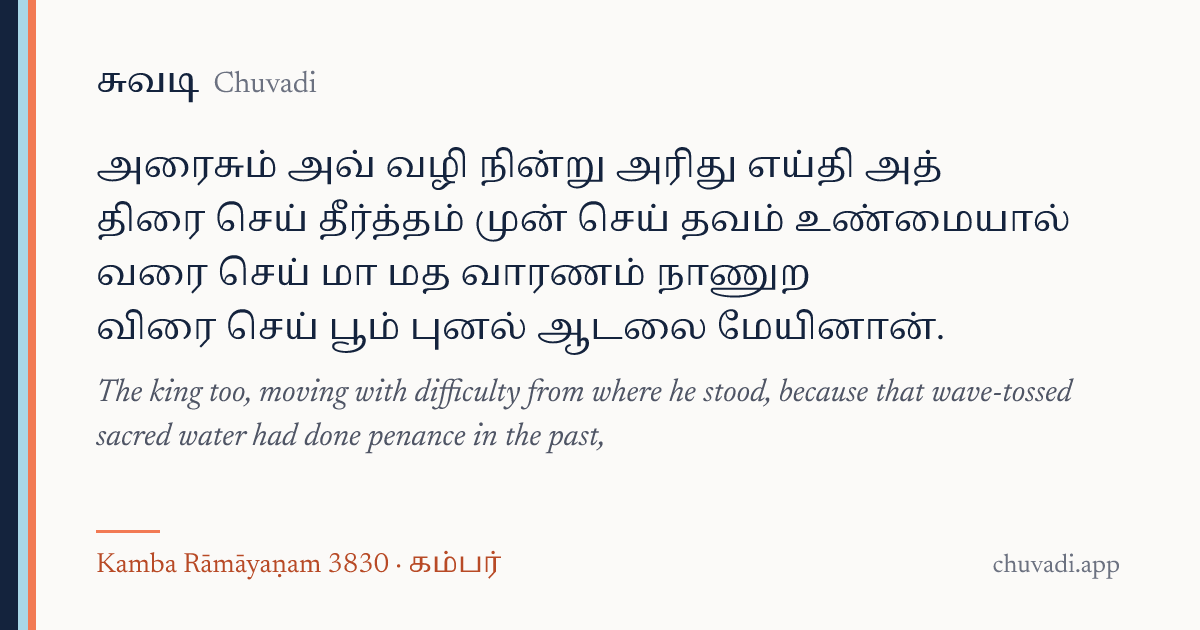
பாடல் · The poem
Tap a word to see its gloss in the commentary and where else it occurs.
பாட வேறுபாடு · Project Madurai reads
பொருள் · Meaning in Tamil
அரைசும் - இராமபிரானும்; அவ்வழி நின்று அரிதுஎய்தி - அந்த இடத்திலிருந்து அரிதாகச் சென்று; அத்திரை செய் தீர்த்தம் - அலைமோதும் அந்த பம்பைப் பொய்கை நீர்; முன்செய்தவம் உண்மையால் - முன்செய்த தவமுடைமையால்; வரைசெய் மாமத வாரணம் நாணுற - மலை போன்றதும் பெரும் மதப்பெருக்குடையதுமான யானையும் நாணும்படி, விரைசெய் பூம்புனல் - மணம் கமழும் மலர்கள் நிறைந்த நீரில்; ஆடல் மேயினான் - நீராடுதலை மேற்கொண்டான்.
தானும் தூயதாய்த் தன்னிடம் நீராடுவார் துயர்நீக்கி தூய்மை நல்கும் சிறப்புடையது தீர்த்தமாகும். அத்தகைய சிறப்புடைய பொய்கை இராமன்மேனி முழுவதும் படியப்பெறும் சிறப்பினைப் பெற்றது. அதற்கு முன் செய்த தவப்பயன் காரணம் என்பதால் 'திரைசெய் தீர்த்தம் முன் செய் தவம் உண்மையால்' என்றார். இராமன் நீராடியதற்கு ஒரு மதயானை நீரில் ஆடியது ஒப்பாகும்.
அரைசு - அரசு என்பதன் போலி.
ஆங்கிலம் · English translationAI
Translation
- The king too, moving with difficulty from where he stood,
- because that wave-tossed sacred water had done penance in the past,
- so that even a mountain-like elephant in great must would be put to shame,
- went to bathe in the fragrant, flower-filled water.
What the poem says
Irāmaṉ drags himself from the spot where he stood grieving and goes down to bathe. A tīrttam is sacred water that purifies those who bathe in it; here the lake itself is honoured by having Irāmaṉ's whole body immersed in it, a reward the poet attributes to penance it must have done in an earlier time.
He plunges in with such grandeur that a bull elephant in must, bathing, would be ashamed by the comparison.