



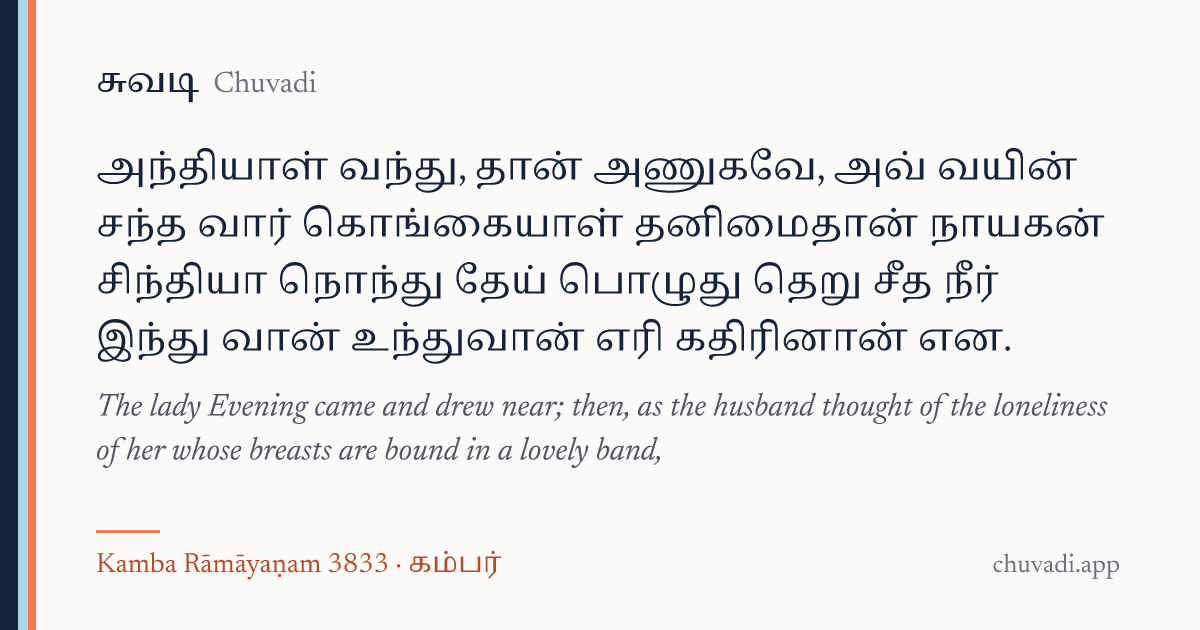
கம்பராமாயணம் 3833 · கிட்கிந்தா 1.38
பாடல் · The poem
Tap a word to see its gloss in the commentary and where else it occurs.
பாட வேறுபாடு · Project Madurai reads
பொருள் · Meaning in Tamil
அந்தியாள் - அந்திப்பொழுதாகிய பெண்; வந்துதான் அணுகவே - வந்து சேரவே; அவ் வயின் - அப்போது; சந்தவார் கொங்கையாள் - அழகிய கச்சணிந்த தனங்களை உடைய சீதை; தனிமைதான் - பிரிந்து தனியே இருக்கும் நிலையினை; நாயகன் சிந்தியா - இராமன் நினைத்து; நொந்து தேய்பொழுது - மனம்வருந்தி வாடும் போது; தெறுசீத நீர் இந்து - வருத்துகின்ற குளிர்ந்த தன்மையை உடைய சந்திரன்; எரி கதிரினான் என - வெய்ய கதிர்களை உடைய சூரியன் போல; வான் உந்துவான் - வானத்தில் எழுவானாயினான்.
அந்தியாள் - மாலைக்காலமாகிய பெண்; 'அந்தியென்னும் பசலை மெய்யாட்டி' என்பது மணிமேகலை. (5-140). பிரிந்தார்க்குக் குளிர்ந்த பொருள்களுக்கு வெப்பம் தருமாதலின் சந்திரனும் சூரியன்போல வெப்பமுண்டாகத் தோன்றினான் என்றார். 'காலை அரும்பிப் பகலெல்லாம் போதாகி மாலைமலரும் இந்நோய்' (குறள் 1227) என்றபடி மாலையில் ஆசை மிகுதியால் இராமனுக்குத் தனிமைத்துன்பம் அதிகமாயிற்று. என - உவம உருபு.
ஆங்கிலம் · English translationAI
Translation
- The lady Evening came and drew near; then,
- as the husband thought of the loneliness of her whose breasts are bound in a lovely band,
- and pined and wasted away, the moon with its tormenting cool rays
- rose into the sky like the sun with its burning beams.
What the poem says
Evening is pictured as a woman arriving. With nightfall Irāmaṉ's thoughts turn to Cītai alone in captivity, and he wastes with pain. Then the moon rises, but to a parted lover cool things burn, so it feels to him like a second sun.
The commentary cites the Tirukkuṟaḷ: love-sickness buds in the morning, opens through the day, and flowers fully at evening. That is why his loneliness is sharpest now.