



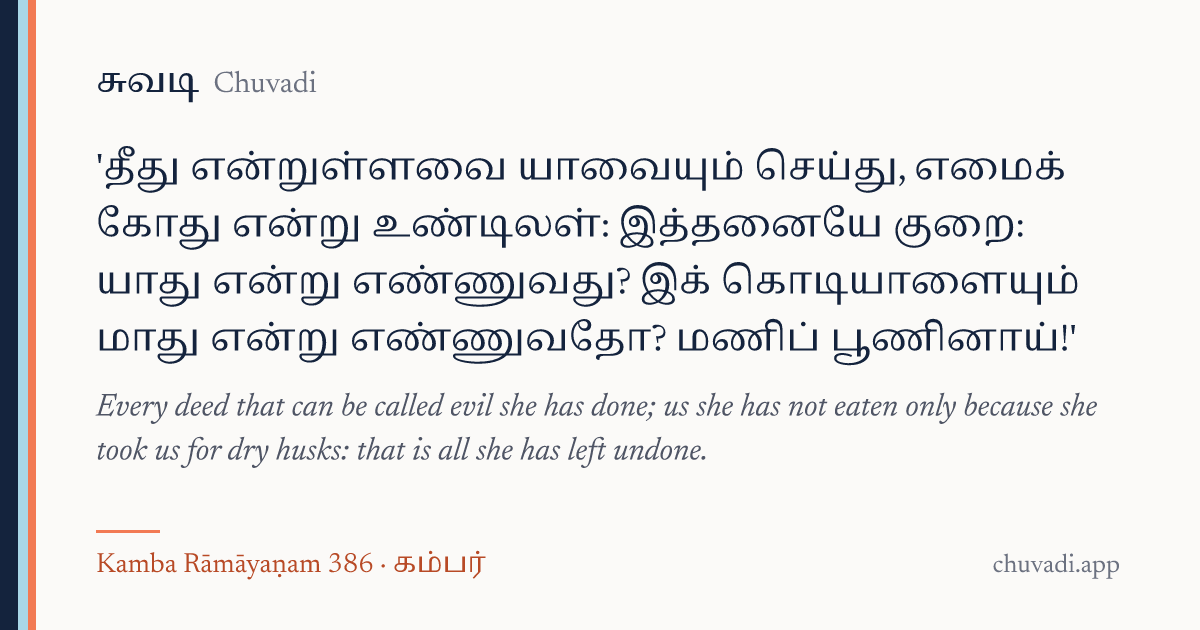
கம்பராமாயணம் 386 · பால 7.56
பாடல் · The poem
Tap a word to see its gloss in the commentary and where else it occurs.
பொருள் · Meaning in Tamil
தீது என்று உள்ளவையாவையும் செய்து - தீமை என்று இருப்பவையாகிய எல்லாச் செயல்களையும் செய்துமுடித்து; எமைக் கோது என்று உண்டிலள் - எம்மைப் போன்ற முனிவர்களைச் (சாரமில்லாத) சக்கை என்று உண்ணாது விட்டனள்; இத்தனையே குறை - அவள் செய்த தீய செயல்களில் இவ்வளவே குறை; யாது என்று எண்ணுவது - இத்தகையவளை என்னவென்று நினைப்பது; இக்கொடியாளையும் - இத்தகைய கொடுஞ்செயல் உடையவளையும்; மணிப்பூணினாய் - மணிகளாலான அணிகலன்களை அணிந்திருக்கும் ராம பிரானே! மாது என்று எண்ணுவதோ - பெண் என்று நினைத்தல் ஒண்ணுமே? கூடாது என்றபடியாம்.
தீது: தீய செயல்கள். உள்ளவை: குறிப்பு வினையாலணையும் பெயர். எம் உளப்பாட்டுப் பன்மை. கோது: சாரமற்றது (சக்கை). குற்றம் குறை: குறைவு. அரசகுமாரன் என்பதால் “மணிப்பூணினாய்” என்றார்.
ஆங்கிலம் · English translationAI
Translation
- Every deed that can be called evil she has done; us
- she has not eaten only because she took us for dry husks: that is all she has left undone.
- What should one think her? This cruel one too,
- is she to be thought a woman, O you with jewelled ornaments?
What the poem says
Vicuvāmittiraṉ answers Irāmaṉ's hesitation. Tāṭakai has committed every evil there is; the only thing she has not done is eat the sages, and that is only because she considers such dried-up ascetics worthless husks.
Can such a creature really be called a woman? The sage addresses Irāmaṉ by his princely jewels, reminding him of his royal duty to protect.