



கம்பராமாயணம் 3896 · கிட்கிந்தா 3.24
பாடல் · The poem
Tap a word to see its gloss in the commentary and where else it occurs.
பொருள் · Meaning in Tamil
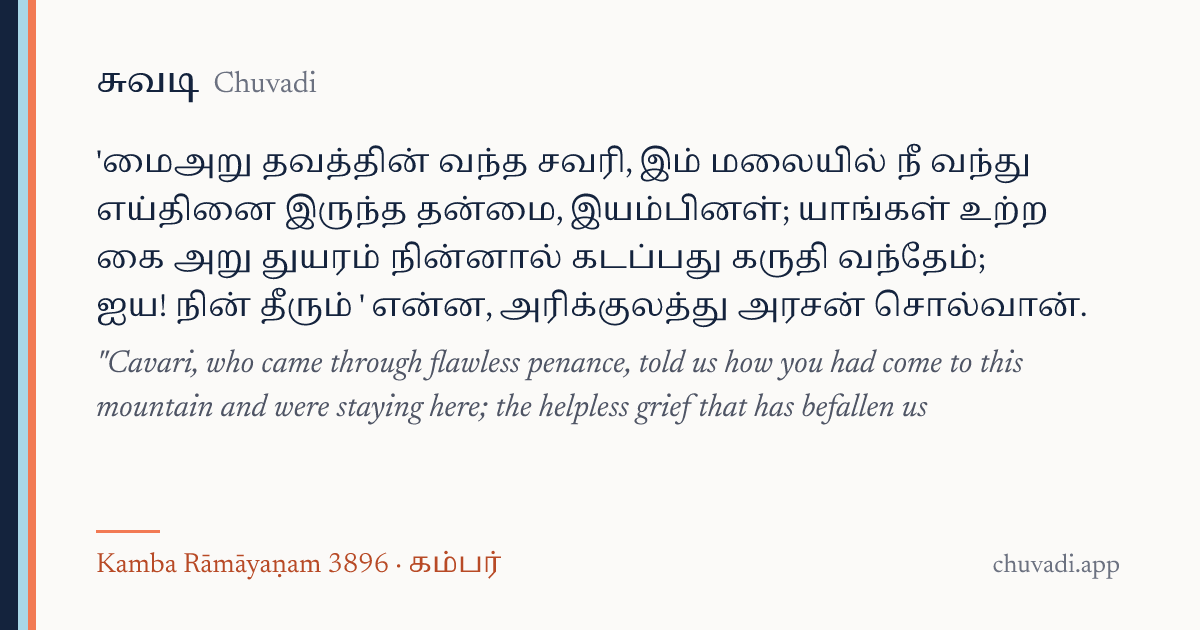
ஐய - (இராமன் சுக்கிரீவனை நோக்கி) ஐயனே! மை அறு தவத்தின் வந்த - குற்றமற்ற தவமுடையவளாய் வந்த; சவரி - சவரியானவள்; இம்மலையில் நீ வந்து - இந்த ருசியமுக மலையில் நீ வந்து; எய்தினை இருந்த தன்மை - பொருந்தி இருந்த நிலையை; இயம்பினள் - சொன்னாள்; யாங்கள் உற்ற - நாங்கள் அடைந்துள்ள; கையறு துயரம் - செயலற்று வருந்தும் பெருந்துன்பத்தை; நின்னால் கடப்பது கருதி - உன்னால் நீக்குவது கருதி; வந்தேம் - இங்கு வந்தோம்; நின் தீரும் - அத்துன்பம் உன்னாலேயே தீர்வதாகும்'; என்ன - என்று கூற (அதைக்கேட்ட); அரிக்குலத்து அரசன் - குரங்கினத்திற்கு அரசனாகிய சுக்கிரீவன்; சொல்வான் - சொல்லத்தொடங்கினான்.
சுக்கிரீவன் இருந்த மலையை அறிந்தது எவ்வாறு என்பதை அறிவிக்கச் 'சவரி.... இயம்பினள்' என்றான் இராமன். தான் வந்த காரணத்தையும் 'கையறு துயரம் நின்னால் கடப்பது கருதி வந்தேம்' என உரைத்தான். மை - குற்றம்; தவத்திற்குக் குற்றம் - காமம், வெகுளி, மயக்கம் இடை இடையே நிகழ்வது. 'வந்து எய்தினை இருந்த தன்மை' என்பதால் ருசியமுகமலை சுக்கிரீவனுக்கு உரிய மலையன்று என்பதும், வாலிக்கு அஞ்சியே அங்கே தங்கியிருந்தான் என்பதும் பெறப்படுகின்றன.
ஆங்கிலம் · English translationAI
Translation
- "Cavari, who came through flawless penance, told us how you had come
- to this mountain and were staying here; the helpless grief that has befallen us
- we have come hoping to cross with your help;
- it will end through you, sir," he said, and the king of the monkey race replied.
What the poem says
Irāmaṉ explains how they found Cukkirīvaṉ: the ascetic Cavari told them he was living on this mountain. They have come because they hope that with his help they can get through the grief that leaves them helpless.
The words "you came and were staying here" imply that the mountain is not Cukkirīvaṉ's home; he is there only in hiding from Vālī.