



கம்பராமாயணம் 3897 · கிட்கிந்தா 3.25
பாடல் · The poem
Tap a word to see its gloss in the commentary and where else it occurs.
பாட வேறுபாடு · Project Madurai reads
பொருள் · Meaning in Tamil
முன்னவன் - எனக்கு அண்ணனாகிய வாலி; பின் வந்தேனை - பின் பிறந்த தம்பியாகிய என்னை (அடிக்க); முரண் உடை - வலிமையுள்ள; தடக்கை ஓச்சி - பெரிய கையை ஓங்கிக் கொண்டு; இருள் நிலை புறத்தின் காறும் - இருட்டுக்கு இருப்பிடமாகிய இவ்வுலகத்திற்கு அப்புறம் வரையிலும்; உலகு எங்கும் தொடர - எல்லா உலகங்களிலும் பின்தொடர்ந்து துரத்த; இக்குன்று அரண் உடைத்துஆக - இம்மலையையே பாதுகாவலாகக்கொண்டு, உய்ந்தேன் - உயிர் பிழைத்தேன்; ஆர் உயிர் துறக்கலாற்றேன் - அரிய உயிரை விடுவதற்கும் முடியாதவனாகிய நான்; சரண் உனைப் புகுந்தேன் - உன்னை அடைக்கலமாக அடைந்தேன்; என்னைத் தாங்குதல் - என்னைக் காப்பாற்றுதல்; தருமம் என்றான் - நினக்குரிய தருமமாகும் என்றான்.
தம்பி என்ற உறவும் பாராது, வலிமை குறைந்தவன் என்ற போர் முறையையும் நோக்காது, அஞ்சி ஓடியவனைத் துரத்தி ஓடுதல் போர்முறைக்குப் பழியாகும் என்பதையும் உணராது வாலி, சுக்கிரீவனை வருந்தினான் என அவ்வாலியின் முறையற்ற செயலைச் சுக்கிரீவன் உணர்த்தினான். மதங்க முனிவர் சாபத்தால் ருசியமுகமலையில் வாலி வந்தால் அவன் தலை வெடித்து இறப்பான் ஆதலால் 'இக்குன்று அரண் உடைத்து ஆகி உய்ந்தேன்' என்றான்.
இருள் நிலை புறத்தின் காறும் - அண்டத்தின் இறுதியில் சக்கரவாளகிரி இருக்கின்றது என்றும், அதற்கு அப்புறம் இருள்நிலைப்புறம் (அந்தகாரம்) உள்ளது என்றும் கூறுவது புராண மரபு. தனக்கு உயிர்மேல் உள்ள காதலை 'ஆர் உயிர் துறக்கலாற்றேன்' என உணர்த்தினான். தன் இயலாமையை உணர்த்தும் முகத்தான் 'சரண் உனைப் புகுந்தேன்; என்னைத் தாங்குதல் தருமம்' என்றான். தன்னைத் தாங்காது விடுவானோ எனும் அச்சத்தாலும் 'என்னைத் தாங்குதல் தருமம்' என்றான். இதனால் வாலியை அழித்துத் தன்னைக் காக்க வேண்டும் எனச் சுக்கிரீவன் கருதுவது புலப்படும்.
ஆங்கிலம் · English translationAI
Translation
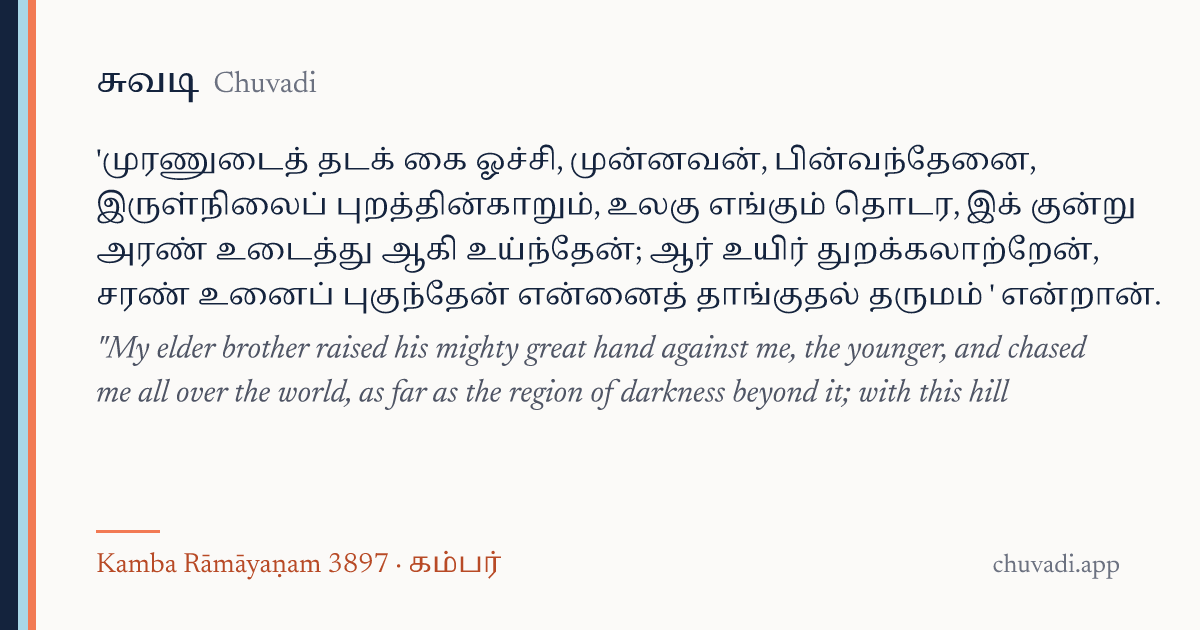
- "My elder brother raised his mighty great hand against me, the younger,
- and chased me all over the world, as far as the region of darkness beyond it; with this hill
- as my fortress I survived; I cannot bring myself to give up my precious life;
- I have come to you for refuge; to uphold me is righteousness," he said.
What the poem says
Cukkirīvaṉ pours out his story. His elder brother Vālī raised his fist against him and hunted him across the whole world, to the edge of the darkness beyond it. He escaped only by taking shelter on Ruciyamukam, where the sage Mataṅka's curse means Vālī's head would burst if he set foot there.
He admits he cannot bear to give up his life, says he has come to Irāmaṉ for refuge, and declares that protecting him is Irāmaṉ's duty. Vālī, he implies, has broken every rule of kinship and fair combat by pursuing a weaker brother who had fled.