



கம்பராமாயணம் 3914 · கிட்கிந்தா 3.42
பாடல் · The poem
Tap a word to see its gloss in the commentary and where else it occurs.
பொருள் · Meaning in Tamil
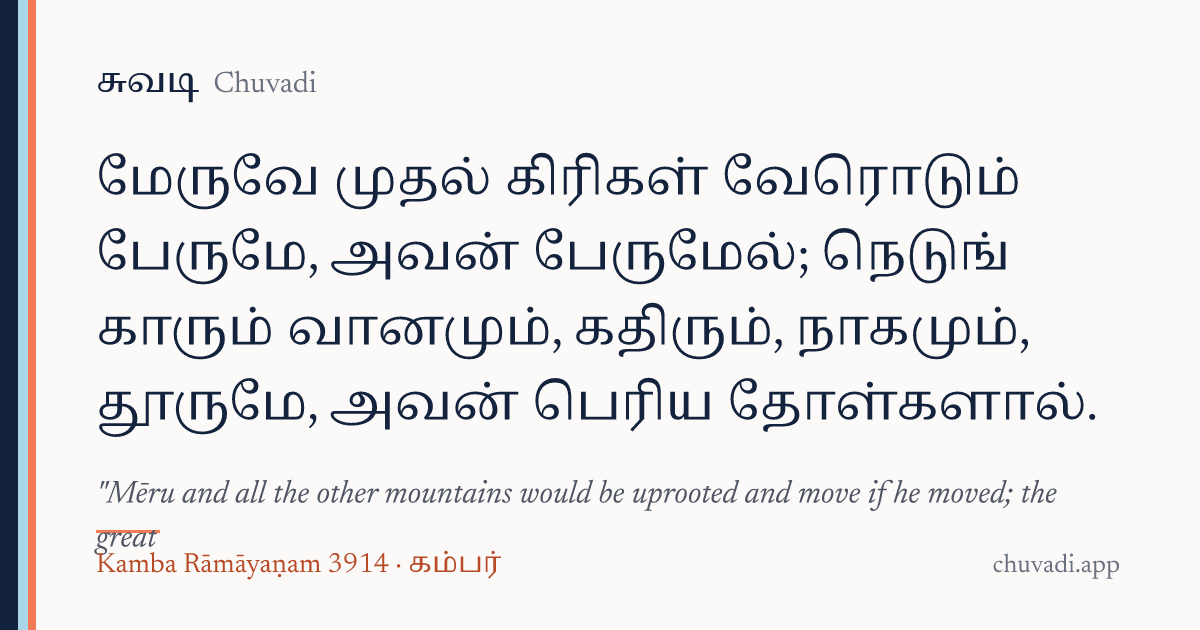
அவன் - அவ்வாலி; பேருமேல் - இடம் பெயர்ந்து எழுவானானால் (அந்த அதிர்ச்சியில்); மேருவே முதல் கிரிகள் - மேரு முதலிய பெரிய மலைகளெல்லாம்; வேரொடும் பேருமே - வேரொடு இடம் விட்டுப் பெயர்ந்து போகும்; அவன் பெரிய தோள்களால் - அவனது பெரிய தோள்களால்; நெடுங்காரும், வானமும் - பெரிய மேகங்களும், ஆகாயமும், கதிரும் நாகமும் - சூரிய, சந்திரர்களும், விண்ணுலகமும்; தூருமே - மறைந்து போய்விடும்.
வாலி இயல்பாக அடிவைத்துச் செல்லுகையில் அவ்வதிர்ச்சியைத் தாங்காது பெரிய மலைகளும் நிலைகுலைந்துவிடும் என அவனது வேகத்தின் பெருமை கூறப்பட்டது. அவனுடைய தோள்கள் மிக உயர்ந்து நிற்றலால், மேகம் முதலியன அத்தோள்களில் மறையும் என அத்தோள்களின் பருமையும் நெடுமையும் உயர்வுநவிற்சி உத்தியால் உணர்த்தப்பட்டன.
'பெயருமேல் நெடும்பூதங்கள் ஐந்தொடும் பெயரும்' (6201) என்ற இரணியன் ஆற்றலை ஒப்பிட்டுக் காண்க. மேருவே - ஏகாரம் உயர்வு சிறப்பு; பேரும் - பெயரும் என்பதன் மரூஉ.
ஆங்கிலம் · English translationAI
Translation
- "Mēru and all the other mountains would be uprooted
- and move if he moved; the great
- clouds and the sky, the sun and the heavens,
- would be blotted out by his huge shoulders."
What the poem says
Aṉumaṉ continues in hyperbole. If Vālī so much as stirs, the shock tears Mēru and all the other mountains from their roots; his shoulders rise so high that clouds, sky, sun and moon are hidden behind them.
The commentary compares the similar description of the demon king Iraṇiyaṉ later in the epic.