



கம்பராமாயணம் 3915 · கிட்கிந்தா 3.43
பாடல் · The poem
Tap a word to see its gloss in the commentary and where else it occurs.
பொருள் · Meaning in Tamil
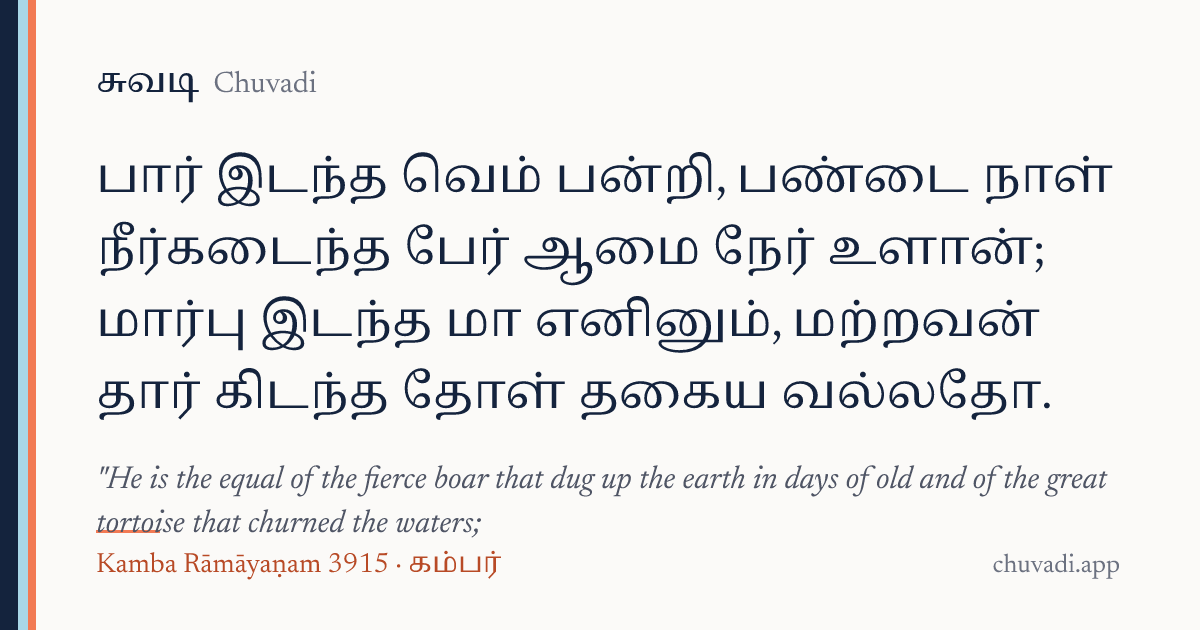
பண்டை நாள் - முன்பு; பார் இடந்த - பூமியைத் தன் கொம்பால் குத்தி எடுத்த; வெம்பன்றி - சினம்மிகுந்த வராகத்தையும்; நீர் கடைந்த - (மந்தர மலையாகிய மத்தை அழுத்தாமல் தாங்கியிருந்து) கடலைக் கடைந்த; பேர் ஆமை - பெரிய கூர்மத்தையும்; நேர் உளான் - வலிமையால் நிகர்ப்பவன்; மார்பு இடந்த - இரணியனின் மார்பினைப் பிளந்த; மா எனினும் - நரசிங்கமே வந்ததாயினும்; அவன் - அவ்வாலியின்; தார்கிடந்த தோள் - மாலையணிந்த தோள்களை; தகைய வல்லதோ - அடக்கக் கூடிய வலிமையுடையதாகுமோ? (ஆகாது).
வாலி பூமியைப் பெயர்க்கும் ஆற்றலும், மலையைத் தாங்கும் வன்மையும், கடலைக்கடையும் திறலும் உடையவன் என்பது இதனால் பெறப்பட்டது. 'பண்டை நாள்' என்பது இடைநிலை விளக்காய் முன்னும் சென்று பொருந்தியது. இரணியன் மார்பைப் பிளந்த நரசிங்கத்திற்கும் வாலியின் தோள் வலிமையை அடக்க இயலாது என வாலியின் தோளாற்றலைக் கம்பர் எடுத்துரைக்கிறார். திருமாலின் அவதாரமான இராமனும் வாலிக்கு எதிர்நின்று போர் புரியாது மறைந்து நின்று வெல்வது ஈண்டுச் சிந்திக்கத்தக்கது.
ஆங்கிலம் · English translationAI
Translation
- "He is the equal of the fierce boar that dug up the earth in days of old
- and of the great tortoise that churned the waters;
- even the beast that tore open the chest,
- could it hold back his garlanded shoulders?"
What the poem says
Aṉumaṉ measures Vālī against three of Tirumāl's own incarnations. He is as strong as the Boar that lifted the earth from the ocean on its tusk and the Tortoise that bore Mount Mantara during the churning; and even the Man-Lion that tore open the demon Iraṇiyaṉ's chest could not restrain his shoulders.
The commentary remarks that this is worth pondering, since Irāmaṉ, another incarnation of Tirumāl, will not face Vālī openly but will kill him from hiding.