



கம்பராமாயணம் 3916 · கிட்கிந்தா 3.44
பாடல் · The poem
Tap a word to see its gloss in the commentary and where else it occurs.
பொருள் · Meaning in Tamil
அனந்தனும் - ஆதிசேடனும்; படர்ந்த நீள்நெடும் தலைபரப்பி - ஆயிரமாகப் படர்ந்த நீண்ட பெரிய தலைகளைப் பரப்பிக்கொண்டு; மீது - அத்தலைகளின் மேலே; அடர்ந்து பாரம் வந்துஉற - நெருங்கிப் பாரம் மிகுதியாகப் பொருந்தியிருக்க; கிடந்து - (நின்று தாங்க முடியாமல்) கீழே கிடந்து; இப்புவனம் நாள்எலாம் - இப் பூமியை நாளெல்லாம் (எக்காலத்தும்); தாங்கும் - தாங்குவான்; இக்கிரியை மேயினான் - இந்தக் கிட்கிந்தை மலையில் வாழும் வாலியோ; நடந்து தாங்கும் - நடந்து கொண்டே அப்பூமியைத் தாங்கக்கூடிய ஆற்றலை உடையவன்.
பூமியின் பாரத்தைத் தாங்கமாட்டாமல் ஆயிரம் தலைகளை உடைய ஆதிசேடன் வருந்திக் கிடந்து தாங்கிக் கொண்டிருக்க, ஒரு தலை உடைய வாலி நடந்து கொண்டு எளிதாகத் தாங்குவான் எனக்கூறி ஆதிசேடனை விட வாலி வலிமை மிக்கவன் என்பது உணர்த்தப்பட்டது. இது வேற்றுமை அணி பொருந்தியது. கிட்கிந்தை அருகில் தோன்றுவதால் 'இக்கிரி' என்றான். அனந்தனும் - உம்மை உயர்வுசிறப்பு.
ஆங்கிலம் · English translationAI
Translation
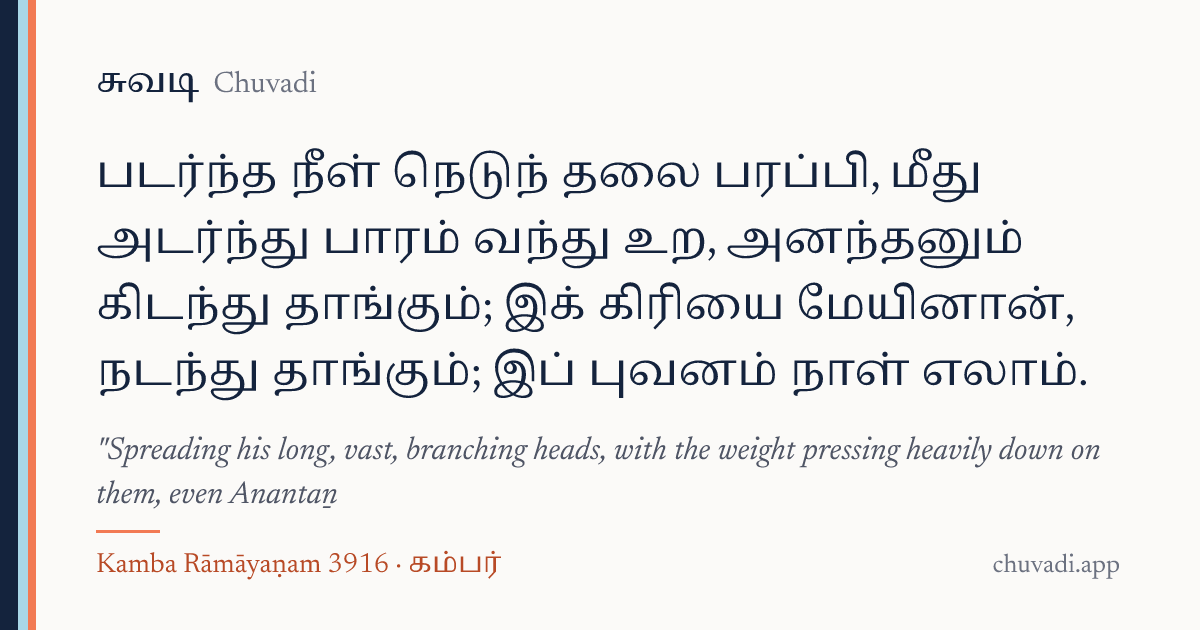
- "Spreading his long, vast, branching heads, with the weight
- pressing heavily down on them, even Anantaṉ
- must lie down to bear this world all his days; he who dwells on this mountain
- could bear it while walking."
What the poem says
The serpent Anantaṉ, Ātiśeṣaṉ, carries the earth on his thousand outspread heads, but the weight is so great that he must lie down to do it. Vālī, who lives on the nearby Kiṭkintai mountain, could carry it on his single head while walking about.
The commentary calls this a figure of contrast, making Vālī stronger even than the world-serpent.