



கம்பராமாயணம் 3919 · கிட்கிந்தா 3.47
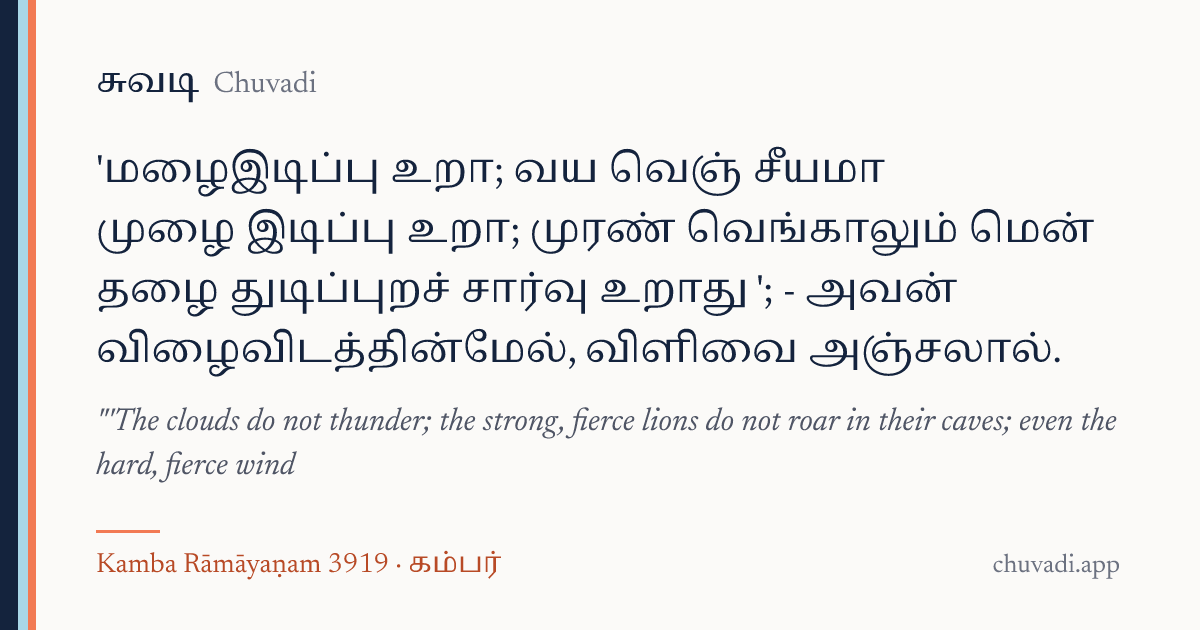
பாடல் · The poem
Tap a word to see its gloss in the commentary and where else it occurs.
பொருள் · Meaning in Tamil
விளிவை அஞ்சலால் - (வாலி சினம் கொண்டால்) தமக்கு அழிவு நேருமே என்று அஞ்சுவதால்; அவன் - அவ்வாலி; விழைவு இடத்தின் மேல் - விரும்பித் தங்கியிருக்கும் இடத்திற்கு எதிராக; மழை இடிப்பு உறா - மேகம் இடித்து ஒலிக்கமாட்டா; வய வெம் சீயமா - வலிமை மிக்க கொடிய சிங்கமாகிய விலங்குகள்; முழை இடிப்பு உறா - குகையில் இடிபோல் முழங்கமாட்டா; முரண் வெம் காலும் - வலிய கொடிய காற்றும்; மென் தழை துடிப்புற - அங்குள்ள மெல்லிய இலைகள் நடுக்கம் கொள்ள; சார்வு உறாது - அவற்றின் பக்கத்தில் வராது.
வாலி இருக்கும் இடத்தில் தன் வல்லமையைக் காட்டினால் தமக்கு இறுதி நேரிடும் என்று அவனது வலிமைக்கு அஞ்சி மேகமும், சிங்கமும், காற்றும் அடங்கி நடக்கும் என்பதால் வாலியின் பெருவலி உணர்த்தப்பட்டது. வாலி விரும்பித் தங்கும் இடத்தே இடியோ, இடிபோன்ற முழக்கமோ கேளா; காற்று மென்மையாக வீசும் என அறிய முடிகிறது. 'அவன் கடியுடை வியன்புலம், உருமு முரறாது அரவும் தப்பாகட்டுமாவும் உறுகண் செய்யா' (பெரும்பாண் - 42 - 44) என்ற அடிகள் தொண்டைமான் இளந்திரையன் ஆட்சிச் சிறப்பை உணர்த்துவதுடன் இதனையும் ஒப்பிடலாம். 'கறங்கு கால் புகா; கதிரவன் ஒளிபுகா; மறலி மறம் புகாது' (4857) என்பன முதலாக இராவணன் ஆணைமிக்க ஆட்சி எல்லையைக் கம்பர் குறிப்பதும் ஒப்பிட்டுணரத்தக்கது.
சீயம் மா - சீயமாகிய மா. இருபெயரொட்டுப் பண்புத்தொகை.
ஆங்கிலம் · English translationAI
Translation
- "'The clouds do not thunder; the strong, fierce lions
- do not roar in their caves; even the hard, fierce wind
- does not come near enough to make the soft leaves tremble'
- over the place where he chooses to stay, for fear of their death."
What the poem says
Wherever Vālī chooses to stay, the clouds do not thunder, lions do not roar in their caves, and even a gale will not come near enough to rustle the leaves, all for fear that his anger will destroy them.
The commentary compares a classical poem describing the peace of a king's domain, where thunder does not crash and snakes and beasts do no harm, and Kampaṉ's own later description of Irāvaṇaṉ's realm.