



கம்பராமாயணம் 3924 · கிட்கிந்தா 3.52
பாடல் · The poem
Tap a word to see its gloss in the commentary and where else it occurs.
பாட வேறுபாடு · Project Madurai reads
பொருள் · Meaning in Tamil
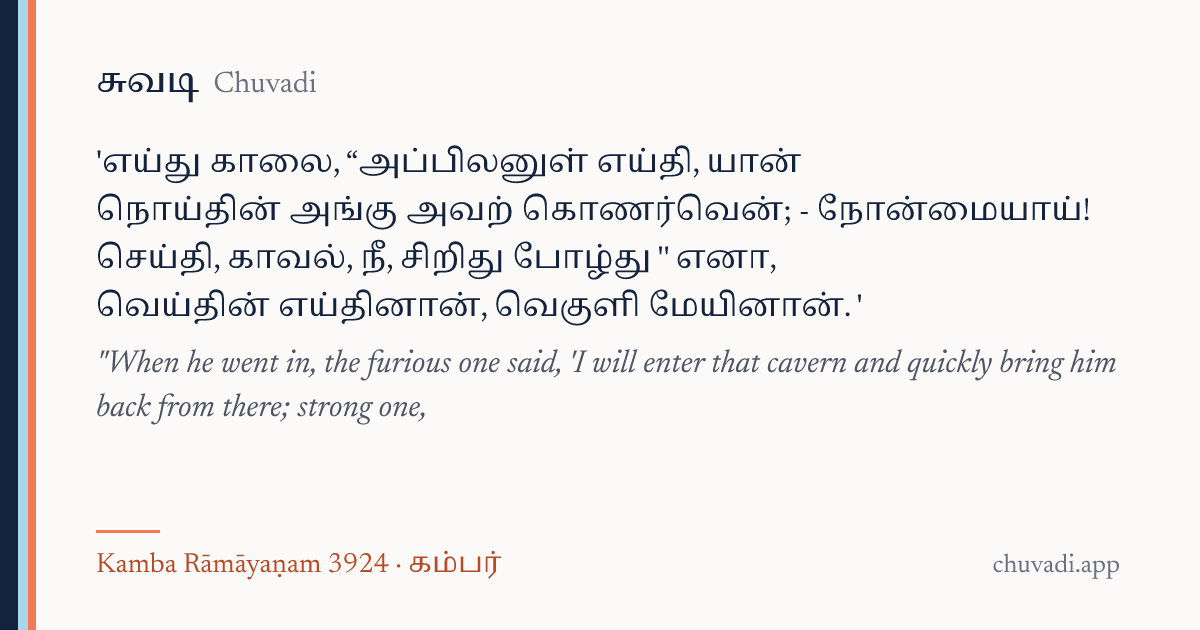
எய்து காலை - (அவ்வாறு மாயாவி) பிலத்தினுள் நுழைந்த போது; வெகுளி மேயினான் - சினங்கொண்டவனாகிய வாலி; நோன்மையாய் - (சுக்கிரீவனை நோக்கி) வலிமை உடையவனே! அப்பிலனுள் எய்தி - அவன் நுழைந்த பிலத்தினுள் நுழைந்து; யான் - நான்; நொய்தின் அங்கு - விரைவில் அங்குள்ள; அவற் கொணர்வென் - அவனைப் பிடித்துக் கொணர்வேன்; நீ சிறிது போழ்து - நீ சிறிது நேரம்; காவல் செய்தி - இப்பிலத்திலிருந்து வேறுவகையில் அவன் தப்பித்துச் செல்லாதவாறு காவல் செய்வாய்; எனா - என்று கூறி; வெய்தின் எய்தினான் - விரைவாக அப்பிலத்துள் சென்றான்.
மாயாவி பிலத்தினுள் புகுந்ததைக் கண்ட வாலி, மிக்க சினங்கொண்டு தம்பியை அப்பிலவாயிலில் காவல் வைத்து மாயாவியைத் தொடர விரைந்து சென்றான் என்பதாம். காவல் காக்கும் வலிமையுடையனாதலின் தம்பியை 'நோன்மையாய்' என விளித்தான். நொய்து, வெய்து என்பன விரைவுப் பொருள்.
அவற்கொணர்வென் - இரண்டாம் வேற்றுமைத்தொகையாதலின் இயல்பாக வேண்டிய அவன் என்னும் உயர்திணைப்பெயர் விகாரமாயிற்று. முன் செய்யுளோடு இச்செய்யுள் அந்தாதித்தொடையாகத் தொடர்ந்தது கருதத்தக்கது.
ஆங்கிலம் · English translationAI
Translation
- "When he went in, the furious one said, 'I will enter that cavern
- and quickly bring him back from there; strong one,
- keep guard here for a little while,'
- and went in swiftly."
What the poem says
When the demon vanished into the cavern, Vālī in his fury told Cukkirīvaṉ to stand guard at the entrance for a short while, so that the demon could not slip out that way, while he went in to drag him out. Then he plunged in after him.
The commentary points out that this verse picks up the last word of the previous verse at its start, a linking device called antāti.