



கம்பராமாயணம் 3925 · கிட்கிந்தா 3.53
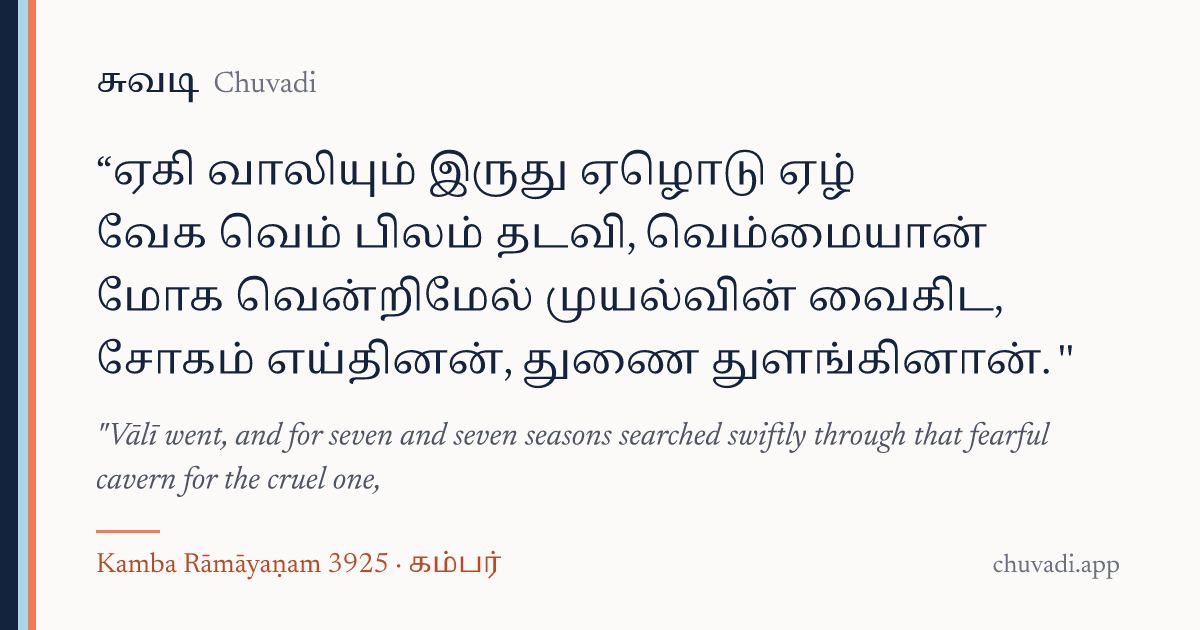
பாடல் · The poem
Tap a word to see its gloss in the commentary and where else it occurs.
பாட வேறுபாடு · Project Madurai reads
பொருள் · Meaning in Tamil
வாலியும் - வாலியும்; ஏகி - சென்று; இருது ஏழொடு ஏழ் - பதினான்கு பருவகால வரையிலும்; வேகம் - வேகத்தோடு; வெம்பிலம் தடவி - கொடிய பிலத்தினுள்ளே தேடிப் பார்த்து; வெம்மையான் - கொடுந்தன்மையுடைய அசுரனை; மோக வென்றி மேல் - (வெல்லுதலாகிய) விரும்பத்தக்க வெற்றிமேல் கருத்துடையவனாய்; முயல்வின் வைகிட - அம்முயற்சியின் ஈடுபட்டிருக்க; துணை - தம்பியான சுக்கிரீவன்; சோகம் எய்தினன் - துன்பம் அடைந்தவனாய்; துளங்கினான் - கலங்கினான்.
பிலத்துள் சென்ற வாலி அசுரனைத் தேடுதலும், தேடிக்கொண்டு பிடித்தலும், பிடித்துப் போர்செய்தலும் ஆகிய செயல்களில் ஈடுபட்டு இருபத்தெட்டு மாதங்கள் வெளிவராததனால் 'வாலிக்கு என்ன இடுக்கண் நேர்ந்ததோ' எனக் காவல் காத்து நின்ற சுக்கிரீவன் கலங்கினான். இருது - இரண்டு மாத காலங்களைக் கொண்டது. ஏழொடு ஏழ் - பதினான்கு பருவங்கள் - இருபத்தெட்டு மாதகாலம். துணை - சுக்கிரீவன். இருபத்தெட்டு மாதங்கள் கழிந்தமையால் வாலி இறந்திருப்பானோ என்ற ஐயம் சுக்கிரீவனுக்கு ஏற்படலாயிற்று. வெற்றிமேல் கொண்ட மோகத்தால் 'மோகவென்றி' ஆயிற்று.
ஆங்கிலம் · English translationAI
Translation
- "Vālī went, and for seven and seven seasons
- searched swiftly through that fearful cavern for the cruel one,
- intent on the victory he craved, and while he stayed at that effort,
- his brother fell into grief and was shaken."
What the poem says
Inside the cavern Vālī searched for the demon, caught him and fought him, so bent on victory that fourteen seasons, twenty-eight months, went by without his coming out. Cukkirīvaṉ, waiting at the entrance, grew anxious and distressed, fearing that some disaster had befallen his brother.