



கம்பராமாயணம் 394 · பால 7.64
பாடல் · The poem
Tap a word to see its gloss in the commentary and where else it occurs.
பாட வேறுபாடு · Project Madurai reads
பொருள் · Meaning in Tamil
கூற்று உறழ் வேலினாய் - எமனுக்கு ஒப்பான வேலேந்திய வீரனே!; சாற்றும் நாள் அற்றது எண்ணி - முன் வினைப்படி ஏற்பட்ட வயது தீர்ந்துவிட்டதை நினைத்து; தருமம் பார்த்து ஏற்றும் விண் என்பது அன்றி - அறப்பயனை நினைத்து, விண்ணுலகம் புகச் செய்தல்லாது; இவளைப் போல் - புதிய எமனாகிய இவ்வரக்கியைப் போல; நாற்றம் கேட்டலும் தின்ன நயப்பதோர் - மணம் தெரிந்தவுடன் உயிர்களைத் தின்ன விரும்புவதாகிய; ஒரு கூற்று உண்டோ - ஒரு எமன் இவ்வுலகத்துண்டோ?
சாற்றும்: ஏற்படுத்தும். நாள்: ஆயுட்காலம். நாற்றம்: மணம். கேட்டல்: தெரிந்து கொள்ளல். “நாற்றம் கேட்டலும் தின்ன நயத்தல்” எமனுக்கு உரிய குணமன்று. புது வழக்கமுடைய இவள் “புதிய கூற்று” எனப்பட்டாள். உறழ்தல்: பொருவுதல் (நிகராதல். 'உண்டோ' என்பதில் 'ஓ' எதிர்மறைப் பொருளில் வந்தது. 'இல்லை' என்றபடியாம். சாற்றும் நாள்: நியமித்த நாள் என்றபடி.
ஆங்கிலம் · English translationAI
Translation
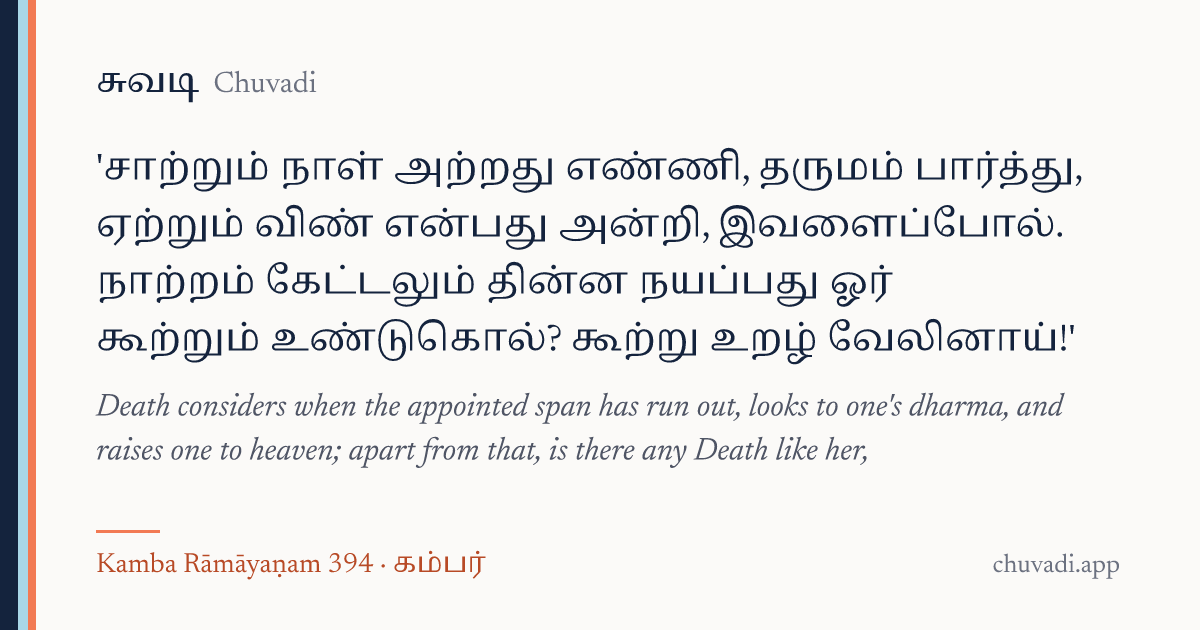
- Death considers when the appointed span has run out, looks to one's dharma,
- and raises one to heaven; apart from that, is there any Death like her,
- who, the moment she catches a scent,
- longs to eat? O you whose spear is like Death!
What the poem says
The sage contrasts Tāṭakai with Yamaṉ, the god of death. Yamaṉ takes a life only when its allotted span is over, and then weighs the person's merit and sends the good to heaven.
Tāṭakai is a new and worse kind of death. She kills anything as soon as she smells it, purely because she is hungry. The sage addresses Irāmaṉ as one whose own weapon is as deadly as Death.